Enterprises running VMware vSphere environments manage hundreds or even thousands of virtual machines, each supporting critical business applications and data. As infrastructures scale, ensuring that VMware backups remain fast, reliable, and compliant becomes significantly more complex. Backup windows shrink, regulatory pressures increase, and downtime tolerance continues to fall. At the same time, threats such as ransomware demand that backups not only exist but are also resilient and recoverable.
For enterprise IT leaders, the challenge isn’t whether to back up VMware—it’s how to design and execute a backup strategy that delivers performance, security, and compliance without disrupting production workloads.
The Most Common Challenges in VMware Virtual Machine Backups
Even with advanced VMware vSphere features designed for data protection, enterprise IT teams face persistent hurdles when scaling backup operations across hundreds or thousands of virtual machines. Performance bottlenecks, regulatory mandates, ransomware threats, and the complexity of modern hybrid environments mean that a backup strategy that worked a year ago may already be insufficient. Addressing these challenges requires not just technology, but also disciplined planning and continuous refinement.
Managing Backup Performance in Large vSphere Environments
In large VMware deployments, a single ESXi host can run dozens of VMs, and simultaneous backup requests can quickly saturate CPU, memory, and I/O resources. Heavy reliance on Change Block Tracking (CBT) can help reduce backup load, but CBT metadata can become corrupted after vMotion migrations or hardware changes, requiring re‑synchronization. Additionally, backup traffic across vSAN or NFS datastores must be carefully load‑balanced to avoid storage contention. Enterprises often employ network traffic shaping or dedicated backup proxies to offload workloads from production hosts.
Handling VM Sprawl and Rapid Data Growth
VM sprawl not only increases storage demand but also complicates backup scheduling and retention management. Many enterprises see “zombie VMs” consuming backup resources despite being unused. Thin‑provisioned disks add another layer of complexity, as backup systems may end up protecting large amounts of allocated but unused space unless block‑level exclusion is applied. Leveraging VM tagging and automated policies in vCenter can help ensure that only critical workloads are prioritized for frequent protection.
Meeting Compliance and Regulatory Retention Requirements
Long‑term retention in VMware environments is rarely feasible with primary storage alone. Enterprises must leverage tiered storage models, sending daily or weekly VMware backups to cost‑efficient object storage solutions (such as S3‑compatible or tape) with Write‑Once‑Read‑Many (WORM) capabilities. Encryption is typically mandated both in‑transit (TLS) and at‑rest (AES‑256). In addition, audit trails must confirm not only backup completion but also successful restores within the compliance window defined by industry regulations like HIPAA, SOX, or GDPR.
Reducing Backup Windows Without Impacting Production Workloads
With mission‑critical workloads running around the clock, enterprises can’t afford lengthy quiescing of VMs during backup. VMware’s VADP (vStorage APIs for Data Protection) provides image‑level backup without requiring agents inside each VM, significantly reducing impact. However, improper use of VMware snapshots can lead to datastore bloat and degraded performance if snapshots linger. Enterprises often pair incremental‑forever strategies with periodic synthetic fulls to shorten backup windows while keeping restore operations efficient.
Addressing Ransomware Resilience in VMware Backups
Modern ransomware targets backup metadata and repositories in addition to production data. To counter this, enterprises are implementing immutable backups using technologies like vSAN native snapshots with immutability, object‑lock enabled storage, or air‑gapped repositories. Role‑based access control (RBAC) and multi‑factor authentication (MFA) on backup consoles are now non‑negotiable. Some enterprises also maintain an offline “golden copy” of critical VMware backups to ensure recovery in case all online repositories are compromised.
Navigating Hybrid and Multi‑Cloud VMware Backup Complexities
As enterprises increasingly extend VMware workloads into hybrid or multi‑cloud environments, backup strategies must adapt to distributed infrastructures. Ensuring consistent backup policies across on‑premises clusters and VMware Cloud on AWS, Azure VMware Solution, or Google Cloud VMware Engine is no small task. Network latency can slow backup replication between data centers and clouds, while egress fees can inflate costs for frequent restores. Additionally, enterprises must verify that cloud‑based backups are compliant with regional data sovereignty laws, often requiring geo‑fencing of backup storage locations. A unified backup framework capable of policy‑based orchestration across environments is critical to avoid silos and ensure seamless recovery.
Evaluating Different VMware vSphere Backup Approaches
Choosing the right VMware backup method can make the difference between meeting enterprise SLAs or struggling with performance bottlenecks and recovery failures. Each approach carries trade‑offs in terms of resource usage, granularity, and recovery speed. Enterprises often deploy a combination of methods to align with workload criticality and compliance mandates.
Agent-Based vs. Agentless Backups in Enterprise Settings
Agent-based backups require installing a backup client inside each virtual machine. While this provides fine‑grained control, including file‑level recovery and application‑aware backups, it introduces overhead. Large environments with hundreds of VMs can find agent maintenance cumbersome and resource‑intensive.
Agentless backups leverage VMware’s VADP to capture image‑level snapshots without requiring agents in each VM. This approach reduces administrative overhead and minimizes resource consumption but may require additional steps for consistent application‑level protection in databases and transactional systems.
Image-Level vs. File-Level Backups for Different Workloads
Image‑level backups capture the entire VM disk and configuration, enabling fast restores of entire VMs or replicas. This makes them ideal for disaster recovery scenarios. However, they can be less efficient for single‑file recovery unless the backup software provides granular restore options.
File‑level backups, on the other hand, provide precise recovery but can increase backup times and strain resources if used for large VMs. Enterprises often use image‑level backups as their default strategy while enabling file‑level recovery only for critical workloads that demand granular restores.
The Role and Limitations of VMware Snapshots in Backup Strategies
VMware snapshots are often misunderstood as backups. While snapshots are essential for creating consistent states during backups, they are not intended for long‑term retention. Extended snapshot lifetimes can cause datastore performance degradation and increased storage consumption. Enterprises should use snapshots strictly as a staging tool within a backup workflow, ensuring they are promptly committed after the backup job completes. In modern enterprise environments, snapshots serve best when integrated with application‑consistent backup methods, ensuring data integrity for systems like SQL Server or Exchange.
Best Practices Enterprises Should Adopt for VMware Backups
Enterprises running VMware vSphere cannot afford a “set it and forget it” backup strategy. To keep pace with evolving threats, regulatory pressures, and data growth, IT leaders must adopt practices that ensure reliability, scalability, and security across their backup infrastructure.
Designing Backup Policies Around RPOs and RTOs
Recovery Point Objectives (RPOs) and Recovery Time Objectives (RTOs) are the foundation of any enterprise VMware backup strategy. Critical workloads may require RPOs of minutes and RTOs under an hour, while less essential VMs can tolerate longer recovery windows. Aligning backup schedules, replication intervals, and retention policies with business SLAs prevents both over‑protection and under‑protection of workloads.
Leveraging Deduplication, Compression, and Tiered Storage
Data reduction techniques are essential for controlling the cost and footprint of VMware backups. Inline deduplication ensures that identical blocks across multiple VMs are stored only once, significantly reducing capacity demands in environments with similar workloads. Compression further optimizes storage efficiency, while tiered storage architectures allow enterprises to retain recent backups on high‑performance systems and archive older data on cost‑effective object storage or tape.
Implementing Application-Consistent Backups for Mission-Critical VMs
Crash‑consistent backups may suffice for non‑critical workloads, but enterprise applications such as SQL Server, Oracle, and Exchange require application‑consistent backups to ensure transactional integrity. VMware Tools combined with Microsoft’s VSS (Volume Shadow Copy Service) or database‑native quiescing mechanisms enable consistent recovery points without data corruption. Skipping this step can render restored VMs unstable or unusable for business operations.
Encrypting Backup Data to Strengthen Security Posture
Enterprises must treat backup data with the same security controls as production data. Encryption should be enforced both in‑transit (TLS/SSL for data movement) and at‑rest (AES‑256 or stronger for stored backups). Centralized key management systems help prevent operational risks, while role‑based access ensures only authorized personnel can restore sensitive workloads.
Automating and Orchestrating Backups for Large VM Fleets
With potentially thousands of VMs to protect, manual backup scheduling is impractical. Policy‑driven automation ensures that newly provisioned VMs are automatically enrolled in backup jobs, reducing the risk of human oversight. Orchestration tools integrated with vCenter allow IT teams to enforce SLAs, monitor compliance, and trigger automated failover or restore workflows when needed.
Ensuring Reliable Recovery from VMware Backups
A VMware backup is only as valuable as its ability to restore critical workloads quickly and consistently. For enterprises, reliable recovery is the true benchmark of a successful backup strategy. Achieving this requires not only capturing valid restore points but also ensuring that recovery operations can meet business SLAs under pressure.
Combining Replication with Backups to Reduce Downtime
Backups alone may not provide the speed enterprises require for recovery, especially when entire VMs or clusters need to be restored. Replication complements backups by maintaining near‑real‑time copies of VMs in secondary sites or cloud environments. When combined, backups deliver long‑term retention and compliance while replication ensures minimal downtime and faster failover in case of primary site outages.
Validating Backups Through Regular Restore Testing
Enterprises often discover backup corruption or misconfiguration only during an actual incident—when it’s too late. Regular recovery testing, including both partial restores and full VM failover simulations, is essential. Automated verification processes can validate checksum integrity, boot VMs in isolated networks, and ensure application consistency without disrupting production.
Integrating VMware Backups into Disaster Recovery Planning
VMware backups must be more than a standalone process—they should be part of the broader disaster recovery (DR) strategy. This means aligning backup RPOs and RTOs with DR runbooks, ensuring failover sites are capable of running restored workloads, and validating that network configurations (such as IP mapping and DNS updates) are accounted for in recovery scenarios.
Using Immutable Storage and Automated Air-Gapping to Protect Against Ransomware
Immutable backups are critical, but immutability alone does not guarantee ransomware resilience if the repository remains network‑accessible. True air‑gapping requires isolation from all production networks, making it impossible for malware to reach backup copies. Simply labeling a repository as “air‑gapped” while keeping it online defeats the purpose.
Enterprises should employ automated air‑gapping solutions that regularly transfer and isolate backups from the primary environment. Automation ensures that the air‑gap is consistently enforced, reducing human error while guaranteeing that critical recovery points remain untouchable.
Leveraging Automated Threat Detection and Response in Backup Workflows
Having automated threat detection and response as part of your backup and disaster recovery (DR) solution is no longer optional—it’s necessary. Threats such as ransomware can remain dormant in environments and reappear during recovery if not proactively identified.
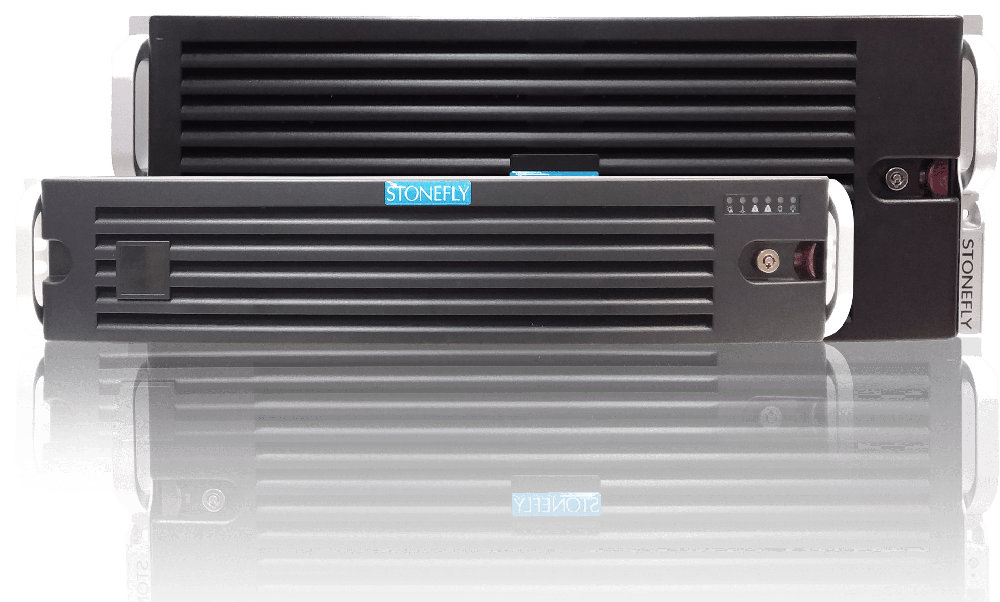
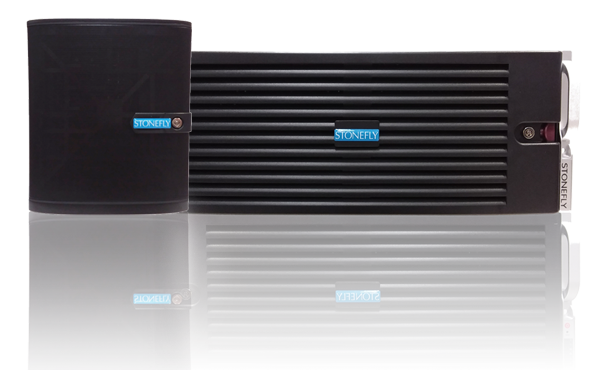
With StoneFly, enterprises can integrate automated threat detection and response into their VMware backup strategy. StoneFly delivers these capabilities as part of its Veeam Ready, air‑gapped, and immutable backup and DR solutions, enabling organizations to identify threats in real time, isolate compromised data, and ensure that only clean, verified recovery points are restored.
Conclusion
VMware vSphere backups in enterprise environments demand more than routine scheduling—they require strategies built for scale, security, and resilience. From managing backup performance and VM sprawl to implementing immutable, air‑gapped storage and automated threat detection, the goal is to ensure that recovery is both reliable and timely. By aligning backup policies with business objectives and reinforcing them with automation and security intelligence, enterprises can maintain confidence that their VMware workloads remain protected and recoverable against any disruption.
If you’re looking for VMware backup, StoneFly delivers turnkey air‑gapped and immutable backup and disaster recovery solutions for VMware. Contact us today to schedule a demo and see how we can help protect your virtual machines.