A single Proxmox VE cluster is easy to stand up. A production Proxmox VE environment that an enterprise can actually run on — one that survives a ransomware attack, meets a recovery point objective, and gets monitored the way finance and compliance expect — is a different project entirely. Most IT teams discover that the hypervisor was never the hard part. The hard part is everything they had to bolt onto it afterward.
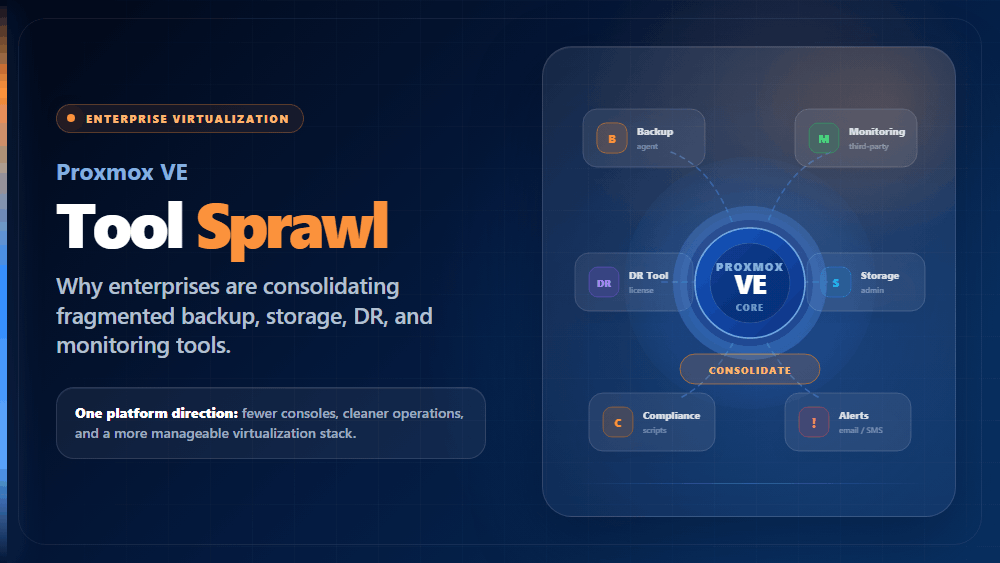
That pattern is not unique to Proxmox VE, but it hits Proxmox VE deployments especially hard because the platform’s open-source foundation, unlike a bundled VMware or Nutanix stack, ships without an opinion on backup, security, or centralized management. Enterprises fill those gaps one purchase at a time: a backup vendor here, an immutable storage appliance there, a separate monitoring dashboard, a separate threat detection product. According to a 2024 Forrester survey, 77% of U.S. technology decision-makers report moderate to extensive levels of technology sprawl, and 63% say they are actively pursuing consolidation strategies as a result. Proxmox VE environments are a textbook case of how that sprawl accumulates.
This blog covers how tool sprawl builds up around enterprise Proxmox VE deployments, why multi-site environments make the problem worse, and how a consolidated platform — the approach StoneFly built its Proxmox VE Appliance around — removes the fragmentation instead of managing around it.
Why Proxmox VE Deployments Multiply Point Tools Across the Stack
Proxmox VE handles virtualization: compute, storage pools, clustering, and live migration. It does not ship with enterprise-grade ransomware protection, a validated backup and DR strategy, or a management console built for multi-cluster, multi-hypervisor environments. Every enterprise requirement that falls outside core virtualization becomes a separate procurement decision, and separate procurement decisions become separate tools with separate consoles, separate licensing, and separate support contracts.
Backup and Disaster Recovery Purchased as a Standalone Product
Proxmox Backup Server (PBS) handles incremental backup and deduplication, but enterprise recovery requirements — granular file and VM recovery, instant full VM restore, near-zero RTO and RPO — typically require a dedicated backup and DR product layered on top. That product has its own agents, its own retention policies, and its own recovery console that IT staff have to learn separately from Proxmox VE itself.
Ransomware Protection and Immutability as a Separate Purchase
Proxmox VE clusters are just as exposed to ransomware, insider threats, and accidental deletion as any other virtualization platform, but immutability, air-gapped repositories, and threat detection and response are rarely native to the hypervisor. Enterprises add a dedicated immutable storage vendor or a separate security product to close that gap, which means the security posture of the Proxmox environment now depends on integration between two vendors that were not designed together.
Monitoring and Management Dashboards Built for Different Platforms
Proxmox VE’s native web interface manages the cluster it is installed on. It does not give administrators a single view across Windows servers, Linux servers, multiple Proxmox clusters, and the security layer sitting on top of all of it. Most enterprise IT teams end up running Proxmox VE’s own console alongside a separate infrastructure monitoring tool and a separate security dashboard, none of which share alerts, reporting, or a common data model.
How Multi-Site Proxmox VE Deployments Make Tool Sprawl Worse
Every additional site does not just add infrastructure — it adds another instance of every tool in the stack. A three-site enterprise running Proxmox VE does not manage one backup policy, one security posture, and one monitoring view. It manages three of each, often configured slightly differently by whoever set up that site, at whatever point the standard procedure had drifted.
Configuration Drift and Inconsistent Policy Enforcement Across Locations
Backup retention windows, immutability settings, and access controls that are configured correctly at one site frequently are not replicated exactly at the next, especially when sites were brought online at different times or by different teams. Configuration drift is not a hypothetical risk — it is the default outcome of managing distributed infrastructure through disconnected tools, and it is precisely the kind of gap that ransomware and audit findings surface after the fact rather than before.
Recovery Objectives That Vary by Site Instead of by Design
When each site’s backup and DR tooling was selected or configured independently, recovery time and recovery point objectives end up varying by location rather than by business requirement. A branch office may have a materially weaker recovery posture than headquarters simply because it was the last site standardized, which is a difficult position to defend when an incident response plan gets tested during an actual outage.
Multiplied Licensing, Support Contracts, and Administrative Overhead
Every additional site running a separate backup vendor, security product, and monitoring tool multiplies licensing costs, renewal cycles, and support relationships. IT teams spend measurable time simply keeping track of which version of which tool is deployed at which site, time that does not show up as a line item but shows up directly in how long routine changes take to roll out safely.
The Operational Cost of Fragmented Proxmox VE Infrastructure
Tool sprawl is not just an inconvenience — it is a measurable operational and security liability. Industry analysis of enterprise security tooling generally puts large organizations at 60 to 80 or more distinct security tools, with significant capability overlap and, per multiple 2025 surveys, a majority of those tools going underused on any given day. Each additional tool in a Proxmox VE stack adds an integration point that can fail silently, a login that can be mismanaged, and a console that has to be checked separately during an incident.
The practical effect during a ransomware event is the one that matters most. If backup, security, and monitoring for a Proxmox VE environment live in three unrelated systems, the incident response team is reconstructing a timeline across three consoles that were never designed to talk to each other, at the exact moment that speed determines whether the organization needs to restore from backup or pay a ransom.
Why Enterprises Are Consolidating Infrastructure Around Proxmox VE
The response to this pattern, across enterprise IT broadly and not just in Proxmox VE environments, is consolidation: fewer vendors, fewer consoles, and infrastructure that is validated as a system rather than assembled from parts that happen to be compatible. For Proxmox VE specifically, that means a platform where virtualization, backup and DR, ransomware-resilient storage, centralized management, and Veeam-ready storage are built and tested together rather than integrated after the fact by the customer.
Consolidation does not mean giving up capability. It means the capabilities enterprises were already buying separately — immutable storage, instant VM recovery, single-pane monitoring — arrive validated for Proxmox VE from a single vendor with a single support relationship, which is what actually shrinks the sprawl instead of just renaming it.
How the StoneFly Proxmox VE Appliance Replaces a Fragmented Stack
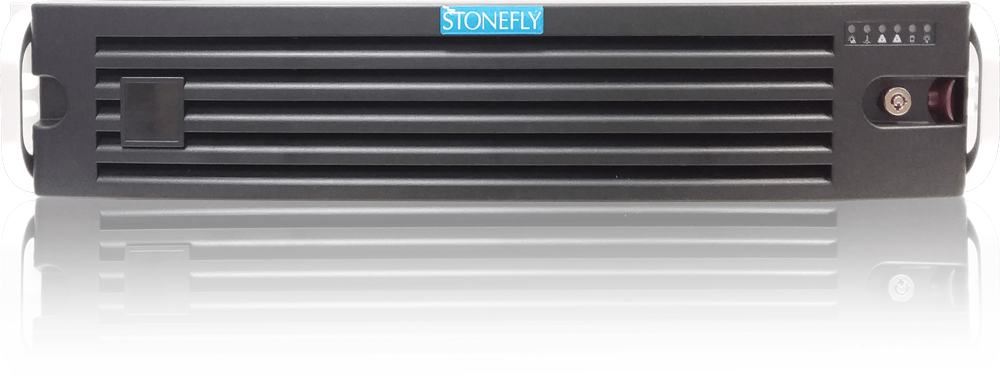
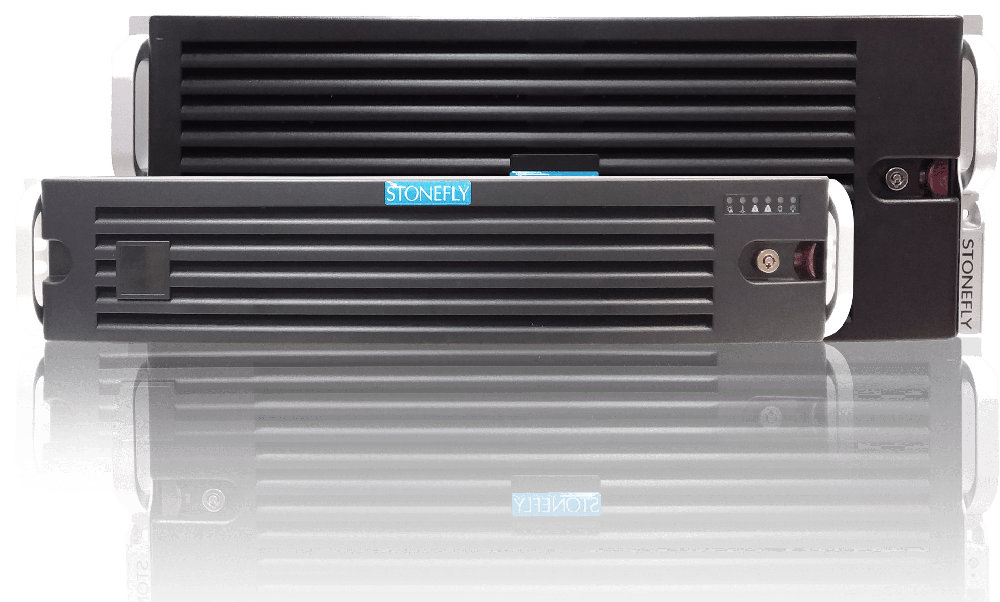
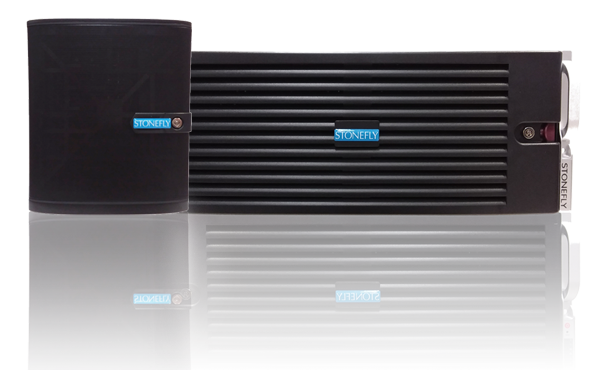
StoneFly built its Proxmox VE Appliance specifically to close the gap between what Proxmox VE provides natively and what enterprise IT teams need to run it in production, especially across multiple sites. Instead of five separate procurement decisions, the appliance delivers five integrated pillars in a single validated platform.
Patented Air-Gapped Vault® and Immutable Storage Built Into the Platform
Security is native to the appliance rather than layered on afterward. The platform includes StoneFly’s patented Air-Gapped Vault, immutable storage, integrated Threat Detection and Response, and volume deletion protection, so ransomware and insider threats are addressed at the storage layer without requiring a separate security vendor.
Veeam Ready Backup and Disaster Recovery Validated for Proxmox VE
Organizations can integrate enterprise backup and DR directly into the appliance, built and tested specifically for Proxmox VE. Granular file and VM recovery, complete system recovery, and instant full or granular VM restore are designed to hit near-zero RTO and RPO, and the appliance includes Veeam Ready Object Storage and Veeam Ready Immutable Object Storage for organizations standardized on Veeam for long-term retention.
Single Pane of Glass Management Across Every Site
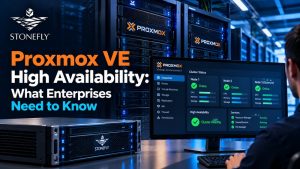
The appliance’s Data Center Management Dashboard gives administrators one interface to monitor Proxmox VE clusters and virtual machines, Windows and Linux servers, infrastructure health, and security and threat detection visibility. For multi-site enterprises, that single dashboard is the direct fix for the configuration drift and inconsistent recovery objectives that fragmented tooling creates — one policy view instead of one view per site.
Conversational AI for Day-to-Day Administration
Built-in AI capabilities let administrators handle VM deployment, environment monitoring, reporting, VM cloning, and migration assistance through conversational interaction rather than switching between multiple management consoles, reducing the administrative overhead that multiplies with every additional site and every additional tool.
Together, these five pillars deliver Proxmox VE virtualization, cyber resilience, backup and disaster recovery, centralized infrastructure management, and Veeam-ready storage as one enterprise-ready platform rather than a stack of point products an IT team has to keep aligned themselves. Full details on the platform are available on StoneFly’s Proxmox VE Enterprise Appliance page.
What Multi-Site Enterprises Should Evaluate Before Consolidating
- Validation for Proxmox VE specifically. A backup or security product that was adapted for Proxmox VE after being built for VMware often carries integration gaps; ask whether the platform was built and tested for Proxmox VE from the start.
- Recovery objectives under real failure conditions. Near-zero RTO and RPO claims should be testable against granular file recovery, full VM restore, and complete system recovery, not just marketing language.
- Consistency of policy enforcement across sites. A consolidated platform should apply the same immutability, retention, and access policies at every site by default, not require each location to be configured manually to match.
- Whether security is native or bolted on. Air-gapped and immutable storage that is built into the platform closes gaps that a separately integrated security product cannot fully close.
- Support and licensing consolidation. Moving from five vendor relationships to one should measurably reduce renewal complexity and the number of support tickets required to resolve a single incident.
Conclusion: Consolidation Is the Fix for Proxmox VE Tool Sprawl
Proxmox VE tool sprawl is not a symptom of poor planning — it is the predictable result of adding enterprise requirements to a hypervisor that was never designed to include them natively. That pattern is manageable at a single site and becomes a genuine operational and security liability once an organization runs Proxmox VE across multiple locations, each with its own backup policy, security posture, and monitoring blind spots.
Consolidating backup and disaster recovery, ransomware-resilient storage, centralized management, and Veeam-ready capacity into one validated Proxmox VE platform is what actually closes those gaps, rather than adding a sixth tool to manage the other five. Contact StoneFly to discuss how the Proxmox VE Appliance can replace a fragmented stack across your production and multi-site environments.