
Enterprises operating in hybrid or multi-cloud environments rely on AWS-compatible S3 object storage to unify access, scalability, and cost-efficiency. Replicating this data—whether between cloud regions, across cloud providers, or from on-premises to the cloud—is essential for maintaining resilience, performance, and compliance. But not all replication strategies are created equal.
Understanding the capabilities and limitations of cross-region replication, batch replication, and traditional copying is critical for selecting the right approach for your infrastructure.
Data replication is more than just a safeguard against failure—it’s a strategic necessity for distributed, high-performance, and compliant infrastructure. Enterprises increasingly deploy AWS-compatible S3 object storage both in the cloud and on-premises, and ensuring data consistency across these environments has become central to operational continuity.
In regulated industries like finance and healthcare, replication supports data residency and audit requirements by maintaining synchronized copies in specific geographic zones. For global operations, replication improves data access speed by placing content closer to end users. In disaster recovery scenarios, replicated AWS-compatible S3 object storage enables near-instant recovery without reliance on a single site or provider.
Another key driver is infrastructure heterogeneity. As organizations adopt on-premises AWS-compatible S3 storage alongside public cloud services, replication bridges gaps between storage silos—enabling unified data management, tiering strategies, and cloud bursting workflows. The result is a more flexible, scalable architecture capable of meeting evolving business demands.
Cross-region replication (CRR) and manual object copying are two fundamentally different methods for duplicating data across AWS S3 buckets or AWS-compatible S3 environments. While both aim to produce a replica of your data, the mechanisms, use cases, and performance implications vary significantly.
AWS S3 cross-region replication is a fully managed, policy-driven feature designed to automatically replicate objects from a source bucket to a destination bucket in a different region. It supports near real-time data synchronization, handles new object writes without manual intervention, and maintains metadata fidelity such as object versioning and access control lists. This automation is especially valuable in production environments where consistency and latency are critical.
In contrast, manual AWS S3 copying typically involves custom scripts, lifecycle events, or third-party tools to periodically copy data between locations. While more flexible in some scenarios, this approach introduces operational overhead and timing inconsistencies. It does not inherently support incremental changes, meaning newly updated or deleted objects may require custom logic to handle synchronization.
Additionally, AWS S3 CRR offers built-in tracking and replication status APIs—capabilities that are difficult to replicate manually. However, CRR is only effective for new writes. For historical or existing data, batch replication or manual copying may still be required.
When working with AWS-compatible S3 storage outside of native AWS (such as on-premises appliances or third-party cloud platforms), CRR features may not be available. In these cases, replication often depends on external orchestration tools or platform-specific replication services. Therefore, the choice between CRR and manual AWS S3 copying must account for not only feature sets but also infrastructure compatibility and operational complexity.
Cross-region replication (CRR) in AWS-compatible S3 storage is driven by rule-based automation that monitors write operations in a source bucket and asynchronously replicates eligible objects to a destination bucket in a different region or infrastructure zone. Whether implemented in native AWS or through compatible platforms, the core replication behavior follows a few foundational principles.
Versioning is mandatory for CRR to function. Both the source and destination AWS-compatible S3 buckets must have versioning enabled. This ensures that object changes are tracked, and conflicts or overwrites are handled predictably. Without versioning, replication jobs cannot maintain data integrity across regions or systems.
Replication rules define the scope of what gets copied. These rules can be applied to the entire bucket or narrowed down using prefix or tag filters. For example, enterprises may replicate only certain folders or files marked with specific metadata to reduce bandwidth and storage costs.
Identity and access configuration is critical. In AWS, this typically involves IAM roles that allow the source bucket to write to the destination. For AWS-compatible S3 systems, role-based access control (RBAC) or API token-based permissions are used to achieve the same goal. Improper permissions are one of the most common causes of replication failures.
Once configured, the replication process automatically handles all new uploads that meet the rule criteria. Each replicated object includes system metadata and retains user-defined metadata where supported. CRR does not replicate delete markers by default, though this can be optionally enabled in native AWS environments.
For hybrid deployments, some AWS-compatible S3 platforms offer replication extensions that mimic AWS CRR behavior across on-prem and cloud storage. These implementations rely on event monitoring services, internal job schedulers, and REST API calls to maintain consistency between distributed storage instances.
Monitoring tools or status APIs—when supported—enable enterprises to track replication lag, identify skipped objects, and verify policy compliance. This observability is essential in regulated environments where data movement must be auditable.
Cross-region replication (CRR) in AWS S3 or AWS-compatible S3 storage is designed to handle new data only—it does not retroactively copy existing objects. That’s where AWS S3 batch replication becomes essential. It enables enterprises to backfill data across buckets that were not previously configured for CRR or where replication failed.
AWS S3 batch replication is not a background service—it’s a deliberate, initiated job. It uses manifest files to define which objects need to be replicated. These manifests can be automatically generated based on filters such as object age, tags, prefixes, or from failed replication reports. For AWS-compatible S3 platforms, some vendors support similar batch-based replication capabilities using API-based jobs and policy-driven manifests.
Use cases include:
Unlike real-time CRR, batch replication gives administrators full control over job execution, status visibility, and retry logic. However, because it operates on large data sets, it consumes more compute and storage I/O. Enterprises should run these jobs during off-peak hours or throttle them to avoid affecting production performance.
In AWS, batch replication integrates with S3 Batch Operations and AWS DataSync for large-scale jobs. For non-AWS environments, similar workflows may require custom orchestration via scripts or third-party tools, depending on the platform’s compatibility with AWS S3 APIs.
AWS S3 cross-region replication (CRR) is designed for continuous, real-time replication of new objects. However, in hybrid environments where AWS-compatible S3 object storage spans on-prem and cloud infrastructure, there’s often a need to replicate existing datasets—especially when replication was configured after initial ingestion. That’s where AWS S3 batch replication becomes necessary.
Batch replication enables enterprises to backfill previously unreplicated objects across storage systems. This includes scenarios where versioning was recently enabled, replication rules were misconfigured, or an AWS-compatible system outside native AWS is being brought into sync.
Unlike CRR, batch replication is a manual, job-based process. It typically relies on manifest files—either generated automatically based on storage metadata or manually defined—to identify which objects should be included. In AWS, this is facilitated through S3 Batch Operations with support for replication actions. In AWS-compatible platforms, similar functionality is often delivered through REST APIs or vendor-specific orchestration tools.
Typical batch replication use cases include:
Batch replication offers greater control, including job scheduling, progress tracking, and retry logic—but it’s resource-intensive. Enterprises must consider the performance impact on the source and destination environments, particularly during peak I/O hours or when handling petabyte-scale datasets.
For hybrid deployments, batch replication is often part of a broader data mobility strategy that complements real-time CRR with operational flexibility and long-term consistency.
While replication is a critical feature for resilience and performance, AWS-compatible S3 object storage comes with several constraints that can impact data consistency, control, and compliance. Understanding these limitations is essential before implementing cross-region or batch replication in hybrid environments.
Replication is not retroactive. Cross-region replication only applies to new objects written after replication rules are configured and versioning is enabled. Any existing data must be replicated separately using batch replication or manual workflows.
Versioning is required. Both the source and destination storage systems must support and have versioning enabled. Without it, replication rules won’t function correctly, and you risk overwriting objects or losing change history.
Delete markers and delete operations behave differently. By default, delete markers are not replicated. This can create discrepancies between source and destination unless explicitly configured in AWS or supported by the AWS-compatible platform.
Object ownership and ACLs may break replication. Objects uploaded by different users or services with restrictive ACLs can silently fail to replicate unless access is granted at the bucket or account level. This is a common cause of incomplete replication in multi-tenant setups.
Not all storage vendors fully support AWS S3 replication semantics. While many platforms claim AWS S3 API compatibility, the depth of that compatibility varies. Some may lack support for replication status APIs, fail to preserve metadata, or introduce delays in event-driven replication.
Eventual consistency can lead to temporary mismatches. Especially in high-throughput environments, there may be a lag between when an object is written and when it’s available in the destination system. Monitoring replication status and handling retries is important for critical workflows.
Replication is region-bound unless explicitly supported. Some cloud providers restrict where replication traffic can be routed due to compliance or infrastructure constraints. On-prem to cloud replication may also require intermediary services or custom configurations.
Enterprise teams must carefully review documentation from their AWS-compatible storage vendors to understand what is and isn’t supported, and validate replication behavior through controlled testing before deploying it across production workloads.
Selecting a replication strategy for AWS-compatible S3 object storage depends on several architectural and operational factors—storage location, data change rate, compliance goals, and recovery objectives. There is no universal approach; the best method aligns with the specific demands of your infrastructure.
Use cross-region replication (CRR) when the priority is continuous, near-real-time duplication of new objects. This is ideal for production workloads that generate data incrementally and require immediate availability across multiple regions or zones. CRR works well for log replication, application backups, and datasets with predictable write patterns—assuming versioning is enabled and both ends support AWS S3 replication semantics.
Deploy batch replication when you need to backfill objects that were created before CRR was activated, or when integrating new regions or systems into existing replication flows. This method offers flexibility and control but demands more administrative overhead. It’s especially useful in migrations, archival restoration, or when dealing with petabyte-scale data that needs replication in controlled phases.
Use manual copying or custom replication logic in scenarios where AWS-compatible S3 replication features are not supported across platforms. This may involve scripting with AWS CLI, SDKs, or orchestration tools like rclone or custom APIs. While less efficient, this approach allows full control over object selection, metadata handling, and transformation logic during transfer.
Hybrid strategies are often the most practical. For example, CRR may handle new data in real-time, while batch replication is scheduled weekly to ensure consistency for large, infrequently updated datasets. Manual scripts may be used only to bridge incompatible systems or enforce specialized workflows like encryption transformations during transfer.
To make the right choice, consider:
The replication method isn’t just a technical decision—it’s an architectural one that impacts cost, compliance, and long-term data availability.
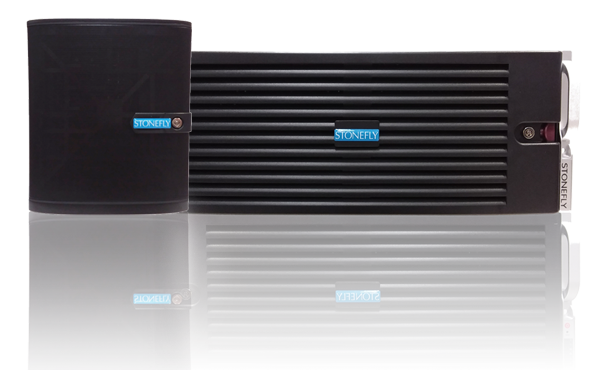
StoneFly delivers an enterprise-grade on-premises AWS-compatible S3 object storage solution that integrates seamlessly with public cloud providers, including AWS and other S3-compatible platforms. This enables organizations to build hybrid architectures that combine on-prem and cloud storage while maintaining unified replication policies.
StoneFly supports multiple deployment modes—air-gapped, immutable, or standard—allowing enterprises to tailor their object storage to meet internal security, compliance, and performance requirements. Whether you’re enforcing ransomware protection with immutability, isolating systems via air-gapping, or combining both, StoneFly provides the flexibility to match the environment to the workload.
Replication between on-prem and cloud storage is fully supported, making it possible to synchronize data across geographically distributed systems, maintain offsite backups, or support low-latency access in multiple regions. Designed specifically for enterprise use cases, StoneFly’s platform has been deployed in high-security, high-availability environments, and has been tested for scale and performance.
For organizations evaluating AWS-compatible S3 object storage with built-in replication capabilities and enterprise-level reliability, StoneFly offers a proven foundation.
Replicating AWS-compatible S3 object storage requires a strategic balance between automation, control, and compatibility. Cross-region replication delivers real-time consistency for new data, batch replication fills historical gaps, and manual copying offers flexibility across unsupported environments. The right approach depends on how your architecture is built—and how critical your data is to business continuity.
Explore StoneFly’s enterprise-ready AWS-compatible S3 object storage to simplify hybrid replication and secure your data at scale. Contact us to discuss your projects today.







Join our mailing list to receive the latest news, updates, and promotions from StoneFly.