Enterprise data storage has become a critical pillar for modern organizations that must manage petabytes of information while ensuring performance, security, and compliance. Traditional infrastructures alone can no longer keep pace with these demands. This is why enterprise hybrid cloud strategies are reshaping how IT leaders think about enterprise data storage solutions.
By combining the speed and control of on-premises systems with the elasticity of enterprise cloud data storage, companies gain the best of both worlds. Hybrid storage environments enable IT teams to maintain mission-critical workloads locally while tiering secondary or archival data to the cloud. This makes hybrid cloud storage solutions not just an option but a necessity for businesses that need to balance cost, agility, and regulatory requirements.
At the same time, enterprise cloud backup services have become a cornerstone of resilience strategies. With ransomware, accidental deletions, and hardware failures on the rise, enterprises are integrating cloud-based recovery alongside their hybrid cloud storage platforms. As a result, enterprise hybrid cloud deployments are no longer just about storage—they are about building scalable, secure, and future-ready enterprise data storage ecosystems.
Why Enterprise Data Storage Needs Are Changing Rapidly
Enterprise data storage requirements are growing more complex as businesses manage structured, unstructured, and real-time data across global locations. Traditional storage architectures cannot keep up with the demands of analytics, compliance, and modern applications. To address these challenges, enterprises are adopting enterprise hybrid cloud infrastructures that combine on-premises control with enterprise cloud data storage flexibility.
This shift reflects a broader need for scalability, agility, and built-in resilience. Hybrid storage models give enterprises the ability to expand capacity on demand while maintaining high-performance systems for mission-critical workloads. At the same time, enterprise cloud backup services are integrated to deliver strong disaster recovery capabilities, ensuring data is always protected and recoverable.
Drivers Behind Hybrid Cloud Storage Solutions in Enterprises
Several key trends are pushing organizations toward enterprise hybrid cloud strategies:
- Explosive data growth: Enterprises must store petabytes of information, making enterprise data storage solutions that blend local and cloud resources essential.
- Regulatory compliance: Hybrid cloud storage solutions enable organizations to meet data sovereignty requirements by keeping sensitive records on-premises while using enterprise cloud data storage for less critical workloads.
- Operational resilience: Enterprise cloud backup services provide redundancy and offsite recovery, strengthening business continuity.
- Cost optimization: Hybrid storage architectures allow companies to avoid overprovisioning hardware by leveraging enterprise cloud data storage for scalability.
The combination of enterprise hybrid cloud systems and enterprise cloud backup services ensures that organizations can adapt to new demands without compromising performance, security, or compliance. This is why hybrid cloud storage solutions are rapidly becoming the foundation of modern enterprise data storage strategies.
How Hybrid Cloud Storage Solutions Work for Enterprises
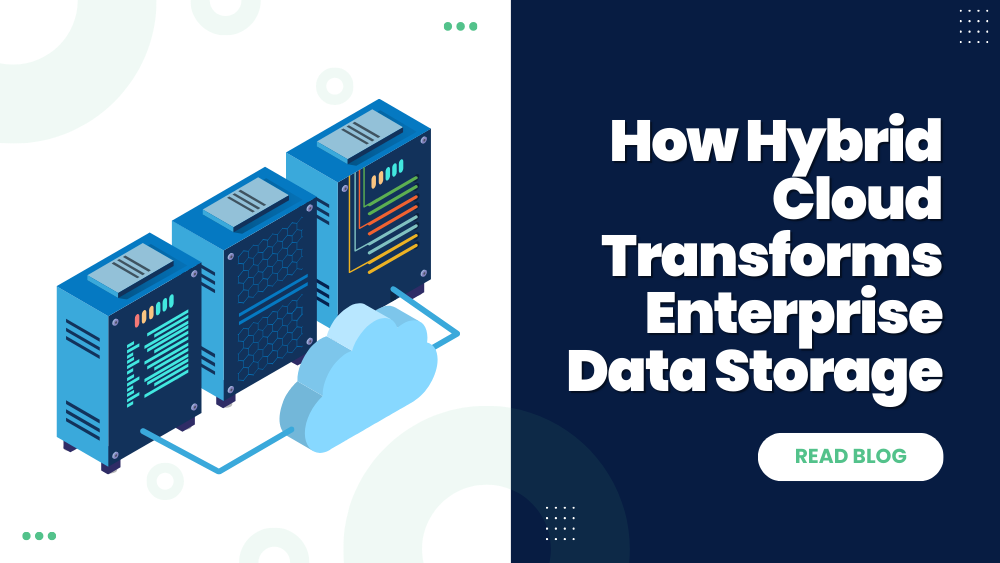
Hybrid storage combines on-premises infrastructure with enterprise cloud data storage, giving enterprises the flexibility to manage performance-sensitive workloads locally while scaling into the cloud for long-term retention and cost savings. By blending enterprise data storage solutions with cloud resources, organizations build enterprise hybrid cloud environments that can adapt to fluctuating demands without overprovisioning hardware.
A key component of these systems is seamless integration with enterprise cloud backup services. Backups, snapshots, and replicas can be automatically directed to cloud storage, ensuring redundancy and protecting against threats such as ransomware or regional outages. This makes enterprise hybrid cloud deployments resilient by design, with hybrid storage ensuring both high availability and disaster recovery readiness.
The Technical Architecture Behind Enterprise Hybrid Cloud Storage
The effectiveness of hybrid cloud storage solutions depends on the technical architecture that connects local and cloud environments:
- Storage gateways and connectors: These enable secure, low-latency communication between on-premises arrays and enterprise cloud data storage.
- Tiered storage models: Frequently accessed data remains in high-performance local storage, while archival or compliance-driven data is moved to enterprise cloud data storage tiers.
- Policy-driven automation: Enterprise hybrid cloud systems use policies to determine where data resides, moving information between hybrid storage layers based on performance, lifecycle, or compliance requirements.
- Integrated enterprise cloud backup services: Cloud-based backup protects against data loss, hardware failures, and cyberattacks while providing rapid recovery capabilities.
- Unified management platforms: Centralized dashboards allow IT teams to manage enterprise data storage solutions across hybrid environments, monitor costs, and ensure governance.
This architecture enables enterprises to build enterprise hybrid cloud systems that combine the speed and reliability of local infrastructure with the flexibility and scalability of enterprise cloud data storage. When combined with enterprise cloud backup services, these hybrid storage frameworks provide a secure and future-ready foundation for enterprise data storage strategies.
How Enterprise Hybrid Cloud Storage Delivers Real Business Value
Enterprises adopting hybrid storage strategies gain more than just extra capacity—they unlock a flexible, secure, and scalable foundation for long-term growth. By merging on-premises infrastructure with enterprise cloud data storage, organizations create enterprise hybrid cloud environments that can dynamically adjust to evolving business and regulatory demands.
One of the primary benefits of enterprise data storage solutions designed with hybrid models is scalability. Companies can start with high-performance local systems and seamlessly extend workloads into enterprise cloud data storage without the need for costly hardware overhauls. This eliminates overprovisioning while ensuring resources are always available for mission-critical applications.
Enterprise cloud backup services also play a critical role in strengthening hybrid storage strategies. Backups stored in the cloud provide rapid disaster recovery, protection against ransomware, and resilience against site-level failures. This combination ensures that enterprise hybrid cloud systems deliver business continuity while keeping compliance and governance intact.
Why Enterprises Rely on Hybrid Cloud Storage Solutions
- Scalability on demand: Enterprise hybrid cloud storage eliminates capacity limits by integrating enterprise cloud data storage for expansion when needed.
- Cost optimization: Enterprise data storage solutions allow organizations to keep only mission-critical data on-premises while leveraging lower-cost enterprise cloud data storage for archiving and backups.
- Resilience and recovery: With enterprise cloud backup services integrated into hybrid storage, companies reduce downtime and maintain business continuity even in the face of cyberattacks or natural disasters.
- Compliance and security: Hybrid cloud storage solutions give enterprises control over sensitive datasets locally, while still using enterprise cloud data storage for less regulated workloads.
- Collaboration and accessibility: Enterprise hybrid cloud infrastructures make data available globally, enabling secure collaboration across teams and locations.
By combining the strengths of enterprise data storage solutions with the flexibility of enterprise cloud backup services, hybrid storage architectures give organizations the resilience and scalability they need to thrive. For enterprises managing massive data volumes, enterprise hybrid cloud strategies are no longer optional—they are essential.
What Enterprises Must Consider Before Choosing Cloud Data Storage Solutions
While enterprise hybrid cloud offers flexibility and scalability, success depends on careful planning. Enterprises cannot simply connect on-premises arrays to enterprise cloud data storage and expect seamless results. Instead, they must evaluate enterprise data storage solutions holistically, considering compliance, integration, and security.
A critical factor is data sovereignty. Many industries are bound by strict regulations that dictate where sensitive information can be stored. Hybrid storage models allow enterprises to keep critical datasets locally while leveraging enterprise cloud backup services for redundancy. However, choosing the wrong architecture could result in compliance violations.
Another key consideration is integration with existing infrastructure. Enterprise hybrid cloud deployments must connect smoothly with legacy applications, virtualization platforms, and databases. Without this alignment, hybrid cloud storage solutions may create silos instead of streamlining operations.
Key Factors in Enterprise Data Storage Solutions
- Security and compliance requirements: Enterprises must ensure hybrid storage aligns with industry standards while protecting workloads in both on-premises and enterprise cloud data storage tiers.
- Vendor lock-in risks: A single-provider approach can limit flexibility. Enterprise hybrid cloud strategies should support multiple enterprise cloud backup services and storage providers.
- Data governance and lifecycle management: Policies must dictate how data moves between hybrid storage layers to meet performance and retention requirements.
- Performance and latency: Enterprise hybrid cloud systems must balance speed for local workloads with accessibility in enterprise cloud data storage.
- Cost transparency: Hybrid storage strategies should include tools for tracking and managing costs across enterprise data storage solutions.
By addressing these considerations, enterprises can design enterprise hybrid cloud environments that maximize performance, strengthen resilience with enterprise cloud backup services, and meet long-term compliance requirements.
How Enterprises Can Implement Hybrid Cloud Storage Effectively
Adopting enterprise hybrid cloud is not just about adding capacity to existing systems; it requires a structured approach that aligns with business objectives, compliance needs, and IT performance requirements. Enterprises must evaluate how hybrid storage integrates into their broader enterprise data storage solutions before moving workloads.
Steps to Implement Enterprise Hybrid Cloud Storage
- Assess workloads and requirements
Enterprises should begin by analyzing current enterprise data storage environments. Identify mission-critical workloads that demand low latency and high performance for on-premises storage, while designating archival or less critical data for enterprise cloud data storage tiers.
- Define compliance and governance policies
Hybrid cloud storage solutions must comply with industry regulations. Enterprises should establish governance rules for where data resides, how it moves between hybrid storage layers, and how retention requirements are enforced.
- Select the right enterprise hybrid cloud providers
The choice of providers matters for cost, scalability, and interoperability. Enterprises should ensure that chosen enterprise data storage solutions support seamless integration between on-premises systems and cloud infrastructure.
- Integrate with existing infrastructure
Successful hybrid storage requires tight alignment with virtualization platforms, databases, and applications. Enterprises must ensure that enterprise hybrid cloud deployments do not create silos but extend the functionality of current systems.
- Monitor, optimize, and scale
Once implemented, enterprises should use management tools to monitor costs, track data movement, and optimize performance across hybrid storage tiers. Enterprise hybrid cloud strategies must remain adaptable as workloads and business needs evolve.
By following these steps, organizations can design enterprise hybrid cloud infrastructures that balance the performance of on-premises systems with the flexibility of enterprise cloud data storage. This approach ensures that hybrid storage becomes an integral part of long-term enterprise data storage strategies.
Conclusion
Enterprise hybrid cloud has become the foundation of modern enterprise data storage. By combining the performance of on-premises infrastructure with the scalability of enterprise cloud data storage, hybrid storage delivers flexibility, compliance, and cost efficiency. For enterprises, adopting enterprise data storage solutions that integrate cloud resources is no longer optional—it is essential for meeting growing demands and future-proofing IT strategies.