
A few years ago, the question of whether to replace VMware would have been treated as fringe thinking in most enterprise IT departments. VMware was the category. It had been the category for two decades, and the switching costs — migration effort, staff retraining, integration work, risk to production systems — were significant enough that most organizations renewed their licenses and moved on.
That calculus shifted after Broadcom’s acquisition of VMware and the licensing restructuring that followed. Enterprises that had been running VMware on perpetual licenses found themselves facing mandatory subscription conversions, significantly higher costs, and elimination of product bundles they had built their infrastructure around. The question stopped being fringe and became urgent. The evaluation of VMware alternatives is a mainstream enterprise activity, not a theoretical exercise.
This guide covers the platforms enterprises are moving to, what each one actually delivers, how to build a structured evaluation process, and what migration looks like in practice. The goal is not to recommend a single platform — no single platform is the right answer for every organization. The goal is to give IT leaders the framework to make the right choice for their specific workloads, compliance environment, and operational reality.
The drivers behind VMware departures are not primarily technical. VMware’s hypervisor technology remains capable. The issues are structural: pricing, licensing predictability, vendor lock-in, and strategic alignment with the direction organizations want to take their infrastructure.
The Broadcom acquisition eliminated perpetual licensing for VMware products and moved all customers to subscription-based models. For enterprises that had been running paid-up perpetual licenses with annual support contracts, this represented a substantial increase in recurring costs. The bundling changes that accompanied the transition — where products previously sold separately were consolidated into larger bundles, requiring customers to pay for capabilities they did not use to access the ones they did — compounded the cost impact.
The total cost increase varies significantly by environment size and licensing history, but reports from enterprises across industries consistently indicate that VMware’s cost under the new model is two to five times higher than their previous arrangements. For large environments, this represents millions of dollars in additional annual expenditure — money that IT departments are choosing to redirect toward migration rather than renewal.
Beyond cost, enterprises have become more attuned to the strategic risk of deep dependency on a single vendor’s proprietary ecosystem. VMware’s stack — vSphere, vCenter, NSX, vSAN — is tightly integrated in ways that make it performant and manageable, but those same integrations make migration difficult and create leverage for the vendor in pricing negotiations. Organizations that have invested years in building VMware-specific automation, management tooling, and operational processes find themselves in a position where switching is genuinely painful.
The experience of the Broadcom transition has made this risk tangible in a way that theoretical vendor lock-in arguments previously had not. IT leadership teams that were once comfortable with VMware dependency are now actively seeking platforms built on open standards, with open APIs and compatibility with the broader ecosystem of tools their organizations use.
A third driver is the shift in workload architecture. Enterprises that have been progressively moving toward containerized applications, Kubernetes orchestration, and cloud-native deployment models find that VMware’s VM-centric model creates friction with those practices. The platforms gaining ground as VMware alternatives tend to have stronger native integration with Kubernetes, better support for hybrid cloud workflows, and architectures that treat containers and VMs as coequal deployment targets rather than forcing containers into a VM substrate.
The evaluation framework for a VMware replacement needs to cover more ground than a typical software procurement decision. The stakes are higher because virtualization infrastructure is foundational — everything else runs on top of it. A poor choice is not easily reversed without significant effort and downtime.
Vendor benchmarks are not a reliable basis for performance comparison. They are measured under conditions that favor the vendor’s platform and rarely reflect the mixed workloads, competing demands, and environmental constraints of real production environments. The only meaningful performance evaluation is testing the candidate platform under workloads that resemble your own — your databases, your VM density targets, your live migration patterns, your storage access profiles.
Key metrics to evaluate include CPU overhead and efficiency at the hypervisor level, memory balloon driver behavior under memory pressure, I/O throughput and latency consistency under sustained load, live migration time and performance impact during migration, and VM boot time for dense deployments. These numbers should be compared against your current VMware baseline, not against each other in isolation.
Management is where organizations most often underestimate the cost of switching. VMware’s vCenter and ecosystem of management tools represent years of operational familiarity for most enterprise IT teams. The alternative platform’s management interface, automation capabilities, and integration with existing monitoring, alerting, and ticketing systems determine how much operational overhead the new environment introduces. A platform that is technically superior but requires significantly more administrative effort to maintain is not necessarily the right choice if the organization does not have the staffing to absorb that overhead.
Evaluate how each candidate platform integrates with the automation frameworks already in use — Ansible, Terraform, PowerShell, REST APIs — and how its management interface maps to the daily operational tasks your team performs most frequently. Platforms that align with existing tooling reduce the retraining burden and lower the risk of operational gaps during and after migration.
The primary driver for most VMware evaluations is cost, so the licensing analysis needs to be done with rigor. Compare per-core, per-socket, per-node, and subscription models across candidates. Account for what each pricing tier includes and excludes — management tools, storage integration, security features, and disaster recovery capabilities that were bundled in VMware may be separately licensed in alternatives. A platform with a lower headline price but many separately licensed components can produce a higher total cost than it initially appears.
The five-year TCO calculation should include migration costs — staff time, any necessary hardware changes, third-party tooling, and potential downtime costs — as well as the ongoing operational cost differential between managing the new platform and managing VMware. Organizations that cut licensing costs but increase operational complexity can end up with a neutral or negative TCO outcome.
Enterprises operating hybrid environments need to verify how each candidate platform integrates with their cloud provider relationships. The depth of integration matters — whether the platform can extend workloads to cloud without additional gateway layers, whether it supports native cloud APIs for provisioning and monitoring, and whether workloads can move between on-premises and cloud with consistent management tooling. Platforms that create management silos between on-premises and cloud operations add complexity that compounds over time.
Each platform discussed below has a genuine enterprise install base and addresses real operational requirements. The evaluations below are structured around what each platform does well, where it has limitations, and which organizational profiles it fits best.
For enterprises already heavily invested in the Microsoft ecosystem — Windows Server, Active Directory, Azure, System Center — Hyper-V is the path of least resistance. It is built into Windows Server Datacenter Edition, which means organizations running Windows Server already have access to it without additional hypervisor licensing. The management toolchain — Windows Admin Center, System Center Virtual Machine Manager, PowerShell — is familiar to Windows-centric IT teams and integrates with the identity and access management infrastructure they already operate.
Azure Stack HCI extends this model to a purpose-built hyperconverged infrastructure that connects on-premises Hyper-V clusters with Azure services. Azure Arc provides a unified management plane across on-premises and Azure resources, and Azure Site Recovery enables workload replication and disaster recovery to Azure without third-party tooling. For organizations pursuing an Azure-first hybrid strategy, this integration is substantive and well-supported.
Where Hyper-V falls short relative to VMware is in advanced network virtualization — Hyper-V’s software-defined networking capabilities are less mature than VMware NSX — and in multi-cloud environments where Azure is not the primary cloud provider. Organizations with significant AWS or GCP investment will find Hyper-V’s native integration limited outside the Azure ecosystem. It is the right choice for Microsoft-centric enterprises and the wrong choice for cloud-agnostic or multi-cloud strategies.
Proxmox VE has become the most commonly tested VMware alternative among enterprises conducting proofs of concept. Its combination of KVM-based virtual machines and LXC container support under a unified web-based management interface makes it accessible to teams without deep Linux expertise, while its open-source foundation and REST API make it fully scriptable for organizations that want infrastructure-as-code management.
The platform supports high-availability clustering, live migration, integrated backup to Proxmox Backup Server, and native Ceph storage integration for software-defined storage that scales with the cluster. The subscription model is straightforward: community support is available without payment, and enterprise repository access with commercial support is available at a per-socket fee that is substantially lower than VMware’s equivalent.
The honest limitation of Proxmox for large enterprises is the depth of the vendor support ecosystem. Organizations accustomed to VMware’s partner network, certified integrations, and global support infrastructure will find Proxmox’s ecosystem smaller. For organizations with strong in-house Linux expertise and a preference for operational control over vendor hand-holding, this is manageable. For organizations that depend heavily on vendor-provided support for day-to-day operations, it requires a realistic assessment of internal capability.
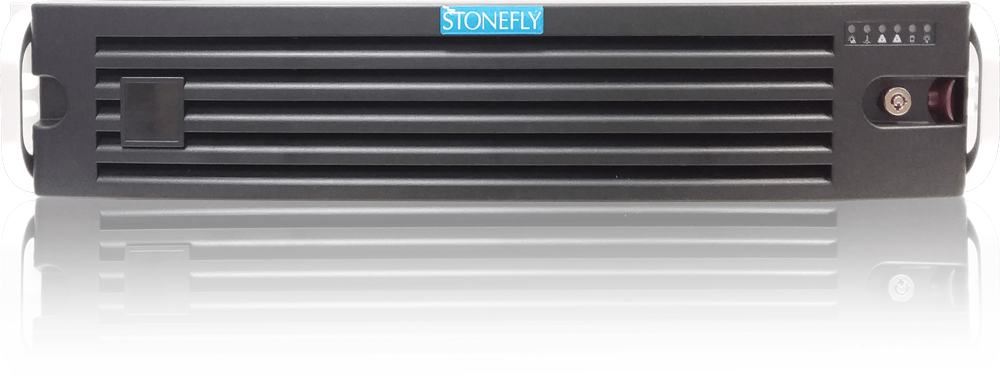
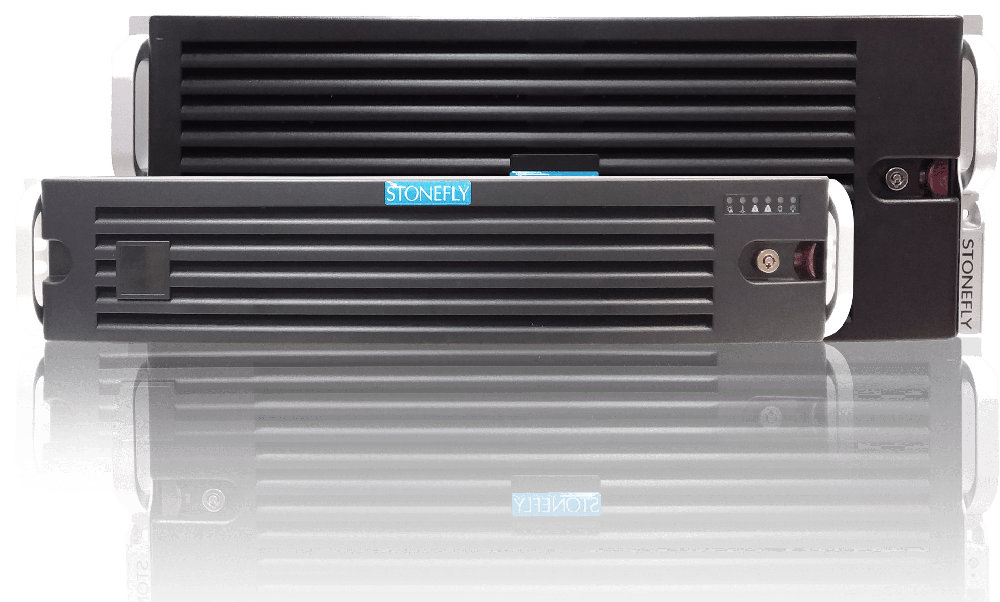
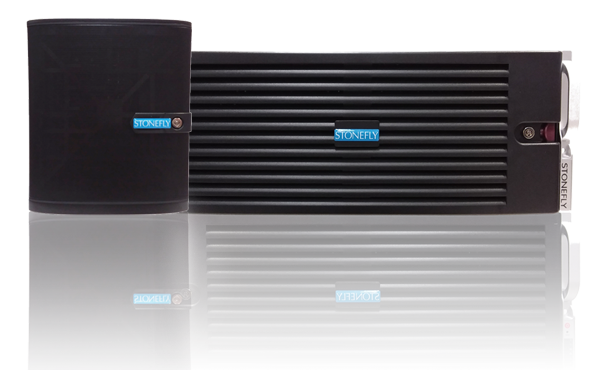
Looking for a VMware alternative appliance? Check out StoneFly’s Turnkey Proxmox VE appliance.
Nutanix AHV is the hypervisor built into the Nutanix hyperconverged infrastructure platform. It ships without a separate license fee — the hypervisor is included with the Nutanix AOS subscription — which removes one of the primary cost drivers in VMware environments. The management interface, Prism Central, provides a unified view of VM provisioning, data protection, performance monitoring, and policy management across clusters.
AHV’s strength is its deep integration with Nutanix’s storage and data protection stack. Snapshot-based backup, asynchronous replication, and disaster recovery orchestration are built into the platform and configured through the same management interface as VM provisioning. This eliminates the operational complexity of coordinating separate hypervisor, storage, and backup products — a complexity that is significant in large VMware environments.
The constraint with Nutanix AHV is hardware dependency. Nutanix HCI is designed around Nutanix-validated hardware configurations. Organizations that want to deploy AHV on existing non-Nutanix hardware, or that want hypervisor flexibility across heterogeneous hardware environments, will find this limiting. AHV is the right choice for organizations that are also adopting Nutanix HCI as their infrastructure platform. It is not the right choice for organizations looking for a standalone hypervisor replacement that runs on existing hardware.
KVM — the Kernel-based Virtual Machine — is the hypervisor layer that underpins much of the Linux-based virtualization ecosystem, including Proxmox, oVirt, Red Hat Virtualization, and the virtualization layer in OpenStack. As a standalone technology, KVM converts a Linux host into a Type 1 hypervisor and supports a wide range of guest operating systems with strong isolation and security properties.
oVirt is the enterprise management layer built on KVM, providing centralized VM management, live migration, snapshot support, and storage domain management through a web-based console. Red Hat Virtualization (RHV) is the commercially supported distribution of oVirt, backed by Red Hat’s enterprise support and integrated with Red Hat Enterprise Linux and Ansible automation. RHV is reaching end-of-life and Red Hat is transitioning customers toward OpenShift Virtualization, which runs VM workloads within a Kubernetes platform.
For organizations with existing Red Hat relationships and Linux-centric environments, this stack provides a clear migration path from VMware with commercial support backing. The tradeoff is that OpenShift Virtualization represents a more significant architectural shift than simply replacing a hypervisor — it requires adopting Kubernetes as the management platform for VM workloads, which some organizations are ready for and others are not.
XCP-ng is the open-source community fork of Citrix Hypervisor (formerly XenServer), and it has gained significant traction as a VMware alternative because of its familiar enterprise feature set: live migration, high availability, storage integration, and a clean management interface through Xen Orchestra. Organizations that want an open-source platform with a management experience that more closely resembles VMware vSphere than KVM-based alternatives do often find XCP-ng the most comfortable transition.
Xen Orchestra provides the management interface — available as a self-hosted open-source application or as a paid cloud-hosted service. It covers VM lifecycle management, backup scheduling, storage management, and performance monitoring in a unified interface that requires less Linux expertise to operate than raw KVM tooling. For environments that need I/O-intensive workloads with strong isolation between VMs, XCP-ng’s Xen hypervisor architecture provides security and isolation properties that are well-suited to multi-tenant or compliance-sensitive environments.
For organizations whose primary VMware use case is Virtual Desktop Infrastructure, Citrix Hypervisor deserves specific consideration. It is purpose-built for VDI workloads and integrates directly with Citrix Virtual Apps and Desktops — eliminating the integration layer that exists when combining VMware infrastructure with Citrix delivery. The native GPU virtualization support through NVIDIA vGPU makes it a strong option for organizations running graphics-intensive virtual desktops for engineering, design, or media production teams.
Outside of VDI workloads, Citrix Hypervisor is not a general-purpose VMware replacement. Organizations looking to replace VMware for mixed workloads — databases, application servers, file services, and VDI — will find that Citrix Hypervisor is an excellent VDI platform but not the right single-platform answer for the full workload mix.
Scale Computing HC3 is a hyperconverged platform that bundles compute, storage, virtualization, and management into a single appliance-based system. Its primary value proposition is simplicity: a small IT team can deploy, manage, and scale an HC3 cluster without the specialized expertise that VMware or most open-source alternatives require. The management interface is designed for non-specialists, and the self-healing cluster architecture handles hardware failures automatically without administrator intervention.
HC3 is specifically strong for remote office/branch office deployments, edge computing environments, and mid-market organizations that need reliable virtualization without a dedicated virtualization specialist on staff. It is not the right platform for very large enterprise deployments with thousands of VMs and complex networking requirements — the ecosystem depth and feature set do not scale to that level. But for the use cases it targets, it delivers a compelling combination of simplicity, reliability, and cost efficiency.
VirtualBox belongs in the evaluation only if the use case is non-production. It is a capable desktop hypervisor for developer workstations, lab environments, and proof-of-concept testing — and it is free. For developers who need to spin up multi-OS environments for testing, or for IT teams that need sandboxed environments for evaluating configurations before production deployment, VirtualBox is a practical tool.
It is not a production datacenter hypervisor. It lacks enterprise features like centralized management, high availability clustering, live migration, and the support infrastructure that production workloads require. Including VirtualBox in a VMware replacement evaluation for production workloads is a category error. It belongs in the evaluation only for the specific use case of developer and lab environments.
Open-source VMware alternatives are appealing because they eliminate software licensing costs. Proxmox VE, KVM, XCP-ng, and oVirt all fall into this category in their community editions. The economics are genuinely attractive: instead of paying VMware’s per-socket or per-core licensing, organizations run equivalent hypervisor technology on the same hardware at no software cost.
The cost that open-source alternatives introduce in place of licensing fees is operational: internal expertise, support models, and the time required to manage platforms that have less vendor hand-holding than commercial offerings. VMware’s support infrastructure — documented upgrade paths, certified hardware compatibility lists, tested integrations with backup and monitoring vendors, and a large ecosystem of partners with certified expertise — represents significant operational value that is not directly replaced by open-source community support.
The honest assessment question for open-source VMware alternatives is: does your team have the Linux expertise and operational discipline to manage this platform without vendor escalation support? Organizations with strong Linux administrators who are comfortable debugging kernel-level issues, managing storage subsystems, and maintaining cluster configurations will find open-source platforms operationally manageable. Organizations whose virtualization management has been largely handled through VMware’s GUI tools with vendor support for complex issues should factor in the training and operational change that open-source platforms require.
Many enterprises adopt a hybrid approach: open-source platforms like Proxmox or XCP-ng for development, test, and staging environments, where the cost savings are immediate and the operational risk is manageable, while evaluating commercial alternatives for production workloads where the support requirement is higher. This staged approach allows organizations to build internal expertise on open-source platforms before committing to them for production.
All of the major open-source VMware alternatives offer commercial support options that provide the support model organizations need for production workloads. Proxmox’s enterprise subscription provides access to the enterprise repository (which has more conservative, tested updates than the community repository) and commercial support SLAs. Red Hat backs oVirt through RHV support contracts. XCP-ng has commercial support available through Vates. These support options change the cost comparison from “free vs. VMware” to “commercially supported open-source vs. VMware” — which often still favors the alternative, but with more realistic operational parameters.
Across the platforms evaluated above, enterprise capabilities cluster around several areas that matter most for production virtualization environments.
All of the platforms discussed — Hyper-V, Proxmox, Nutanix AHV, KVM/oVirt, XCP-ng, and Scale Computing HC3 — support high availability clustering and live migration. This was a VMware differentiator in the early years of enterprise virtualization, but it is now a commodity feature. The differences lie in configuration complexity, the conditions under which live migration performance degrades, and the automation tooling around HA events.
This is where platforms diverge more significantly. Nutanix AHV has the most complete built-in data protection story, with snapshot-based backup, replication, and DR orchestration included in the platform without additional licensing. Proxmox includes integrated backup to Proxmox Backup Server with incremental backups and deduplication. Hyper-V’s native backup capabilities are more limited and most enterprises supplement with Azure Backup or third-party backup tools.
For KVM-based platforms and XCP-ng, backup typically depends on third-party solutions. Most enterprise backup vendors — Veeam, Commvault, Veritas — support KVM-based platforms, and Veeam specifically has strong support for Nutanix AHV and Proxmox. Organizations transitioning from VMware should verify that their existing backup tooling supports the target platform before committing to it.
VMware NSX has set a high bar for software-defined networking in virtualization environments. None of the current VMware alternatives match NSX’s feature depth natively. Organizations that have built significant network virtualization capabilities on NSX — micro-segmentation, distributed firewalling, network automation — should treat this as a significant migration complexity, not a simple replacement. The alternatives approach SDN through different mechanisms: Nutanix Flow for microsegmentation within AHV, Open vSwitch for KVM-based environments, and Hyper-V’s Virtual Switch with Azure-integrated SDN capabilities.
Migration from VMware to an alternative platform is a significant undertaking that requires structured planning to execute without unacceptable downtime or risk. The organizations that manage this well share a common approach: they treat migration as a phased program with clearly defined stages, not as a single cutover event.
The first stage is a complete inventory of what is running on VMware. This means documenting every virtual machine — its operating system, CPU and memory allocation, storage configuration, network configuration, and application dependencies. Dependencies are where migrations most frequently encounter problems: an application that depends on a specific network configuration, a VM that shares storage with other VMs in a way that is not immediately obvious, or a workload that uses VMware-specific features like vSphere vGPU passthrough or VMware Tools in ways that require equivalent configuration on the target platform.
Automated discovery tools can accelerate this inventory process but do not replace the validation step where application owners and infrastructure teams review the output for accuracy. Automated tools are reliable for capturing hardware configuration; they are less reliable for capturing application-level dependencies that are not visible from infrastructure metrics.
Migrating all workloads simultaneously is the highest-risk migration approach. A phased migration moves workloads in defined batches, starting with non-critical systems — development environments, test systems, non-production applications — where failures can be tolerated and learned from. Each phase validates the migration process and the target platform before higher-stakes workloads are moved.
Tools for the technical migration include virt-v2v for converting VMware VM disk images to KVM-compatible formats, Veeam Backup and Replication for replication-based migration where the VM is replicated to the target platform and cut over, and platform-native migration tools provided by Nutanix (Nutanix Move) and Microsoft (Azure Migrate for Hyper-V). Each approach has tradeoffs in terms of downtime, data validation, and complexity.
For each workload migration, the validation process after migration is as important as the migration itself. Verify that the application starts correctly, that it performs comparably to the VMware baseline, that network connectivity is intact, and that backup policies are in place before decommissioning the VMware source VM. Organizations that skip this validation step to accelerate the migration timeline tend to discover problems after the VMware source is gone, when the ability to roll back has been eliminated.
During the transition period, organizations are running two virtualization platforms simultaneously. This has operational implications: the monitoring, alerting, and incident response processes need to cover both environments, backup policies need to be maintained for workloads on both platforms, and the team needs to maintain expertise in both systems. Planning for this operational overhead upfront — rather than discovering it as an unplanned burden mid-migration — reduces the risk of incidents going undetected or unresolved during the transition.
The VMware migration wave of 2025–2026 is accelerating a broader shift in enterprise virtualization architecture. Several trends are shaping where the discipline is going over the next few years.
The separation between virtual machine management and container orchestration is narrowing. Red Hat’s OpenShift Virtualization runs VMs as Kubernetes workloads. Proxmox manages both VMs and LXC containers through the same interface. Nutanix is expanding its Kubernetes integration. The trajectory is toward unified platforms that manage VMs and containers with consistent tooling, policies, and monitoring — which will be a significant operational simplification for organizations currently managing separate systems for each.
The Broadcom/VMware pricing experience has made enterprises more attuned to the long-term cost of proprietary lock-in than they were before. This is creating durable demand for platforms built on open standards — open APIs, open storage protocols, compatibility with multiple orchestration frameworks — that give organizations meaningful portability options. Platforms that require proprietary management agents, proprietary storage formats, or proprietary network overlays to deliver their key capabilities are facing greater scrutiny in procurement decisions.
Infrastructure management automation — policy-based provisioning, predictive capacity planning, automated workload placement and rebalancing — is becoming a standard expectation rather than a premium feature. Platforms that can automate routine management tasks without requiring custom scripting reduce the operational overhead burden that is one of the primary cost drivers in large virtualization environments. The competition for this capability is intense across all the platforms discussed here, and the pace of feature development is accelerating.
There is no single VMware alternative that is the right answer for every enterprise. Microsoft Hyper-V is the right answer for organizations deeply invested in the Microsoft stack and Azure. Nutanix AHV is the right answer for organizations adopting Nutanix HCI. Proxmox VE is the right answer for cost-conscious enterprises with strong Linux expertise. XCP-ng is the right answer for organizations that want an open-source platform with a management experience closer to vSphere. Scale Computing HC3 is the right answer for edge and mid-market deployments that prioritize simplicity.
What is consistent across all successful VMware migrations is the evaluation process: structured performance testing under real workload conditions, honest assessment of internal operational capability, complete TCO analysis that includes migration costs and operational overhead — not just licensing comparisons — and a phased migration approach that validates each stage before committing to the next.
The organizations that are navigating this transition well are not those that made the fastest decision or chose the cheapest platform. They are those that invested in the evaluation process seriously, built internal expertise before committing to production migration, and treated the transition as a multi-year program rather than a single project. VMware is not being replaced overnight, and the enterprises that act like it is tend to learn that the hard way.



Join our mailing list to receive the latest news, updates, and promotions from StoneFly.