
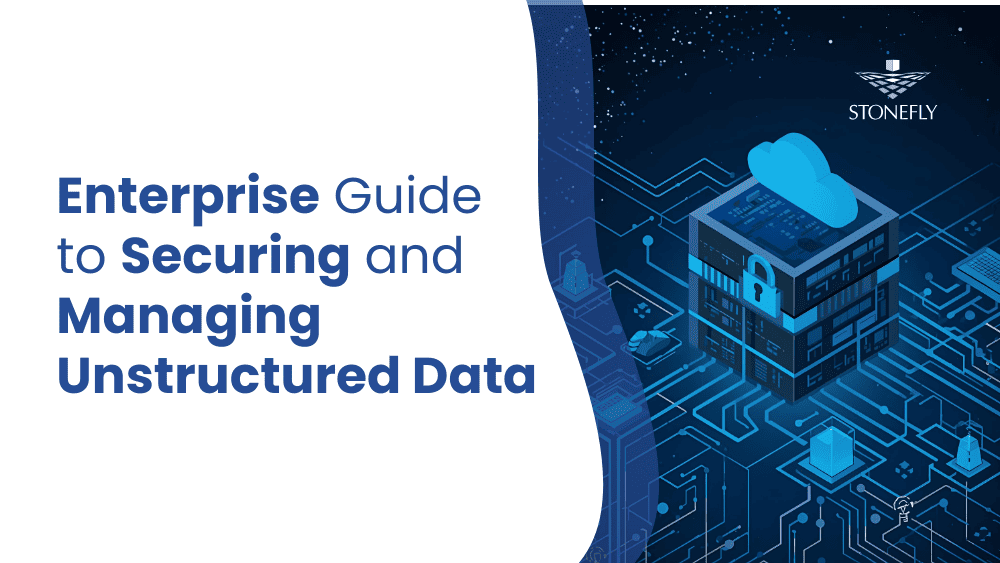
Enterprise environments are generating and storing more unstructured data than ever before. This growth is fueled by hybrid work models, collaboration tools, high-definition media, IoT devices, and documents created by employees across departments. Recent industry estimates show that unstructured data makes up more than 80% of enterprise data—and that number keeps climbing. Even though this data plays a critical role in analytics, decision-making, and delivering customer experiences, it often remains poorly governed and under-protected.
Unstructured data doesn’t follow a consistent structure like the rows and columns of a traditional database. It includes items like emails, images, videos, text files, PDF documents, source code, and logs from surveillance or customer support systems. Because this data is stored in a variety of formats and locations—ranging from local devices and file shares to cloud-based platforms—traditional IT security tools often fall short. As a result, many organizations are left managing scattered, unmonitored files that can potentially expose sensitive information or create blind spots in operational oversight.
When left unsecured, unstructured data opens the door to real risks. An exposed document could include intellectual property, internal legal analysis, customer communications, or sensitive personal information. Leaks involving data protected by privacy regulations such as GDPR, HIPAA, or CCPA can result in steep fines or reputational harm. Adding to the difficulty, most unstructured data lacks labels or tags that help IT teams determine what’s valuable, outdated, or redundant.
Traditional cybersecurity tools haven’t been designed to handle the volume and variety of unstructured data. Files are created, edited, and shared across different platforms and devices—often without clear visibility into access history or movement. This distributed nature makes it easier for attackers to target vulnerabilities using phishing tactics, ransomware, or internal misuse.
In this blog, we’ll cover key strategies enterprises can use to manage unstructured data more effectively. We’ll start by clearly defining what qualifies as unstructured data and why it requires a different approach from structured datasets. From there, we’ll take a closer look at classification—examining why it’s critical, where the common challenges lie, and how automation can simplify the process. We’ll then highlight proven methods for securing unstructured data, such as access controls, encryption, and endpoint defense.
We’ll wrap up with practical steps organizations can take to ensure privacy and compliance as part of a broader data protection strategy—whether they’re managing data in on-premises environments, in the cloud, or across hybrid infrastructure.
StoneFly offers purpose-built solutions that help enterprises simplify the way they secure unstructured data. With our integrated tools, organizations can improve visibility, strengthen data protection policies, and scale securely—without adding unnecessary complexity.
In enterprise environments, data generally falls into one of three categories: structured, semi-structured, and unstructured. Distinguishing between these formats is essential for effective data management, security, and storage planning. As businesses generate and collect more data from applications, user interactions, and connected devices, it’s increasingly important to understand what unstructured data is and how to manage it effectively.
Of the three types, unstructured data is often the most difficult to handle. Structured data is highly organized, stored in predefined formats like relational databases or spreadsheets. It’s easily searchable with tools like SQL and commonly includes numeric or text-based data arranged in rows and columns. Semi-structured data—such as XML and JSON—contains tags or markers that provide some structure, though it doesn’t fit neatly into a relational system.
Unstructured data, by contrast, does not follow a standard format or schema. It’s not easily stored in traditional databases and tends to lack the metadata that makes data easier to search or analyze. Common examples include emails, PDFs, Word documents, images, audio and video files, chat logs, maps, and sensor output from IoT devices. Because of its irregular structure, this type of data is harder to classify, secure, and manage—especially at scale.
Historically, enterprise storage was designed to support structured data. However, it’s now estimated that more than 80% of enterprise data is unstructured. This type of data is often distributed across endpoints, file shares, SaaS platforms, on-prem servers, and public or private cloud environments. Such sprawl makes organizational visibility and oversight especially difficult.
One of the core issues with unstructured data is the lack of reliable metadata. Without attributes like ownership, sensitivity level, or access history, identifying and securing data becomes a manual and time-consuming process. This leaves organizations vulnerable to data loss, mismanagement, or non-compliance with regulatory requirements.
Security is another challenge. Incidents involving unsecured emails, poorly configured shared folders, or backup copies falling into the wrong hands have become common. Protecting unstructured data calls for deeper insight into who is accessing the data, when, why, and how—and requires ongoing encryption, access controls, and monitoring at a granular level.
Data generated from collaboration platforms, video meetings, and smart devices adds complexity. These tools often produce data that isn’t automatically indexed or managed, including temporary files, recordings, logs, and media assets. Without strong classification processes in place, businesses risk losing control over their data and falling out of compliance with laws like GDPR, CCPA, or HIPAA.
To manage unstructured data effectively, organizations need to assess their current infrastructure, tools, and governance practices and update them to meet new demands:
– Traditional backup and archiving systems often fall short when it comes to managing version history, user-level access, and context for unstructured data types.
– Monitoring tools should go beyond basic access logs, incorporating behavioral analysis and anomaly detection to flag unusual activity or unauthorized modifications.
– Indexing must be smarter—using advanced parsers to process a wide range of formats, from scanned images and video files to industrial sensor logs.
– A unified storage approach should blend high-speed hybrid cloud performance with low-cost archive tiers, allowing seamless movement of files based on usage and lifecycle needs.
Solutions built for unstructured data must be scalable, adaptable, and compatible with modern data governance frameworks. With the help of tools that can analyze content and extract detailed metadata, organizations can gain a clearer picture of their unstructured data assets.
At the same time, it’s essential to apply the right security and compliance tools to ensure data protection across devices, platforms, and storage locations. IT teams need the ability to define policies around data classification, access rights, retention timelines, and secure disposal.
The ability to identify, manage, and protect unstructured data is becoming a critical part of enterprise IT strategy. Companies that approach this challenge proactively are better positioned to reduce risk, stay compliant, and make the most of the vast amount of information that moves through their systems every day.
The rapid expansion of unstructured data has introduced a significant, and often underestimated, security challenge for organizations. Unlike structured data—typically stored in databases with clearly defined access rules—unstructured data includes everything from emails and documents to PDFs, videos, chat logs, and spreadsheets. Managing and securing this type of data is far more complex due to its unpredictable nature and distribution.
To understand why unstructured data presents such a high risk, especially from a cybersecurity perspective, it helps to look at how it’s stored and accessed in most enterprise environments.
Most security infrastructures are built around structured data—systems like relational databases, financial applications, and ERP platforms. These environments benefit from robust protections, including encryption, access controls, and continuous monitoring.
By contrast, unstructured data is typically spread across user devices, shared drives, cloud platforms, collaboration tools, and external storage devices. This fragmented footprint makes it much harder to track who is accessing the data, where it’s being stored, and how it’s used. As a result, this information is far more vulnerable to abuse or unauthorized access.
Employees with wide-ranging file-level permissions further increase the risk. One compromised password or successful phishing email can give attackers access to entire systems with little to no oversight. From there, it’s possible to exfiltrate significant volumes of data before anyone notices.
Some of the most important information organizations manage is stored in unstructured files. Think of engineering plans saved as PDFs, business strategies outlined in PowerPoint presentations, or spreadsheets that contain budgets, forecasts, and customer data. Personal and confidential information, like HR files or medical records, often lives in email attachments or shared folders with limited access controls.
Regulatory requirements from agencies and laws like GDPR, HIPAA, CCPA, and PCI-DSS don’t differentiate between structured and unstructured data—if sensitive information is mishandled, the organization is responsible. Many businesses unintentionally fall out of compliance simply because they don’t have full visibility into where sensitive content resides.
A major hurdle to addressing this vulnerability is the lack of data classification. When files aren’t labeled or sorted according to sensitivity, it’s difficult to enforce encryption, permissions, or access policies. Without this foundational step, protecting unstructured data becomes a guessing game.
Several public breaches serve as strong reminders of how unstructured data can become a liability:
– Capital One’s Cloud Breach: A misconfigured S3 bucket exposed more than 100 million customer records. Though the storage itself was structured, the contents—unstructured files such as logs, documents, and communications—were not properly secured.
– Sony Pictures Hack: Attackers gained access to company emails, HR files, and unreleased scripts. The leaked data disrupted operations and caused long-term reputational damage.
– Healthcare Ransomware Attacks: Criminal groups continue to target hospitals by locking down diagnostic images, patient notes, and lab results. Without reliable backups or offline copies, many healthcare providers are left with few options but to pay the ransom.
Unstructured data tends to fly under the radar because it’s created in so many places—often outside of IT’s direct control—and doesn’t follow a predictable format. That doesn’t make it less important. In fact, its growing volume and the sensitivity of the information it carries mean organizations can’t afford to ignore it.
The first step is implementing automated tools that can scan and classify information across file systems, cloud environments, and collaboration platforms. Once sensitive files are identified, organizations need to enforce access policies, apply encryption, and use immutable backups to preserve data integrity.
Security teams should also integrate audit logging and behavior analytics to flag unusual access patterns. These insights can prevent small issues from turning into major breaches.
Protecting unstructured data is no longer just a storage issue—it’s a core part of modern cybersecurity practices. Visibility, control, and proactive security measures are essential. Knowing where your data is, who can use it, and how it’s protected isn’t just good practice—it’s a business requirement.
Meeting global data privacy standards while managing the rapid growth of unstructured data is one of the tougher challenges facing today’s enterprise IT teams. Unlike structured data stored in traditional databases, unstructured data lacks a consistent format—making it harder to categorize, protect, and control. As a result, sensitive information like personally identifiable information (PII) can be scattered across emails, documents, backup files, videos, chat logs, and PDFs—often without clear oversight.
This article breaks down how regulations such as the General Data Protection Regulation (GDPR), California Consumer Privacy Act (CCPA), and Health Insurance Portability and Accountability Act (HIPAA) guide the handling of unstructured data. It also outlines why effective strategies for unstructured data protection are essential for staying compliant, reducing risk, and securing confidential information across enterprise environments.
Privacy laws across different regions continue to evolve with stricter rules and enforcement measures. Regulations such as GDPR (Europe), CCPA (California), and HIPAA (United States) are designed to give individuals better control over their personal information. To stay compliant, organizations are expected to:
– Identify, protect, and monitor sensitive and personal data
– Handle and respond to data subject access requests (DSARs)
– Report data breaches within specific timeframes
– Maintain records that demonstrate compliance and proper safeguards
These requirements apply just as much to unstructured data as to structured systems. Unstructured repositories—including cloud drives, collaboration tools, and archived messages—frequently contain data protected under these laws. For example, a support ticket stored as an email or PDF might hold customer contact details. Without clear visibility into these formats, organizations risk missing regulated data—leading to potential fines, legal issues, or reputational damage.
HIPAA includes additional conditions for protecting health-related records, many of which are found in imaging files, transcripts, scanned documents, or handwritten forms digitized into PDFs. Managing such scattered data without the help of automation becomes difficult as information gets stored across multiple storage locations, archives, and backup systems.
IT leaders must assume sensitive data can be present in nearly any unstructured file and treat those assets with the same diligence used for structured databases.
A major hurdle in achieving compliance is the ability to accurately detect which unstructured data assets fall under existing privacy laws. Unlike structured data, which sits in well-defined tables and schemas, unstructured content varies widely and can include hidden or fragmented pieces of sensitive information that are not easy to locate.
Take a scanned ID document as an example—it might be saved in different versions across backup servers, collaboration tools, or local storage. If the right classification and scanning tools aren’t in place, it becomes nearly impossible to detect PII inside those files or to verify if encryption, access controls, or retention policies are being properly applied.
Furthermore, sensitive elements may be stored in unconventional places, such as audio transcripts, file names, or metadata. Basic keyword searches are rarely enough, which is why enterprises use specialized tools that feature natural language processing (NLP), semantic analysis, and entity recognition capabilities.
A comprehensive unstructured data platform should be able to scan and tag data both in motion and at rest. It needs to identify regulated content—even when it’s obfuscated or stored in unexpected locations. When automated classification is integrated into the data environment, organizations can significantly speed up compliance efforts and apply consistent policies across all storage platforms, including on-prem, hybrid, and cloud systems.
For IT teams, protecting unstructured data means deploying a combination of access controls, monitoring, encryption, and automated response systems. Since unstructured data often makes up more than 80% of an organization’s digital footprint, failing to secure it can leave huge gaps.
A comprehensive unstructured data protection strategy should include:
– Role-based access controls that scale with team size and user roles
– Encryption for data both at rest and while being transmitted
– Detailed audit trails that track every interaction with sensitive files
– Customizable data loss prevention (DLP) rules to block risky content movement
– Backup solutions that preserve integrity while supporting fast recovery
These security protocols not only strengthen an organization’s data safety posture but also make regulatory audits smoother—and reduce the fallout in the event of a data breach. Safeguarding unstructured data sends a clear message: protecting sensitive information is a business priority, not a checkbox on a compliance list.
Managing unstructured data goes beyond protection and storage. Organizations need a continuous governance strategy that spans the full lifecycle—from the moment data is created or received, to when it’s archived or deleted.
Effective governance practices should account for:
– Ingest: Classifying and tagging data as soon as it enters the environment
– Storage: Tracking data locations and applying controls like encryption and retention policies
– Access: Enforcing identity-based access with real-time activity monitoring
– Archival and Removal: Automating deletion processes that follow company and legal timelines
Governance tools must also integrate smoothly with storage servers, cloud systems, SaaS applications, and data protection hardware. Solutions such as StoneFly’s unstructured data platform give businesses a centralized view of data usage and policy enforcement, helping unify security and compliance efforts.
Regulations today require organizations to address unstructured data with the same level of scrutiny as structured records. By adopting clear policies, investing in smart tools for classification, and maintaining control over every stage of the data lifecycle, businesses can reduce risk, meet regulatory standards, and operate with greater confidence.
In enterprise IT environments, unstructured data has quickly become the most prevalent type of stored information. Documents, emails, images, audio files, video libraries, PDFs, and logs from various sources all contribute to this growing volume. Industry estimates suggest that as much as 80% of a company’s data falls into the unstructured category. Unlike structured data that lives in databases with clear organization, unstructured data lacks built-in context or categorization—making it more difficult to secure effectively. One of the most important steps in addressing this challenge is classifying unstructured data.
Classification involves identifying, organizing, and tagging files to provide context and make them easier to manage. It helps organizations understand what data they have, where it’s stored, and how sensitive or business-critical it is. This added layer of context enables IT teams to apply security controls more precisely—whether it’s through encryption, access management, retention rules, or active monitoring.
When unstructured data isn’t classified, valuable or regulated information—like personally identifiable details (PII), financial data, or confidential business documents—can be overlooked and left at risk in shared drives, cloud platforms, or collaboration apps. These gaps in visibility increase the risk of data breaches and non-compliance. With classification in place, however, security and compliance teams gain a clearer picture, allowing them to apply the right protections at the right time.
There are two common approaches to unstructured data classification: manual and automated.
Manual classification relies on individuals—either end users or IT staff—assigning labels to files based on their content, use, or metadata. This method is often part of document workflows or compliance reviews. It gives organizations a high degree of control because human reviewers can recognize context or legal nuance that automated tools might miss.
However, scaling manual classification across an enterprise can be difficult. Managing and tagging large volumes of data by hand is time-consuming and can introduce inconsistencies. Mistakes—either in misclassifying or overclassifying files—can lead to overlooked vulnerabilities or reduced productivity. Manual processes also struggle to keep up with the pace at which data grows in most environments.
That said, manual classification still has its place, particularly in industries with strict compliance requirements, such as banking or healthcare. It’s also a valuable resource for validating and improving automated tools.
To manage growing data volumes, many organizations adopt automated classification powered by AI and machine learning. These systems scan file contents, metadata, and patterns to determine sensitivity, context, and file ownership. Once analyzed, files are automatically tagged—streamlining the process of tracking and protecting large-scale unstructured data.
AI-based classification tools can be trained to recognize industry-specific regulations like GDPR, HIPAA, or CCPA, helping to identify compliance risks and apply the appropriate safeguards. These systems integrate with enterprise search, data indexing, and cloud data management platforms to provide consistent classification across environments.
From a security operations standpoint, automatic tagging supports access control, incident response, and policy enforcement. For instance, once a file is identified as sensitive—such as internal product plans—systems can block unauthorized sharing or restrict access according to its classification.
Automated tools do require regular monitoring and adjustment. Early deployments can produce false positives or miss key files. Over time, however, integrating human feedback helps refine accuracy and improve long-term performance.
The value of classification grows when combined with tools that support content discovery and data indexing. These solutions search across storage systems—including on-prem, cloud, and hybrid deployments—and organize metadata by file type, content, and ownership. With consistent classification in place, teams can search and filter based on regulatory needs, data sensitivity, department usage, or file age.
This kind of visibility is critical for risk management. Security teams can quickly locate files containing sensitive data, verify whether proper controls are in place, and identify any unauthorized exposure. Indexing tools also help detect redundant, outdated, or unnecessary data, reducing both security exposure and storage costs.
When classification and indexing solutions work together, teams can act with confidence—automating encryption based on sensitivity, archiving outdated files, or triggering legal hold procedures when needed.
Protecting unstructured data is a key part of modern cybersecurity strategies for enterprises. As organizations grow and rely more heavily on digital workflows, it becomes increasingly important to secure unstructured content—like emails, documents, spreadsheets, videos, PDFs, and chat logs—to maintain data privacy, ensure compliance, and keep business operations running smoothly. Unlike structured data, unstructured data is typically stored in multiple locations, spread across cloud platforms, employee devices, and collaboration tools, which makes securing it more challenging—and more important.
Enterprises should adopt a multi-layered approach to protect unstructured data. That includes encryption, role-based access control, data loss prevention, and ongoing monitoring. These solutions need to work together without slowing down everyday operations or complicating user workflows.
The following sections explore practical steps organizations can take to secure unstructured data while maintaining usability and scalability.
Encryption helps ensure that unstructured content remains protected from unauthorized access, whether it’s stored or being transferred. With users accessing data on different devices and from various locations, strong encryption practices reduce the risk of data breaches and tampering.
At-rest encryption protects files stored on servers, storage arrays, laptops, and removable media. Whether the files are housed on a NAS, SAN, or in object storage platforms like Azure Blob or Amazon S3, data should be encrypted using standards like AES-256. For cloud deployments, enterprises should deploy secure key management solutions—leveraging technologies like Hardware Security Modules (HSM)—to control and rotate encryption keys properly.
In-transit encryption safeguards data moving between devices, networks, and systems. By enforcing protocols like TLS/SSL for internal file transfers, email communications, and API connections, organizations can ensure files remain protected during transmission.
Endpoints also need to be part of the encryption strategy. Data stored on employee laptops, mobile devices, or USB drives should be encrypted and shielded by multi-factor authentication (MFA). This helps prevent data leaks if a device is lost or compromised.
By making encryption a baseline across all storage layers and communication channels, organizations significantly reduce the risk of unstructured data exposure.
Unstructured data often moves across multiple business units—like HR, legal, R&D, and finance—each with different access and sensitivity requirements. Role-Based Access Control (RBAC) ensures that only authorized personnel can access or update specific files, based on job function or clearance level.
Enterprises can enforce RBAC through:
– File system permissions (e.g., NTFS or POSIX)
– Identity and access management tools (e.g., AWS IAM, Azure Active Directory)
– Document-sharing services (e.g., SharePoint, Google Workspace)
– Data backup and archival systems
Integrating RBAC with identity directories like LDAP or Active Directory allows for consistent and centralized access control across systems. This reduces the chance of misconfigured permissions or unauthorized data exposure.
RBAC not only minimizes the impact of insider threats—whether unintentional or malicious—but also enables detailed audit trails, showing who accessed what data and when. This is particularly critical for organizations managing sensitive content, including financial data, intellectual property, or regulated personal information.
Automated data classification tools can further strengthen RBAC by identifying and labeling files based on their content. For instance, legal contracts may be made editable only by authorized legal team members, while HR records remain viewable only by HR staff.
Combined with encryption and auditing, RBAC plays a key role in enforcing zero trust security practices.
Even with strict access controls in place, data can still be exposed through authorized users or third-party integrations. That’s where Data Loss Prevention (DLP) comes in.
DLP tools are designed to monitor how unstructured data is stored, shared, and transmitted. They scan content and metadata for sensitive information and take action based on predefined policies. For example, if an employee attempts to email a confidential financial file or move a customer database to a public cloud folder, the DLP system can block the action, trigger an alert, or automatically encrypt the file.
Successful DLP implementations rely on:
– Defining sensitive data types (e.g., PII, credit card numbers, healthcare details)
– Tagging files with sensitivity labels
– Creating rules for actions like blocking, quarantining, or alerting
– Integrating with endpoint security tools and centralized monitoring systems
To prevent unintentionally impacting team productivity, organizations should gradually roll out DLP policies. Starting with a monitor-only mode allows security teams to refine rules and minimize false positives before shifting to full enforcement.
When aligned with organizational workflows, DLP helps maintain visibility into where data is going—and keeps sensitive files from ending up where they don’t belong.
Because unstructured data environments are often less organized than structured systems, tracking activity and spotting misuse requires thorough monitoring and analysis.
Logging tools collect and store a history of user activity—including who accessed or modified specific files. When combined with cloud logs (such as AWS CloudTrail or Azure Monitor), log data offers insight into:
– What files were accessed
– When and from where access occurred
– Whether actions align with normal user behavior
Anomaly detection adds a layer of intelligence by recognizing unusual access patterns or user behavior. For example:
– A user unexpectedly downloads hundreds of files
– A former employee account is suddenly reactivated
– Sensitive files are transferred to an external drive at odd hours
Connecting these logs and threat signals to a Security Information and Event Management (SIEM) system—like Splunk or Microsoft Sentinel—enables real-time alerting and incident response.
In regulated industries, audit logs are also vital for proving compliance with standards like HIPAA, SOX, and GDPR. Detailed reports showing who accessed which records and when can help meet documentation requirements.
Effective monitoring reduces blind spots and provides security teams with the context they need to act swiftly on emerging threats.
One of the biggest challenges with data protection initiatives is the fear that they’ll slow teams down or get in the way of daily operations. But with the right approach, it’s possible to secure unstructured data without compromising productivity.
Here are some best practices to consider:
– Start with data classification and audit logging before turning on enforcement policies.
– Use automation to adapt security controls based on user behavior, minimizing disruptions.
– Choose solutions that integrate directly with your existing workflows and storage platforms—like StoneFly’s storage appliances, which are built with native security and data management features.
– Educate employees on secure data handling to reduce human error as a risk factor.
When security tools are embedded into the systems people already use—and designed with usability in mind—they become part of the business process instead of a roadblock.
Securing unstructured data is a growing challenge for enterprise IT teams. As businesses generate and store more data from a wide range of sources — from email and video files to documents and IoT output — this type of data now accounts for nearly 80% of all enterprise information. Because unstructured data lacks a consistent format, protecting it requires a strategic and methodical approach that includes classification, access controls, encryption, and lifecycle management.
Here’s a practical guide to help you protect unstructured data — from identifying where it lives to securely disposing of it — while ensuring data privacy, integrity, and regulatory compliance.
Before deploying any data security practices, it’s critical to identify and document all the unstructured data repositories your organization uses. This includes file shares, email servers, object storage systems, collaboration platforms, and archival solutions that hold data in non-relational formats.
Automated data discovery tools with connectors for Microsoft 365, Google Workspace, Dropbox, and S3-compatible storage can help scan and index unstructured data across the organization. This discovery process provides IT teams with visibility into where data is stored, its volume, type, sensitivity, and how it’s used.
Keeping a centralized inventory helps eliminate blind spots, identify data silos created outside official IT channels (often called shadow IT), and sets the stage for effective risk management.
Once the data is located, the next step is to classify it based on its sensitivity, business relevance, and compliance requirements (such as HIPAA, GDPR, or CCPA).
Assigning metadata — whether system-generated or customized — helps categorize data more precisely. Metadata can include ownership details, usage behavior, file type, and confidentiality level. Many enterprise data governance tools can automatically tag unstructured data using pattern recognition to detect high-risk content like financial records, sensitive credentials, or personal identifiers.
By assigning labels such as “Public,” “Internal,” or “Confidential,” organizations can apply targeted policies to control access and manage compliance more effectively.
With data properly classified, it’s important to define how it can be accessed and shared. Access policies should follow the principle of least privilege, meaning each user or system can only access the data essential to their role.
Implement data loss prevention (DLP) tools that work with your email, messaging, and storage platforms to prevent unauthorized file sharing and detect risky behavior. In higher security environments, add restrictions such as IP-based access controls, download limits, version history tracking, and blocking of unapproved devices.
These policies create a clear framework for how data is used, monitored, and audited — which is essential for ongoing risk mitigation and regulatory compliance.
Protecting unstructured data while it’s stored — also known as data at rest — is fundamental to any security strategy. Use strong encryption standards such as AES-256 to secure both storage volumes (e.g., through BitLocker or Linux dm-crypt) and individual files.
Segment data within object storage platforms so that sensitive files are isolated from less critical ones. Solutions like StoneFly’s air-gapped and immutable object storage can help limit how much data is exposed in the event of a breach.
Support encryption with secure key management using KMIP-compliant systems to control decryption access. To further safeguard critical records such as audit logs or compliance files, use WORM (Write-Once, Read-Many) settings to prevent changes or deletion.
After encryption and segmentation, it’s essential to manage who can access what. Role-Based Access Control (RBAC), supported by Identity and Access Management (IAM) services, helps match user permissions to defined roles, project scopes, and clearance levels.
Leverage IAM solutions like Azure AD, Google Workspace, or Okta to manage credentials and access across both cloud and on-prem environments. Use SAML or OAuth for single sign-on, and enable multi-factor authentication (MFA) to reduce the risk of unauthorized access.
Regularly review IAM logs to identify unusual activity — such as unexpected downloads, access from unfamiliar locations, or privilege escalations — that could indicate security threats.
By aligning data access to identity controls, organizations can limit both unintentional leaks and insider risks.
One common gap in data protection is what happens to files that are no longer needed. Holding on to outdated or unnecessary sensitive data increases the risk of exposure and non-compliance during regulatory reviews.
Develop clear retention policies that account for data type, use case, and applicable compliance frameworks. Automate actions like archiving or deletion based on metadata, file age, or classification.
When it’s time to dispose of data, use certified erasure tools that meet DoD 5220.22-M or NIST 800-88 standards. Organizations with legal hold or public records requirements should integrate these policies with legal workflow automation to ensure the right data is retained securely for future access.
Maintain detailed logs confirming data deletions, methods used, and personnel involved to support transparency and audits.
StoneFly provides secure, enterprise-grade solutions for storing and managing unstructured data. Our platform includes integrated data classification, S3-compatible object storage with hardware-accelerated encryption, RBAC controls, and efficient replication across distributed systems.
Designed to fit into your existing infrastructure, StoneFly’s software-defined architecture helps teams reduce data sprawl, simplify governance, and support business continuity — whether data resides on-premises, in the cloud, or across hybrid environments.
By following these best practices and leveraging purpose-built solutions, organizations can take meaningful steps toward securing unstructured data, improving compliance outcomes, and minimizing long-term risk.
Enterprises generate vast amounts of unstructured data every day—ranging from emails, documents, and PDFs to images, video files, sensor logs, and social media content. Unlike structured data stored in traditional databases, unstructured data has no predefined format, which makes it more difficult to store, secure, and analyze using legacy tools.
Understanding what unstructured data is—and its role across enterprise environments—is the first step toward building an effective protection strategy. This type of data doesn’t fit into traditional row-and-column databases and often lives across multiple platforms and systems. As the volume of unstructured information grows, so does the need for modern solutions that maintain compliance, protect sensitive information, and support evolving business requirements.
Securing unstructured data involves more than restricting access. It requires a comprehensive approach that accounts for data movement across on-prem, cloud, and hybrid environments. It must also work seamlessly with enterprise security technologies such as IAM (Identity and Access Management), DLP (Data Loss Prevention), and SIEM (Security Information and Event Management). The goal is to support an enterprise-wide strategy that aligns cybersecurity with business operations.
A strong unstructured data strategy starts with real-time visibility. Organizations can’t afford to depend solely on scheduled scans. Sensitive data can move or be accessed without notice, so having immediate insight into who accessed which files, when, and from where is essential. Real-time monitoring enables quick responses to unusual behavior, enhancing both compliance and protection efforts.
In parallel, automated classification is key to scaling how organizations manage data. Tagging files manually is resource-intensive and often inconsistent. Automated tools, powered by machine learning, can scan content and metadata to label files—identifying personal data (like PII), proprietary material, or any information subject to compliance requirements. This auto-tagging function feeds directly into policy enforcement tools to help prevent data leaks or mishandling.
Together, real-time monitoring and intelligent classification give organizations the ability to track, manage, and secure unstructured data as it spreads across departments, regions, and systems.
Encryption is fundamental to any data protection plan, both at rest and in transit. However, unstructured data often lives in diverse formats and storage environments—such as object storage, NAS environments, and file-sharing platforms—so legacy encryption solutions may fall short. Modern platforms offer advanced encryption with granular controls that protect file contents and metadata without creating performance bottlenecks.
Control over encryption keys should be centralized. Enterprise-grade key management ensures that sensitive data remains secure, even if credentials are compromised or internal access is misused.
Policy enforcement needs to be just as flexible as the environments it’s protecting. Policies should define who can access what, based on user identity, device, location, or data classification. These policies should also adapt automatically to regulatory updates (such as HIPAA or GDPR requirements) or internal security changes. For example, if an employee accesses a restricted file from a personal device, the system should trigger alerts or automatically limit access—while logging this activity in your broader SIEM platform.
Reporting and audit capabilities must also be built into the system. Organizations should be able to track policy violations, anomalous behavior, and historical access trends, then use this data to refine policies or enhance infrastructure protections.
Unstructured data protection cannot operate in isolation. Enterprises depend on layered security architectures—spanning cloud, on-premises, and hybrid deployments—so interoperability is essential. To be effective, unstructured data platforms must integrate easily with:
– IAM (Identity and Access Management): Access rules built around user roles, departments, and data sensitivity ensure that only authorized personnel can view or edit specific information. Integrating these rules with your data storage and protection tools ensures consistency across systems.
– DLP (Data Loss Prevention): These tools work best when they’re connected to classification engines. DLP systems can detect and block unauthorized file sharing, email attachments, or unusual uploads by identifying files containing sensitive information in real time.
– SIEM (Security Information and Event Management): By logging access events, changes, downloads, and policy breaches, organizations get a clear view of their security status. Feeding these logs into centralized SIEM platforms helps identify patterns, flag risks, and accelerate incident response.
Without integration, security teams face gaps in visibility. Unified tools that talk to one another reduce detection times and help teams respond more quickly to possible threats.
To protect unstructured data in large, dynamic environments, governance must be strategic, repeatable, and aligned with both business goals and compliance requirements. By combining clear classification rules, retention schedules, audit capabilities, and defined roles, organizations can build a framework that scales with their data.
This approach not only strengthens security but also limits legal exposure, keeps storage growth in check, and improves the ability to respond to data-related incidents. With the right governance model in place, protecting unstructured data becomes a seamless part of how the business operates—rather than a reactive or ad-hoc process.


Join our mailing list to receive the latest news, updates, and promotions from StoneFly.