
In recent years, ransomware has evolved from opportunistic attacks on individuals to meticulously orchestrated campaigns targeting enterprises, critical infrastructure, and global supply chains. At the center of this transformation is the rise of Ransomware-as-a-Service (RaaS)—a business model where threat actors lease ransomware payloads to affiliates in exchange for a cut of the profits. This model has significantly lowered the barrier to entry for cybercrime and turned ransomware into a multi-billion-dollar criminal industry.
Among the most notorious and technically advanced ransomware families operating under this model is REvil (Ransomware Evil), also known by its original name Sodinokibi. First detected in early 2019, REvil quickly rose to prominence by executing high-profile attacks against enterprises, managed service providers (MSPs), and critical infrastructure operators. Its developers adopted a ruthless strategy of double extortion—encrypting files and simultaneously stealing sensitive data to pressure victims into paying massive ransoms, often reaching into the tens of millions.
What makes REvil particularly dangerous is its sophisticated modular architecture, configurability, and its use of exploited zero-day vulnerabilities, making it an unusually persistent and evasive threat. The group has been linked to large-scale incidents including the JBS Foods breach and the Kaseya supply chain attack, both of which crippled organizations across multiple countries in a matter of hours.
Despite coordinated global takedown efforts between 2021 and 2022, the legacy of REvil persists. Its codebase, tactics, and RaaS model continue to influence new and emerging ransomware variants, underscoring the need for continuous vigilance.
This blog delivers technical, verified, and source-supported intelligence on REvil ransomware. It is designed specifically for enterprise security professionals, network administrators, and incident response teams who need to understand the underlying mechanics of REvil attacks. From infiltration methods to payload behavior, configuration analysis, and mitigation strategies, this article offers a comprehensive breakdown of the REvil ransomware threat landscape.
REvil made its debut in April 2019, but it didn’t appear out of thin air. It evolved from the remnants of GandCrab ransomware, one of the earliest examples of ransomware sold as a service. Analysts have long pointed to shared code structures, behavior patterns, and infrastructure overlap, indicating REvil either borrowed heavily from GandCrab or was built by the same actors.
Where GandCrab tested the waters, REvil went global—becoming infamous for executing large-scale ransomware campaigns with devastating speed and precision. It gained notoriety through attacks on:
Rather than going after isolated targets, REvil specialized in high-impact enterprise-level ransomware attacks, often coordinated to hit during holidays or off-hours to minimize response time and maximize damage.
REvil operated under a Ransomware-as-a-Service (RaaS) model, allowing affiliates—other cybercriminals—to lease the ransomware kit and execute attacks. In return, these affiliates handed over a cut of each ransom (typically 20–30%) to REvil’s core operators.
This model helped REvil scale rapidly. Affiliates ranged from lone operators with access to compromised credentials to advanced threat actors exploiting zero-day vulnerabilities. REvil’s platform provided them with:
By distributing the work of infiltration, lateral movement, and negotiation to affiliates, REvil built a decentralized, industrial-scale ransomware operation—while shielding its core developers from direct attribution.
REvil’s affiliate model wasn’t a free-for-all. Targets were strategically selected for their size, data sensitivity, or operational criticality. Industries hit hardest included:
The ransomware was also geographically selective. It was engineered to avoid infecting systems in Russia and CIS countries, likely to stay out of reach of domestic law enforcement.
According to threat intelligence data:
REvil’s focus on big-game hunting, combined with double extortion tactics and a scalable delivery model, made it one of the most damaging ransomware operations in modern cybercrime history—and one of the most studied by security professionals worldwide.
Understanding how REvil operates at the code level is critical to effective defense. Unlike less sophisticated ransomware variants, REvil was built for adaptability, stealth, and speed—hallmarks of a well-maintained Ransomware-as-a-Service (RaaS) toolset. Its payload isn’t a one-size-fits-all binary; it’s modular, configurable, and engineered for enterprise-scale disruption.
At its core, REvil uses a hybrid encryption model:
This two-layer encryption model ensures both performance and cryptographic strength, allowing REvil to encrypt vast numbers of files without noticeably degrading system performance—until it’s too late.
One of REvil’s defining traits is its use of a JSON-formatted configuration file, embedded into the payload. This file governs nearly every aspect of the ransomware’s behavior:
This level of configurability makes REvil particularly dangerous in the hands of experienced affiliates, who can tailor each attack based on the environment they’re targeting—Windows workstations, servers, backups, or remote shares.
REvil ensures it survives a reboot or user intervention by establishing persistence in the following ways:
This allows REvil to maintain its foothold in compromised systems long enough to complete file encryption, initiate exfiltration, or wait for user inactivity before triggering.
REvil supports a variety of command-line arguments, giving operators control over how and where it executes:
These switches make the ransomware adaptable to different operational goals. For example, an affiliate might use -fast to maximize disruption on high-volume file servers or -nolocal to avoid detection during lateral movement.
Before encryption begins, REvil takes deliberate steps to evade detection and neutralize defenses:
These anti-forensics tactics ensure that by the time the ransom note appears, victims have few recovery options—unless they’re fully prepared with isolated, immutable backups.
Beneath its encryption logic and lateral movement capabilities, REvil ransomware operates through a highly structured JSON configuration—effectively a playbook that tells the malware exactly how to behave in a given environment. This configuration is embedded directly into the payload and parsed on execution, enabling precise control over every phase of the attack.
This level of control isn’t accidental—it’s what makes REvil so dangerous. The config is designed to give affiliates campaign-level customization, whether the goal is to encrypt, exfiltrate, wipe, or evade.
Here are some of the most critical keys observed in analyzed REvil samples, along with how they influence attack behavior:
| Key | Purpose |
| dbg | Locale check that halts execution if the system language or keyboard layout matches a CIS country (e.g., Russian). A basic but effective evasion technique. |
| dmn | Lists one or more Command-and-Control (C2) domains used to report back to operators or exfiltrate data. |
| exp | Indicates whether to use local privilege escalation exploits (e.g., CVE-2018-8453). Helps gain SYSTEM-level access for broader file access and process killing. |
| fast | Enables a speed-optimized encryption mode. Useful when attackers want to impact more systems faster, especially across large file shares. |
| img | Sets a custom desktop wallpaper to reinforce the ransom demand post-encryption—often containing branding or payment instructions. |
| nbody | Stores the text content of the ransom note. Often includes instructions, a Tor portal address, and threats related to data exfiltration. |
| nname | Defines the name of the ransom note file dropped into each affected directory (e.g., README.txt). |
| net | Controls whether stolen data is exfiltrated to C2 servers before encryption. Used to enable double extortion attacks. |
| prc | Lists processes that should be terminated prior to encryption. Common targets include antivirus tools, backup agents, and database services. |
| wipe | Enables wiping of specific files or folders as part of an anti-recovery or data destruction tactic. |
| wfld | Defines folders to be wiped if wipe is enabled. Often includes backup directories or recovery volumes. |
| wht | Whitelist of file names, extensions, or paths that should be skipped during encryption. Helps avoid system instability or unintentional “bricking.” |
| pk | The public encryption key used to lock files. Each victim receives a unique payload with a unique key. |
| pid, sub | Tags used to track affiliate IDs and campaign variations—enabling REvil operators to manage revenue sharing. |
This structured config file serves two primary purposes:
REvil’s configuration file is more than an instruction set—it’s a tactical toolkit. This is what gives the malware its agility in enterprise environments and its ability to adapt in real time to new defenses, tools, and incident response protocols.
REvil ransomware doesn’t rely on a single method to breach enterprise environments. Instead, it leverages a multi-pronged initial access strategy, enabling affiliates to adapt to the specific defenses, misconfigurations, or vulnerabilities within each target. These infection vectors—ranging from traditional phishing to complex supply chain compromise—highlight REvil’s tactical flexibility and make it especially difficult to contain.
REvil affiliates frequently initiate attacks through spear-phishing emails containing malicious attachments or links to remote payloads. These messages often impersonate internal departments (e.g., HR or IT), vendors, or trusted partners, and may deliver:
Once executed, the initial loader may download REvil directly or establish persistence for later deployment.
One of REvil’s most dangerous features is its use of known and zero-day vulnerabilities in enterprise-facing systems. Some of the most exploited CVEs include:
These vulnerabilities were often weaponized in the wild before patch adoption, giving REvil affiliates access to high-value networks without user interaction.
REvil affiliates have historically targeted internet-exposed RDP endpoints, often using:
Once authenticated, attackers disable logging, create persistence mechanisms, and deploy REvil manually or through living-off-the-land binaries like PsExec or PowerShell.
Poorly secured RDP remains a common weak point, especially in smaller enterprise branches and MSPs.
Perhaps the most devastating REvil campaign to date was the Kaseya VSA supply chain attack. In July 2021, REvil affiliates compromised Kaseya’s update mechanism, deploying ransomware via:
This incident demonstrated how REvil could amplify its reach exponentially by compromising upstream software providers, especially those serving MSPs or IT management platforms.
Beyond high-profile supply chain attacks, REvil has also been delivered through malicious software disguised as system patches or hotfixes. In these cases:
These tactics exploit user trust in update notifications and IT communications—especially when the payload is signed or masquerades as legitimate software.
Revil ransomware’s initial access methods reflect its professional-grade tooling and affiliate flexibility. Whether it’s exploiting unpatched CVEs, social engineering through phishing, or hijacking trusted supply chains, REvil affiliates are well-equipped to bypass perimeter defenses and pivot deep into enterprise networks.
Once inside a network, REvil affiliates don’t immediately launch the ransomware payload. Instead, they conduct structured reconnaissance, elevate privileges, and move laterally across systems to maximize damage and identify valuable data. This post-exploitation phase leverages a mix of off-the-shelf admin tools, repurposed malware frameworks, and native Windows functionality—making detection difficult without deep visibility.
Here’s how REvil ransomware attack spreads and escalates within compromised environments.
Rather than relying solely on custom malware, REvil affiliates frequently use legitimate system administration tools to avoid detection:
These tools are commonly allowed in enterprise environments and often overlooked by traditional signature-based antivirus, giving REvil stealth and reach.
In many cases, REvil is not the first payload to arrive. Instead, the attack begins with malware loaders or penetration testing frameworks designed to stage the environment:
These frameworks make REvil attacks multi-stage and highly adaptable, allowing attackers to fine-tune their approach based on the network’s defenses and layout.
Privilege escalation is a key phase before encryption. REvil affiliates typically aim for DOMAIN ADMIN or SYSTEM-level access using techniques such as:
With escalated privileges, attackers can disable EDR solutions, manipulate backups, and ensure widespread deployment of the ransomware payload.
REvil’s double extortion model hinges on data exfiltration prior to encryption. Affiliates commonly use:
This data is then weaponized to increase pressure during negotiations—often posted or previewed on REvil’s dark web leak site (known as the Happy Blog).
Before launching the final payload, REvil affiliates perform aggressive lateral movement to reach file servers, databases, and backup repositories:
This lateral expansion phase is often invisible to users and sometimes lasts days or weeks—allowing attackers to coordinate encryption across hundreds or thousands of systems in one synchronized detonation.
Revil ransomware’s post-access strategy is deliberate, multi-layered, and difficult to stop once it’s in motion. By combining commodity malware, built-in Windows tools, and enterprise knowledge, affiliates achieve maximum coverage and control before encryption even begins.
Once inside the network, REvil ransomware (also known as Sodinokibi) operates with ruthless precision. By the time files begin to encrypt, the groundwork has already been laid: credentials stolen, backups disabled, and data quietly exfiltrated. This is not smash-and-grab malware. It’s the final stage of a planned, high-impact campaign designed to maximize leverage and force ransom payment—not just through encryption, but public exposure.
Here’s how a Sodinokibi ransomware attack unfolds during its execution phase.
At the core of REvil’s strategy is double extortion ransomware. Before any encryption occurs, the malware scans the victim’s environment for high-value files:
This data is quietly exfiltrated using FTP clients or custom scripts and uploaded to attacker-controlled infrastructure. Victims are then warned: pay up, or your data will be published—usually on REvil’s notorious leak portal known as the Happy Blog, hosted on the dark web.
This gives attackers enormous leverage. Even if a company has reliable backups, the threat of public exposure—regulatory fines, customer attrition, reputational damage—often forces payment.
Once exfiltration is complete, REvil ransomware begins encrypting files across targeted systems. The malware is tuned for both speed and precision:
Notably, Sodinokibi ransomware is designed to exclude systems in Russia and CIS nations. Language and locale checks embedded in the payload cause the malware to self-terminate if it detects a Russian keyboard or system language—reinforcing the theory that REvil operators are Russian-speaking or operating with implicit regional protections.
Once encryption is complete, REvil drops a ransom note in every affected directory, often named README.txt or using a custom filename configured in the JSON payload.
Each note includes:
REvil’s dark web portal includes live chat functionality, allowing attackers to negotiate directly with victims or their incident response teams. Victims are sometimes offered decryptor samples or discounts for early payment, but non-compliance is often met with escalating pressure—including contacting media outlets or customers.
REvil ransomware’s psychological impact is just as strategic as its technical execution. If a victim refuses to pay:
This ransomware leak site model, pioneered by Sodinokibi and a few others, transformed the economics of ransomware. It turns encryption from a disruption into an existential threat—forcing organizations to weigh the risk of long-term reputational and legal damage against ransom payments.
The REvil ransomware campaign—also known as Sodinokibi ransomware—was never about indiscriminate attacks. From the outset, REvil’s affiliate-driven model focused on strategic victim selection: organizations with deep pockets, valuable data, and a low tolerance for operational disruption. This “big-game hunting” approach allowed affiliates to demand—and often receive—multi-million-dollar ransoms while creating ripple effects across entire industries.
Unlike spray-and-pray ransomware campaigns, REvil focused on high-value enterprise environments where disruption would be costly and visible. Affiliates were encouraged to pursue:
These REvil ransomware targets were often hand-picked following weeks of reconnaissance, credential theft, or vulnerability scanning. Affiliates chose them not only for ransom potential but for their likelihood to pay—due to data sensitivity, service-level obligations, or cyber insurance coverage.
REvil’s code includes built-in safeguards to avoid infecting systems in Russia and former Soviet states (Commonwealth of Independent States or CIS). This is not uncommon among Russian-speaking cybercrime groups, as targeting domestic systems often draws unwanted attention from local authorities.
Localization checks within the REvil payload search for:
If a match is found, the ransomware self-terminates, avoiding encryption entirely. This selective targeting strategy suggests a clear intent to focus attacks on Western organizations while sidestepping regional political friction.
While large enterprises were frequent targets, small and mid-sized businesses (SMBs) were far from immune. In particular:
In many cases, REvil ransomware attacks impacted dozens or hundreds of companies simultaneously—not through direct compromise, but via an upstream supplier or third-party tool.
One striking example: the 2021 Kaseya attack infected more than 1,500 downstream businesses, many of them SMBs, through a single software update mechanism. It showcased how REvil could weaponize trust relationships for scale—regardless of company size.
REvil’s RaaS model placed much of the targeting responsibility in the hands of affiliates. While core operators provided the encryption engine, back-end infrastructure, and payment portals, affiliates handled:
This affiliate structure introduced operational variability. Some affiliates were sophisticated actors using zero-day exploits; others relied on phishing kits or leaked credentials. As a result, REvil campaigns ranged from targeted intrusions to opportunistic breaches.
Still, the common thread was clear: maximize pressure, maximize payout. Whether through data theft, critical disruption, or reputational damage, REvil affiliates knew exactly how to make ransomware feel existential.
After two years of high-profile attacks and escalating ransom demands, the REvil ransomware operation—also known as Sodinokibi ransomware—came under direct pressure from international law enforcement. What followed was a rare, coordinated push to disrupt one of the most dangerous ransomware-as-a-service (RaaS) ecosystems the cybersecurity world had ever seen.
While REvil’s infrastructure was eventually dismantled, its techniques, code, and affiliates continue to influence the threat landscape.
In late 2021 and early 2022, REvil’s infrastructure came under attack—not from cybersecurity vendors, but from multinational law enforcement agencies. This included coordinated efforts by:
The FBI reportedly gained access to one of REvil ransomware’s Tor servers, collecting decryption keys and intelligence on the group’s operations. Shortly after, authorities began seizing servers, arresting affiliates, and shutting down access to REvil’s dark web portals—including the group’s leak site, known as the Happy Blog.
This marked one of the most aggressive international responses to a ransomware operation in history.
Multiple arrests followed across several jurisdictions:
These arrests not only disrupted operations, but also sent a clear message: financial anonymity in ransomware is not absolute. Chain analysis and blockchain forensics tools continue to improve, enabling agencies to track illicit crypto flows across wallets and exchanges.
In parallel with the takedown efforts, the cybersecurity firm Bitdefender, working with law enforcement, released a universal REvil decryptor. This tool was developed using keys obtained during the FBI’s covert access to REvil servers and allowed thousands of victims to recover their encrypted data without paying ransom.
This development was a rare win in the fight against ransomware—a technical and operational setback for REvil and a financial loss for its remaining affiliates.
Although the Sodinokibi ransomware infrastructure was dismantled, its codebase has resurfaced in other ransomware families. Analysts have observed variants that:
Some researchers suggest that REvil’s original developers—or experienced affiliates—have rebranded under new names or joined other active ransomware groups. The tactics, techniques, and procedures (TTPs) pioneered by REvil now serve as a blueprint for newer operations like BlackMatter, DarkSide, and Alphv/BlackCat.
As a result, defenders should remain vigilant. Even if REvil is “dead,” its legacy is alive in the tools and playbooks of current threat actors.
When it comes to ransomware like REvil (Sodinokibi), the question is no longer if an attack will happen—but when. Given REvil’s reputation for data encryption, exfiltration, and double extortion, the most effective defense is not detection alone—it’s resilient, isolated, and recoverable data. That means adopting a backup and disaster recovery (DR) strategy that attackers can’t see, reach, or alter.
In a typical REvil ransomware attack, one of the first objectives after gaining access is to disable or encrypt existing backups. This eliminates a company’s ability to restore systems without paying the ransom. To counter this, two technologies are critical:
When implemented together, air-gapping and immutability form a ransomware-proof safety net—ensuring recovery is always possible without negotiating with criminals.
REvil ransomware gang affiliates operate quickly. In some cases, files are exfiltrated and encrypted within hours of initial access. Manual backup workflows are no match for this speed. To defend against sophisticated ransomware attacks, automation is key:
With automation in place, enterprises can reduce RTO/RPO to hours or minutes—minimizing downtime and eliminating the pressure to pay ransoms.
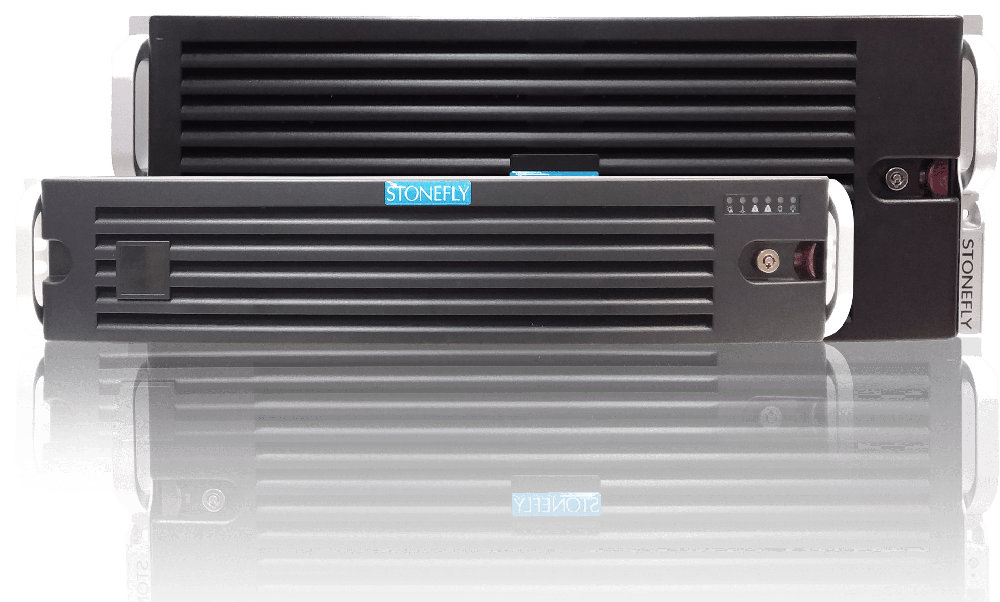
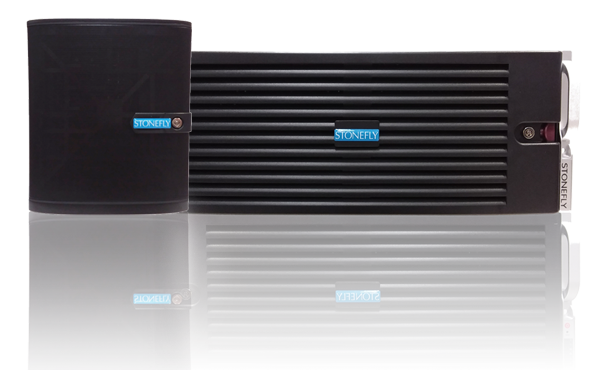
StoneFly is the only vendor on the market offering a backup and disaster recovery solution with a fully integrated, patented Air-Gapped Vault® that is both:
This combination is designed specifically to protect against ransomware like REvil/Sodinokibi, which targets backups as a first priority. StoneFly’s solution includes:
Whether deployed on-prem, in hybrid clouds, or in the StoneFly private cloud, this approach ensures that even if your network is compromised, your backups are not.
REvil ransomware may have been disrupted, but its tactics—and its successors—aren’t going anywhere. The most effective defense isn’t just about stopping the breach, but ensuring your data is untouchable, unchangeable, and always recoverable.
StoneFly’s air-gapped and immutable backup and disaster recovery solution is the only one on the market with a built-in, patented Air-Gapped Vault that attackers can’t reach or modify.
Stop ransomware from turning into downtime, lost revenue, or data loss.
Schedule a demo with StoneFly and see how to make your backups ransomware-proof—before it’s too late.


Join our mailing list to receive the latest news, updates, and promotions from StoneFly.