Enterprises continue to face an ever-growing demand for data storage, driven by analytics workloads, virtualization, backup requirements, and unstructured data growth. Meeting this demand isn’t only about adding more capacity; it’s about building a system that can expand predictably, perform consistently, and stay resilient as it grows. This is where the distinction between scale up and scale out storage architectures becomes critical.
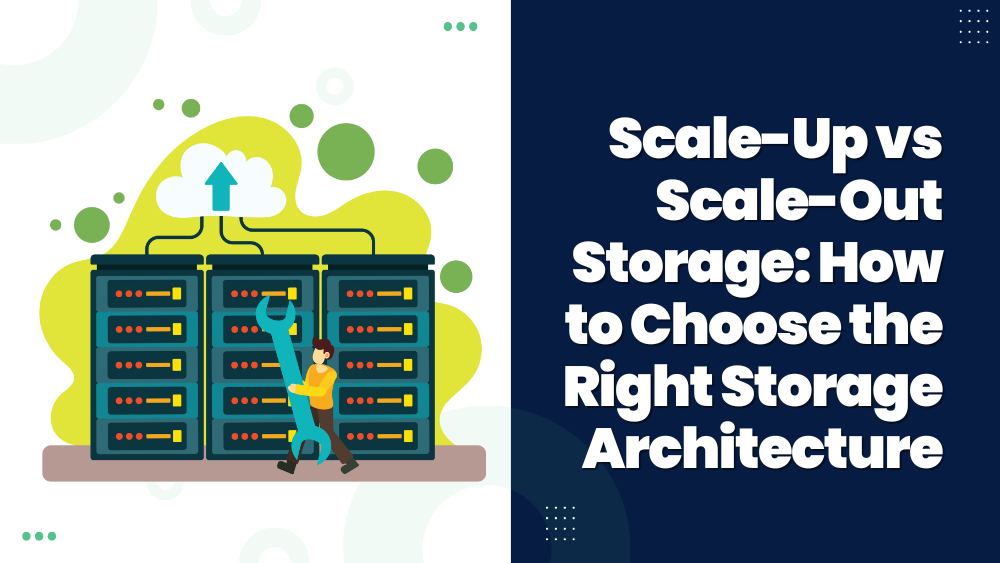
Scale up systems expand by adding more resources—drives, memory, or CPUs—to an existing controller. Scale out systems, on the other hand, grow by adding new nodes that contribute both capacity and performance to the overall cluster. The architectural choice between the two shapes not just performance, but also scalability limits, redundancy, and total cost of ownership.
Enterprise environments, particularly those handling AI data pipelines, virtualization clusters, and large file repositories, are shifting toward scale out designs because they offer flexibility and linear growth. Yet scale up architectures still play a major role in scenarios where simplicity, deterministic latency, and centralized control are priorities.
What Scale-Up Storage Architecture Means
Scale up storage follows a centralized model built around a controller or head node that manages data access, storage operations, and resource allocation. In this architecture, when more performance or capacity is needed, additional resources are added to the existing system — such as more drives, memory, or processing power. The entire system scales vertically, enhancing the capability of a single storage unit rather than expanding the number of storage nodes.
This design is common in traditional SAN and NAS environments. A storage array might start with dual controllers for redundancy and expand by adding disk shelves or upgrading components. Because the controller manages all I/O paths, performance improvements depend heavily on that controller’s processing capacity and the bandwidth of its internal buses.
The primary benefit of a scale up system is its simplicity. Management remains centralized, and expansion steps are predictable. However, this model introduces practical limits. Once the controller reaches its hardware ceiling, further scaling requires a complete system replacement or migration to a new platform. As a result, scale up architectures work best in environments with stable workloads, predictable growth, and clear upper bounds on performance requirements.
What Scale-Out Storage Architecture Means
Scale out storage distributes data and control across multiple nodes that function together as a unified cluster. Each node contributes its own storage, processing, and network resources. As more nodes are added, both capacity and performance scale linearly because every node participates in handling I/O and storing data.
Unlike the centralized controller model of scale up systems, scale out designs operate without a single performance bottleneck. Metadata, data chunks, and workloads are spread across the cluster through distributed file systems or object storage frameworks. Each node runs its own optimized operating environment, often with storage services tightly integrated into the kernel or containerized layer to minimize overhead.
This architecture enables elasticity. Enterprises can start with a small cluster and expand incrementally by adding nodes, without disrupting workloads or reconfiguring storage paths. Scale out systems also improve fault tolerance — when a node fails, others continue serving data while the system automatically rebuilds lost fragments from redundancy mechanisms such as erasure coding or replication.
Because scale out storage is inherently modular, it aligns with cloud-native and high-performance environments that demand flexible scaling, parallel I/O, and massive data distribution. It underpins technologies such as distributed file systems, AWS-compatible S3 object storage, and container storage platforms designed for multi-tenant or geographically dispersed workloads.
Comparing Scale Up vs Scale Out Storage Architectures in Detail
The main difference between scale up and scale out storage lies in how each architecture handles expansion, performance, and resiliency. While both aim to deliver scalable capacity and performance, they do so through fundamentally different design approaches.
- Architecture and Topology
Scale up storage centers around a controller-based topology. The controller manages all I/O operations, connected disks, and caching. Scaling involves upgrading the controller or attaching additional shelves through high-speed interconnects like Fibre Channel or SAS. In contrast, scale out systems use a distributed topology, where each node operates independently but communicates over Ethernet or InfiniBand networks. The system’s control plane and data plane are distributed across the cluster, removing single points of failure.
- Performance Scaling
In a scale up system, performance is bound to the controller’s CPU, memory, and bus bandwidth. Once those limits are reached, scaling further requires new hardware. Scale out architectures distribute workloads across multiple nodes, allowing performance to grow in proportion to the number of nodes added. Each node contributes throughput and IOPS, making this model ideal for parallel workloads such as big data analytics or virtualization.
- Fault Tolerance and Availability
Scale up systems typically depend on redundant controllers and RAID configurations for data protection. Failure of the controller can impact performance until failover completes. Scale out storage, on the other hand, distributes data redundantly across nodes using replication or erasure coding. If a node fails, the system automatically rebuilds the lost data fragments, maintaining uptime and data accessibility without manual intervention.
- Management and Complexity
Scale up storage is easier to manage because of its centralized design. Administrators deal with a single system, a single namespace, and predictable scaling steps. Scale out systems, while more complex to manage, often integrate software-defined automation to handle node discovery, rebalancing, and policy enforcement dynamically. The tradeoff is operational complexity for higher scalability and flexibility.
Scale up storage is about vertical power within a controlled boundary, while scale out storage is about horizontal expansion with distributed intelligence. Each design has clear strengths depending on performance goals, data distribution needs, and IT growth strategy.
How Scale Up and Scale Out Impact Real-World Deployments
When the theoretical advantages of scale up and scale out storage meet the realities of enterprise deployment, the differences become even clearer. The decision isn’t just architectural; it affects cost structure, operational planning, redundancy, and long-term scalability.
- Expansion and Growth Management
Scale up systems are easier to expand in the short term. Adding drives or upgrading controllers can deliver immediate performance improvements. However, this process usually involves downtime or planned maintenance. In contrast, scale out systems can grow node by node, often online, with no service interruption. This model suits environments where capacity demands grow unpredictably, such as analytics, AI training, or enterprise backup repositories.
- Hardware Utilization and Cost Efficiency
A scale up design often leads to underutilized resources once the controller approaches its limits. Upgrades may require replacing expensive hardware even when attached storage still has usable capacity. Scale out storage avoids this by distributing load evenly across nodes. Enterprises can scale with commodity hardware and defer major upgrades by simply adding nodes as needed.
- Data Protection and Redundancy Models
Traditional scale up arrays rely on RAID groups and controller failover for protection. These mechanisms are mature but limited to the local system. Scale out storage uses distributed redundancy such as erasure coding or replication across multiple nodes, improving fault isolation and recovery speed. This makes it inherently more resilient for geographically distributed environments or large datasets.
- Management Overhead
Scale up storage offers centralized, straightforward management, making it attractive for smaller teams or predictable workloads. Scale out clusters introduce more moving parts—metadata coordination, cluster health checks, and data rebalancing—but modern orchestration tools and intelligent automation have minimized much of this complexity. The tradeoff is greater flexibility and elasticity for slightly higher operational sophistication.
- Hybrid and Transition Scenarios
Many enterprises run both architectures together. For instance, a scale up SAN might handle latency-sensitive databases, while a scale out system supports backup, analytics, or object storage workloads. As organizations modernize, hybrid architectures allow a gradual transition to distributed systems without disrupting mission-critical applications.
The choice depends on the organization’s growth curve, workload characteristics, and tolerance for architectural change. Both models can coexist effectively within a well-planned enterprise storage strategy.
Where Scale-In and Scale-Out Storage Fit Together
Scale out storage expands capacity and performance by adding nodes to a cluster, while scale in does the opposite — removing nodes or reducing capacity when the demand decreases. Together, they define how storage systems maintain elasticity without disruption.
Elasticity has become essential in distributed and software-defined storage architectures that support fluctuating workloads. For instance, a cluster might scale out to accommodate data growth from a new analytics job, then scale in after the workload completes, redistributing data across the remaining nodes. This flexibility helps balance resource usage, cost, and efficiency across changing operational requirements.
There is a misconception that scalable storage software achieves elasticity by stripping down the operating system on compute nodes. In practice, each node runs a streamlined but complete OS, often Linux-based, configured with only the necessary components for storage services, networking, and cluster management. This approach minimizes system overhead and ensures that most hardware resources are dedicated to I/O processing and data operations, not general-purpose OS tasks.
Together, scale in and scale out make a storage system adaptive. They allow it to expand and contract in response to workload behavior, maintaining predictable performance and cost efficiency over time — something scale up architectures cannot achieve without manual hardware changes or downtime.
Choosing Between Scale Up and Scale Out Storage
The decision between scale up and scale out storage depends on how an enterprise expects its data, performance, and infrastructure needs to evolve. Both approaches have clear strengths, and the right choice comes down to balancing scalability, manageability, and cost over time.
- When Scale Up Makes Sense
Scale up storage fits well in environments where performance requirements are predictable and workloads are centralized. Examples include databases, ERP systems, and virtualized workloads that benefit from low latency and consistent I/O. Because scale up systems use a single controller or tightly coupled pair, they offer straightforward management, faster provisioning, and stable performance until the system reaches its hardware ceiling.
However, growth beyond that point usually requires a forklift upgrade — replacing or migrating to a larger array. For enterprises with limited data growth or fixed application needs, this tradeoff may still be acceptable because of its simplicity and lower initial cost.
- When Scale Out Is the Better Fit
Scale out storage is built for environments with variable or expanding workloads. When data volume or performance demand increases, new nodes can be added without downtime. Each node brings both storage and compute power, allowing performance to grow in proportion to capacity. This makes scale out an ideal choice for analytics platforms, AI and ML pipelines, media repositories, and distributed backup targets.
The cost model is also different. Scale out architectures allow organizations to use standard hardware and expand incrementally, aligning investment with actual growth. At the same time, they reduce migration risk because scaling is achieved through expansion rather than system replacement.
- Making the Choice
Enterprises often find value in combining both models. Latency-sensitive workloads continue to run on scale up arrays, while capacity-driven or parallel workloads move to scale out clusters. The key is to align the architecture with workload characteristics — deterministic performance versus flexible scaling, centralized management versus distributed operation.
Both designs solve scalability, but in very different ways. The long-term efficiency of an enterprise storage strategy depends on selecting the one that best aligns with workload behavior, operational maturity, and projected data growth.
Conclusion
Scale up and scale out represent two distinct paths to storage scalability. Scale up systems strengthen a single controller’s capability to handle more data and faster performance within fixed hardware limits. Scale out systems expand capacity and throughput horizontally, distributing data and workloads across multiple nodes.
Neither model is inherently better — their effectiveness depends on workload patterns and operational goals. Enterprises that prioritize simplicity and consistent latency often choose scale up architectures. Those planning for unpredictable growth, large data volumes, or distributed workloads find greater flexibility in scale out systems.
The right approach comes from understanding not just how much storage you need today, but how you expect that need to evolve in the future.
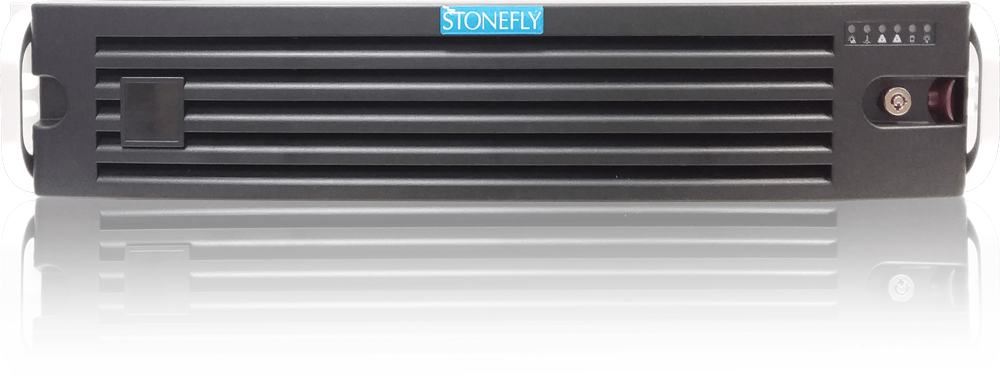
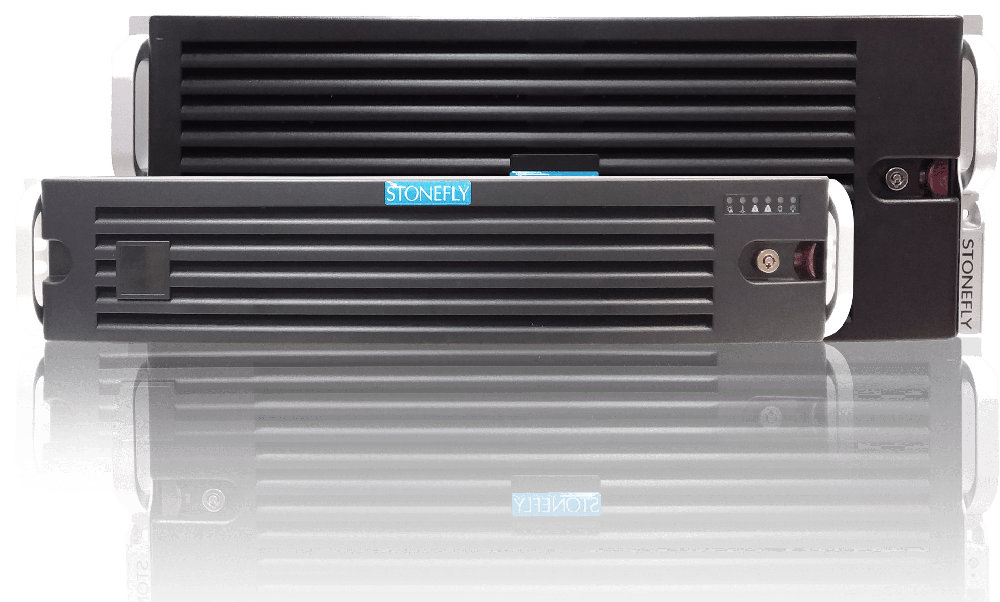
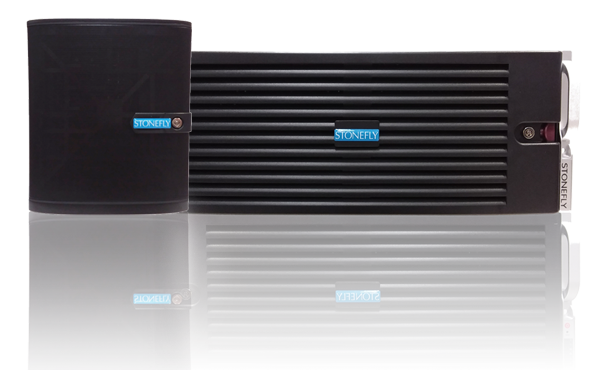
Deploy enterprise-grade scale out or scale up storage with StoneFly without forklift upgrades — built for high performance, flexible growth, and dependable data protection. Contact our experts to discuss your requirements today.