Enterprises generate and process massive amounts of information every day, and all of it needs to be retained, organized, and made accessible when required. At its core, this is what is data storage: the ability to capture and preserve information in a structured manner for later use. Understanding what is storage of data and how it is managed has become a critical part of enterprise IT strategy, especially as business operations, analytics, and compliance requirements depend on it.
Data storage management is the practice of controlling how data in storage is organized, protected, and optimized. Without it, enterprises risk higher costs, slower performance, and compliance issues. The right data storage system ensures information remains secure, scalable, and available—whether it resides on-premises, in the cloud, or across hybrid environments.
As organizations head deeper into 2025, the complexity and volume of enterprise data only continue to expand. That makes strong storage strategies and technologies essential, not optional.
What is Data Storage Management and Why it Matters
Data storage management is the disciplined control of capacity, performance, security, and lifecycle for data in storage across on-prem, cloud, and hybrid estates. It goes beyond simply asking what is data storage or what is storage of data; it governs how a data storage system provisions media, presents protocols, enforces policies, and meets SLOs.
How performance, capacity, and availability are engineered
Modern designs map workloads to the right media and protocol—NVMe/SSD for low-latency transactional I/O, HDD for sequential throughput, and tape or cold cloud for long-term retention—while exposing block (iSCSI/FC/NVMe-oF), file (NFS/SMB), or object APIs. Planners track IOPS, throughput, and 99.9x availability targets, model queue depth and latency percentiles, and right-size controllers, cache, and network paths (bonded 25/40/100GbE or FC). Capacity is forecast with growth curves, thin provisioning, reclamation (TRIM/UNMAP), snapshots/clones, and data reduction (inline/offline deduplication and compression) to hold $/TB flat as datasets expand.
How resilience and recoverability are guaranteed
A resilient data storage system layers RAID/ZFS/erasure coding for media faults, synchronous/asynchronous replication for site failures, and immutable snapshots or WORM retention for cyber resilience. DR plans tie storage capabilities to business objectives: RPO/RTO, application consistency (VSS/Linux fsfreeze), and tested failover/failback runbooks. Metadata integrity (end-to-end checksums, scrubbing, bit-rot repair) and multi-site quorum rules prevent split-brain and silent corruption.
How security and compliance are enforced
Security policy in data storage management spans encryption at rest (AES-256) and in transit (TLS 1.3), centralized key management with rotation, RBAC/least privilege for administrators, and audit trails for every policy change, copy, and delete. Governance applies retention schedules, legal holds, and classification tags so regulated data in storage is provably controlled for GDPR/HIPAA/PCI and similar regimes.
How lifecycle and tiering keep costs predictable
Information lifecycle management moves objects/files/blocks between hot, warm, and cold tiers based on access patterns, age, and classification. Rules handle automatic tier transitions, snapshot pruning, and archive placement while preserving references and maintaining stubs or metadata indexes so applications keep working. This is where understanding what is storage of data becomes operational: you’re not just storing bits, you’re orchestrating them over time.
How operations are measured and automated
Runbooks and automation close the loop: health scoring from telemetry, anomaly detection on latency spikes, QoS throttles to prevent noisy-neighbor effects, and scheduled integrity checks. SLOs roll up per-workload latency/IOPS budgets, capacity headroom, backup success rates, replication lag, and compliance posture into a single operational view—answering, in practical terms, what is data storage management for enterprise IT.
Breaking Down What is Storage of Data in Enterprise IT
When enterprises consider what is storage of data, they are looking at the physical and logical mechanisms that hold information securely and make it available for business operations. At its core, data in storage is classified by how it is accessed and structured—block, file, and object storage being the three dominant categories.
Block storage for high-performance workloads
Block-level storage divides data into fixed-size chunks and addresses them with unique identifiers. This makes it ideal for transactional systems such as databases or virtual machines. A data storage system using block protocols like iSCSI, Fibre Channel, or NVMe-oF delivers predictable latency and high throughput for applications where milliseconds matter.
File storage for collaborative access
File-based storage organizes data in a hierarchical directory structure. Enterprises rely on NFS or SMB/CIFS file shares for unstructured data, engineering files, and user directories. File servers and NAS appliances scale to handle petabytes of data in storage but can become bottlenecks when concurrency or metadata operations surge.
Object storage for scalability and durability
Object storage manages information as discrete objects with metadata and unique IDs, instead of a hierarchical structure. This approach enables enterprises to handle billions of objects across global clusters. AWS-compatible S3 platforms and private cloud deployments are now the standard for archival data, media libraries, backups, and AI/analytics pipelines.
How media choices impact storage of data
The performance, durability, and cost of data in storage depend heavily on media type. SSDs offer low-latency random access for mission-critical workloads; HDDs provide high-capacity sequential throughput for bulk storage; tape libraries and cold cloud tiers deliver ultra-low-cost archival options. A well-architected data storage system layers these media types under a management framework to balance speed, cost, and durability.
Understanding what is data storage at this granular level allows IT teams to select the right mix of protocols and media. That way, storage does not just house information—it actively enables enterprise operations, analytics, and compliance.
Understanding How a Data Storage System Operates in Enterprise IT
A data storage system is the foundation that determines how efficiently enterprises can retain, protect, and deliver information. To understand what is data storage in practice, it helps to look at how these systems operate at both the hardware and software layers.
At the hardware level, storage arrays combine disks, SSDs, or hybrid tiers with controllers that manage I/O requests. These systems present data in storage to applications using block, file, or object interfaces. Protocols like Fibre Channel, iSCSI, NFS, SMB, and AWS-compatible S3 define how servers and applications communicate with the storage infrastructure. The choice of protocol directly affects latency, throughput, and scalability.
On the software side, storage operating systems and virtualization layers abstract physical devices into logical volumes or namespaces. This is where features such as snapshots, replication, thin provisioning, deduplication, and compression come into play. These functions ensure that the storage of data is resilient against hardware failure, optimized for space efficiency, and consistent with performance requirements.
A well-architected data storage system also integrates with security and compliance frameworks. Encryption at rest and in transit, multi-factor authentication for administrators, and audit logging guarantee that data in storage remains protected against both internal misuse and external threats. Automated monitoring, predictive analytics, and AI-driven optimization further enhance management by forecasting capacity needs, tuning performance, and preventing bottlenecks before they occur.
In short, a data storage system is not just a collection of disks—it is a managed service that translates raw capacity into reliable, secure, and scalable resources. By understanding what is storage of data in this context, enterprises can make better decisions about architecture, deployment, and long-term lifecycle management.
Key Strategies that Define Modern Data Storage Management
Tiering and lifecycle rules map workloads to the right media
Start by classifying data in storage by access pattern (hot, warm, cold) and regulatory retention. Use policy engines to place hot OLTP volumes on NVMe/SSD, warm analytic datasets on high-capacity HDD, and archives on tape or AWS-compatible S3. Lifecycle transitions should be automatic: e.g., promote objects to faster tiers on read frequency spikes; demote idle files after N days; expire or vault copies after legal hold ends. ILM policies belong in the data storage system, not in ad-hoc scripts, so they apply consistently to block, file, and object. This is where “what is data storage” turns into enforceable placement and retention.
Data reduction and efficiency features keep costs predictable
Inline deduplication (variable or fixed block) and compression reduce footprint without changing app behavior. For VDI or backup targets, expect 5–20× logical savings; for mixed workloads, 1.3–3× is typical. Thin provisioning with UNMAP/TRIM reclaims freed blocks; copy-on-write snapshots and fast clones enable space-efficient test/dev. On object platforms, enable multipart uploads with checksum validation and bucket-level lifecycle to avoid orphaned parts. Efficiency metrics (logical vs. physical, snapshot reserve, reclaimable white space) should be first-class SLOs in data storage management.
Replication, snapshots, and immutability protect data in storage
Design protection to your RPO/RTO: synchronous replication for sub-second RPOs; asynchronous, multi-hour RPOs across regions for cost and distance. Pair periodic snapshots with object-lock/WORM or immutable snapshot flags to resist ransomware. Validate application-consistent protection (VSS/fsfreeze) and track replication lag as a monitored signal. For erasure-coded clusters, select k+m parameters to balance durability vs. rebuild time, and schedule scrubbing for silent corruption. These practices answer what is storage of data when the question is durability, not just capacity.
Automation, observability, and SLOs operationalize management
Treat storage as an engineered service. Define SLOs per workload (p99 latency, IOPS ceiling/floor, throughput, protection point objective, % encrypted). Use APIs/webhooks to auto-expand volumes on threshold, rotate keys, rotate snapshots, and open tickets on anomaly detection (queue depth spikes, cache thrash, rebuild storms). Telemetry should trace from host to fabric to array/object gateway so contention is obvious. This embeds data storage management into day-two operations, not just procurement.
Security and governance bind technical controls to compliance
Encrypt at rest and in transit, manage keys centrally with rotation and separation of duties, and enforce least-privilege admin roles. Classify datasets and attach retention/hold tags so audits show policy compliance. On AWS S3 or private AWS-compatible S3, enable bucket policies, TLS enforcement, and object-lock where required; on filesystems, prefer signed SMB and NFSv4 with Kerberos. These controls belong inside the data storage system so they travel with the data, regardless of where it lives.
Net effect: by codifying placement, efficiency, protection, automation, and governance, you turn what is data storage from raw capacity into a reliable service—precisely the goal of enterprise data storage management.
Why Effective Data Storage Management Matters in 2025
By 2025, enterprises are grappling with explosive data growth, stricter regulations, and rising infrastructure costs. Simply knowing what is data storage is not enough—IT leaders must apply mature data storage management practices to keep pace with business and compliance demands.
Rising data volumes from AI, IoT, and analytics
AI training datasets, IoT telemetry, and real-time analytics generate petabytes of new data in storage each year. Without a structured data storage system and lifecycle rules, organizations face uncontrolled sprawl, longer query times, and higher costs. Tiering and automation ensure that data lands in the right place at the right time, sustaining both performance and affordability.
Regulatory pressure and compliance accountability
Frameworks like GDPR, HIPAA, and PCI DSS require enterprises to prove not only that they store data but also how they protect, retain, and eventually delete it. This makes it vital to connect what is storage of data with encryption, immutability, retention rules, and audit trails. Strong governance within the storage layer reduces the risk of penalties and reputational damage.
Cost optimization and sustainability goals
Storage now accounts for a significant portion of IT budgets. Compression, deduplication, and automated tiering bring the $/TB curve under control, while low-power media such as tape and deep cloud tiers reduce energy consumption. Enterprises that embrace energy-efficient data storage systems also move closer to sustainability targets, an increasingly important factor in 2025.
Performance, availability, and resilience expectations
Business stakeholders expect data to be always-on, no matter the workload. Data storage management ensures this by combining snapshots, replication, and erasure coding with predictive analytics that prevent downtime. In 2025, downtime is no longer tolerated, making robust storage management an operational necessity rather than a best practice.
Conclusion
Enterprises that understand what is data storage, what is storage of data, and how a data storage system operates are better positioned to manage data at scale. By applying disciplined data storage management practices—tiering, efficiency features, replication, automation, and compliance—organizations transform raw capacity into a reliable, secure, and cost-effective service.
In 2025, this shift is not optional; it is essential for resilience, compliance, and sustained business growth.
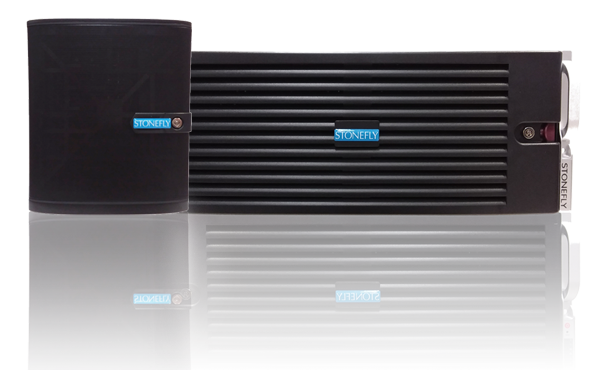
Looking to set up an enterprise SAN, NAS, and object data storage system? Contact our experts to discuss your projects today.