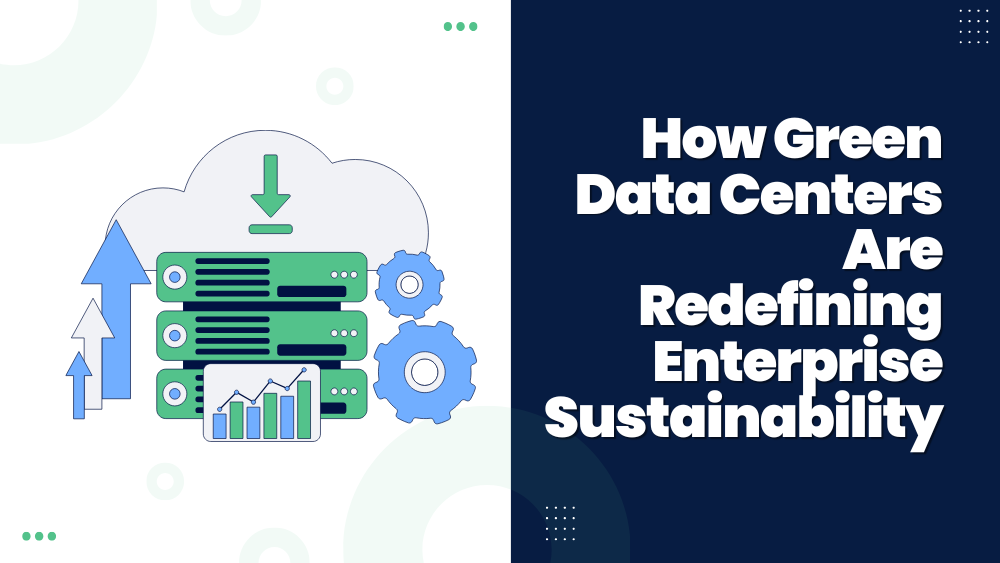
Rising energy costs, stricter environmental regulations, and corporate ESG mandates are transforming how enterprises build and operate their data centers. As global digital infrastructure expands, the environmental impact of data centers — responsible for roughly 2.5% to 3.7% of greenhouse gas emissions worldwide — has come under scrutiny. The industry is responding with a decisive shift toward green data center design, where efficiency, sustainability, and performance converge.
Green data center initiatives focus on sustainable operations that minimize environmental impact, optimize energy efficiency, and reduce carbon emissions. This evolution is no longer optional; it’s becoming a business imperative. The global green data center market, valued between USD 48 and 85 billion in 2025, is projected to grow dramatically — reaching USD 155.75 billion by 2030 and nearly USD 295.8 billion by 2035. Asia is leading this transition, with China, India, and Germany showing growth rates above 16% CAGR, driven by aggressive energy-efficiency policies and national sustainability programs.
Enterprises are rethinking everything from power utilization to cooling systems and storage infrastructure. Metrics such as Power Usage Effectiveness (PUE) — ideally below 1.3 — are now key performance targets. Meanwhile, innovations like liquid immersion cooling, AI-powered DCIM tools, heat recovery systems, and renewable energy integration are redefining operational efficiency standards.
Green data centers are not just a response to environmental pressures — they’re a smarter, more cost-effective way to scale digital operations sustainably. By embracing energy-efficient storage and optimized infrastructure design, organizations can reduce both their carbon footprint and long-term operational costs, achieving measurable sustainability without compromising performance.
How Green Data Centers Reduce Environmental and Operational Costs
Building a sustainable data center involves rethinking every aspect of power, cooling, and infrastructure design. The goal is simple: reduce waste while maintaining high performance and reliability. As energy prices rise and regulatory frameworks tighten, efficiency-driven architectures are becoming the new baseline for enterprise operations.
Optimizing Energy Use Through Smarter Data Center Design
Energy efficiency is measured through Power Usage Effectiveness (PUE), which compares the total facility power to the power used directly by computing equipment. A PUE value below 1.3 is considered highly efficient, meaning nearly all consumed energy goes into actual compute rather than cooling or overhead. Modern facilities achieve this through a mix of design choices—ranging from optimized airflow management to direct-to-chip and liquid immersion cooling systems that eliminate the need for energy-intensive air conditioning.
Cooling alone can account for up to 40 percent of a data center’s energy use. Advanced cooling methods like evaporative systems, rear-door heat exchangers, or location-based design in colder climates reduce this significantly. Some operators are now implementing heat recovery loops, redirecting waste heat to nearby commercial or residential buildings, turning excess thermal energy into a secondary resource.
Integrating Renewable Energy and Smarter Data Center Infrastructure
Power sourcing is another defining factor. Green data centers increasingly operate under long-term renewable energy purchase agreements, integrating solar, wind, hydro, or biofuel power directly into their supply. This approach stabilizes energy costs while reducing exposure to fossil-fuel volatility.
On the infrastructure side, AI and data center infrastructure management (DCIM) platforms analyze workloads and environmental conditions in real time to optimize cooling, adjust power distribution, and improve utilization. Virtualization and workload consolidation further reduce the physical footprint, leading to fewer servers, less heat, and lower energy demand overall.
The result is a facility that operates with a smaller carbon footprint and lower total cost of ownership. Efficiency and sustainability work together, creating data centers that remain reliable and cost-effective while meeting environmental targets.
The Role of Energy-Efficient Storage in Sustainable Infrastructure
Data storage is one of the most energy-intensive components of any data center. Even when servers are idle, spinning disks, active controllers, and redundant arrays consume constant power. As data volumes grow, the energy required to store, replicate, and protect information scales almost linearly. This makes storage architecture a central focus for data center sustainability.
Energy-efficient storage systems reduce consumption by addressing both hardware design and data management strategy. Modern architectures use low-power drives, automated spin-down mechanisms, and advanced caching techniques to minimize unnecessary disk activity. Features like deduplication, compression, and intelligent tiering further optimize capacity utilization—storing data on the most power-efficient medium without sacrificing availability or performance.
Solid-state and nearline storage technologies also contribute to efficiency by providing faster access at lower power draw per transaction. When paired with automated tiering, frequently accessed data can stay on high-performance SSDs, while infrequently used data is shifted to energy-efficient archive tiers. This balance ensures that performance requirements are met without over-provisioning high-energy hardware.
The software layer plays an equally critical role. AI-driven analytics within storage management platforms can predict usage trends, power down idle volumes, and rebalance workloads across lower-cost or lower-energy tiers in real time. Such automation reduces operator overhead while maintaining service-level objectives.
These technologies collectively reshape the energy profile of enterprise data centers. By reducing idle power use, optimizing utilization, and extending hardware life cycles, energy-efficient storage not only supports ESG and sustainability initiatives but also drives measurable savings in operational expenditure.
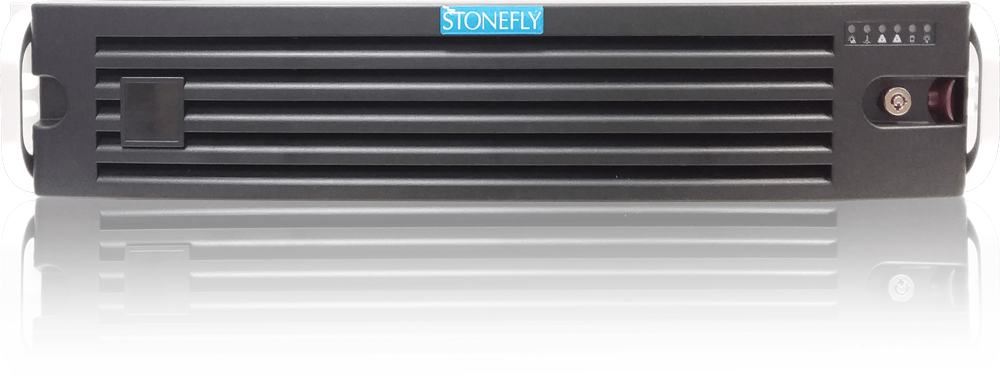
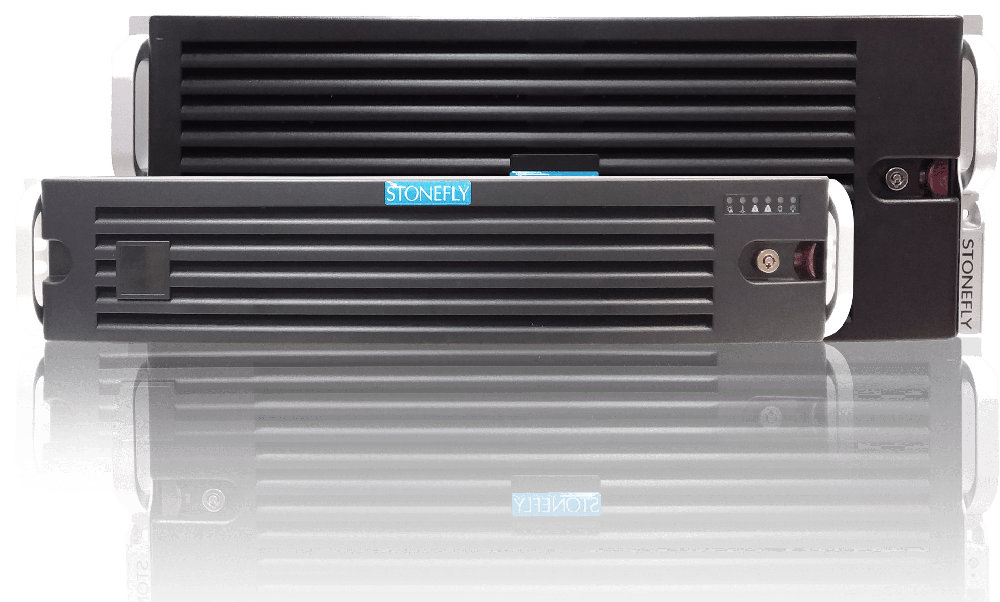
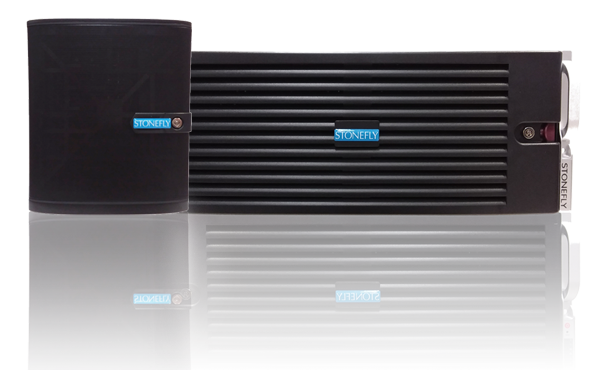
StoneFly’s Green Petabyte Archive Storage reflects this approach—combining dense, low-power storage with intelligent tiering and automated management to deliver sustainable capacity at scale. It enables organizations to maintain large data archives with minimal power consumption, aligning long-term storage needs with sustainability goals.
Why Archival Data Is Central to Green Data Center Strategy
Archival data—long-term, rarely accessed information—accounts for a significant share of enterprise storage capacity. Backups, compliance records, logs, and sensor data accumulate continuously, and while they must remain retrievable, they do not require high-performance infrastructure. This creates both a challenge and an opportunity for data center sustainability.
Many traditional storage environments treat all data equally, keeping cold data on the same high-performance systems used for active workloads. This wastes power and rack space, as idle disks and servers consume energy without delivering proportional business value. In large-scale data centers, this inefficiency compounds into substantial carbon emissions and operational costs.
A sustainable approach segments storage based on access frequency and retention requirements. By isolating archival data onto energy-efficient storage tiers, data centers can reduce power use without compromising durability or availability. Modern archive systems use low-power drives, erasure coding, and automated spin-down features to maintain petabyte-scale storage at a fraction of the energy cost of traditional systems.
Integration with renewable-powered infrastructure enhances this model further. When cold data is stored in facilities powered by solar, wind, or hydro sources, the carbon footprint associated with long-term data retention drops sharply. Combining that with intelligent tiering and deduplication ensures minimal hardware overhead while maintaining compliance and recovery readiness.
This shift toward sustainable archival infrastructure is critical because the volume of stored data is growing faster than the capacity to offset its energy demand. Without adopting energy-efficient archive systems, even the most optimized data centers risk falling short of corporate and regulatory sustainability goals.
Solutions like StoneFly’s Green Petabyte Archive Storage are designed for this exact purpose. They provide massive capacity for cold and archival workloads while consuming significantly less power, making them a cornerstone for enterprises aiming to align long-term data growth with environmental responsibility.
Building a Sustainable Data Center Strategy for 2025 and Beyond
Sustainability in data center operations is no longer a single initiative—it’s a design principle. Building a green strategy that endures beyond short-term targets requires integrating efficiency at every layer, from power and cooling to storage, automation, and lifecycle management.
The foundation begins with measurable goals. Organizations must assess current power usage, cooling efficiency, and carbon footprint using established metrics such as PUE and carbon usage effectiveness (CUE). These benchmarks identify where power is lost to overhead and help prioritize infrastructure upgrades that yield the greatest efficiency gains.
Hardware selection follows the same logic. Deploying low-power processors, high-efficiency power supplies, and energy-optimized storage arrays reduces baseline consumption. For existing assets, virtualization and containerization extend equipment life by maximizing utilization. Reducing the number of underused servers lowers both energy and maintenance costs.
Cooling remains one of the most important factors in data center sustainability planning. Facilities investing in direct-to-chip liquid cooling or immersion-based systems are reporting measurable energy savings, particularly in high-density compute environments such as AI or HPC clusters. Locating data centers in cooler climates or near renewable energy sources further reduces energy intensity per unit of compute.
Automation and analytics amplify these gains. AI-based DCIM platforms can dynamically adjust cooling setpoints, redistribute workloads to underused nodes, and predict maintenance needs before inefficiencies escalate. These systems reduce manual oversight while maintaining optimal operating conditions.
The final consideration is data lifecycle management. Archival and backup data should not remain on high-energy primary systems indefinitely. Migrating inactive data to sustainable archive tiers, such as StoneFly’s Green Petabyte Archive Storage, closes the loop between performance and sustainability. This ensures that only the data requiring compute performance consumes active power resources, while long-term data remains secure, accessible, and energy-efficient.
A sustainable data center strategy blends operational efficiency with technology modernization. It transforms sustainability from a cost center into a performance advantage, enabling enterprises to scale their digital infrastructure responsibly while meeting both regulatory and environmental goals.
Conclusion
Green data centers are reshaping how enterprises approach digital infrastructure. Efficiency, once viewed as a technical optimization, has become a strategic imperative. Through energy-efficient designs, renewable integration, and intelligent storage architectures, organizations can reduce operational costs while meeting sustainability mandates.
Storage, in particular, defines long-term energy impact. By adopting low-power, scalable archive systems and intelligent data management practices, enterprises gain measurable reductions in energy use and carbon output without compromising reliability or compliance.
Sustainable data centers are not built through isolated upgrades—they evolve through coordinated decisions that align technology, policy, and performance. For enterprises planning for 2025 and beyond, the next competitive advantage lies in how effectively they can balance environmental responsibility with operational excellence.
Looking to minimize your data center’s power footprint? Explore StoneFly’s Green Petabyte Archive Storage — energy-efficient, scalable, and designed for long-term data sustainability.