
Enterprise organizations generate massive volumes of data every day, much of which needs to be retained for compliance, legal, or business continuity reasons. While primary storage and backups handle operational workloads, they are not built for long-term, low-access data. This is where archive storage becomes essential.
Unlike short-term retention, archive storage systems are designed to keep data secure, cost-efficient, and accessible over years or even decades. By separating inactive files from production environments, enterprises can lower storage costs, reduce overhead, and ensure compliance with industry regulations.
Modern archive storage solutions offer flexibility across cloud and on-premises infrastructures, allowing IT leaders to optimize storage and archiving strategies based on regulatory, security, and scalability needs. Whether through archives storage appliances or cloud-native services, enterprises can streamline archival data storage while keeping it compliant and energy-efficient.
With the right storage for archiving, organizations ensure data remains protected, retrievable, and managed without straining resources. As demands for long-term retention increase, effective archiving storage is no longer optional—it is a strategic requirement for enterprise IT.
Enterprise data growth is exponential, and without a clear strategy, production systems quickly become overloaded. Relying on primary storage for long-term retention is inefficient, while using backup systems for compliance data creates unnecessary redundancy. Archive storage addresses this gap by providing a purpose-built tier for inactive data that still needs to be preserved.
Archive storage systems are engineered for immutability, durability, and compliance. Unlike production arrays optimized for performance, archives focus on capacity and efficiency. Many modern archive storage solutions integrate with object storage technologies, allowing enterprises to store billions of files with metadata indexing for quick retrieval. These capabilities make storage and archiving scalable while minimizing costs.
Archival data storage leverages advanced features that go beyond simple retention:
By offloading inactive datasets to archiving storage, enterprises free up high-performance infrastructure for active workloads. This not only reduces capital expenditure on primary systems but also streamlines governance and audit readiness.
For industries where data retention is non-negotiable, such as healthcare, financial services, and government, archives storage becomes the backbone of compliance strategies. The combination of policy-driven retention, immutable file storage, and cost-optimized scalability makes data archive storage indispensable for enterprise IT leaders.
Many enterprises mistakenly use backup systems or even primary storage for long-term data retention. While this may seem convenient, it leads to inefficiencies, compliance risks, and unnecessary costs. Archive storage is a distinct discipline with a specific purpose in enterprise IT.
Backups are designed for operational recovery. They capture point-in-time copies of active systems and are optimized for short retention periods and fast restores. Backup repositories often use deduplication and compression to minimize capacity, but they are not optimized for decades of storage.
In contrast, archive storage systems are designed for long-term governance and preservation. They support archival data storage through:
Primary arrays are built for performance, handling transactional databases, virtualization, and business applications. They rely on high-speed flash or hybrid architectures where latency and throughput are critical. Using them for archives is wasteful and accelerates hardware wear.
Archiving storage instead emphasizes:
Modern archive storage solutions fill the gap between backups and production storage. By using archives storage for inactive datasets, enterprises can:
This separation of functions ensures that backups remain agile, primary systems stay high-performing, and archives deliver secure, long-term retention.
Enterprises have multiple options when designing archive storage systems, and the right choice often depends on compliance requirements, scalability needs, and budget considerations. Modern archive storage solutions can be deployed on-premises, in the cloud, or as hybrid models that combine both.
On-premises storage for archiving gives enterprises complete control over their data. These systems are typically built with high-capacity drives, dense storage enclosures, and features like erasure coding for durability. Administrators can configure air-gapped vaults, ensuring that archival data storage remains isolated from production networks. Enterprises with strict compliance mandates often rely on on-premises archives storage to meet industry-specific security and governance standards.
Cloud platforms provide virtually unlimited scalability for data archive storage. Cloud-native archiving storage tiers often use object storage with integrated lifecycle policies, making them cost-efficient for rarely accessed files. Advanced features such as cross-region replication and automated encryption at rest help enterprises maintain data availability and compliance without the need for extensive on-site infrastructure. However, network latency and egress costs must be considered when retrieving archived datasets.
Hybrid deployments combine the control of on-premises systems with the elasticity of cloud platforms. This model allows enterprises to retain sensitive or compliance-heavy datasets locally while using the cloud for scalable, long-term archival data storage. Policy-based engines automatically move files between tiers, ensuring that archive storage solutions remain both cost-optimized and compliant.
When evaluating architectural approaches, IT leaders should assess:
Enterprises that design storage and archiving with these considerations in mind can balance performance, compliance, and cost while ensuring their data archive storage remains resilient for decades.
StoneFly delivers enterprise-grade archive storage solutions across on-premises, cloud, and hybrid models, enabling organizations to preserve inactive data securely and cost-effectively over decades. Each option is designed to balance compliance, scalability, and operational efficiency.
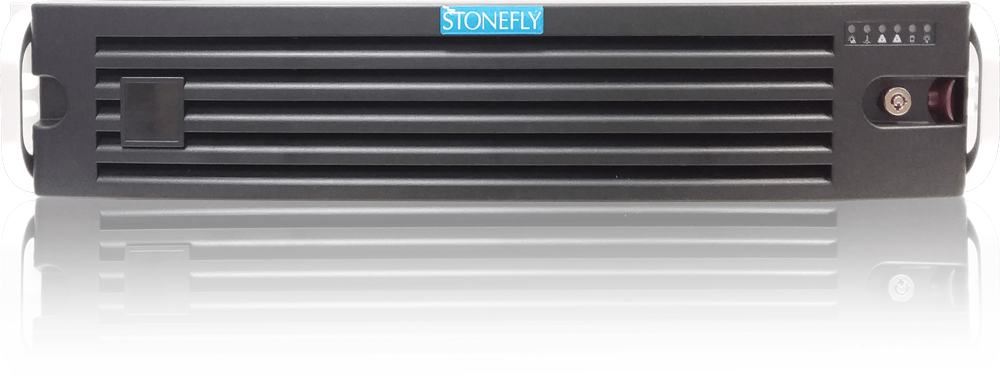
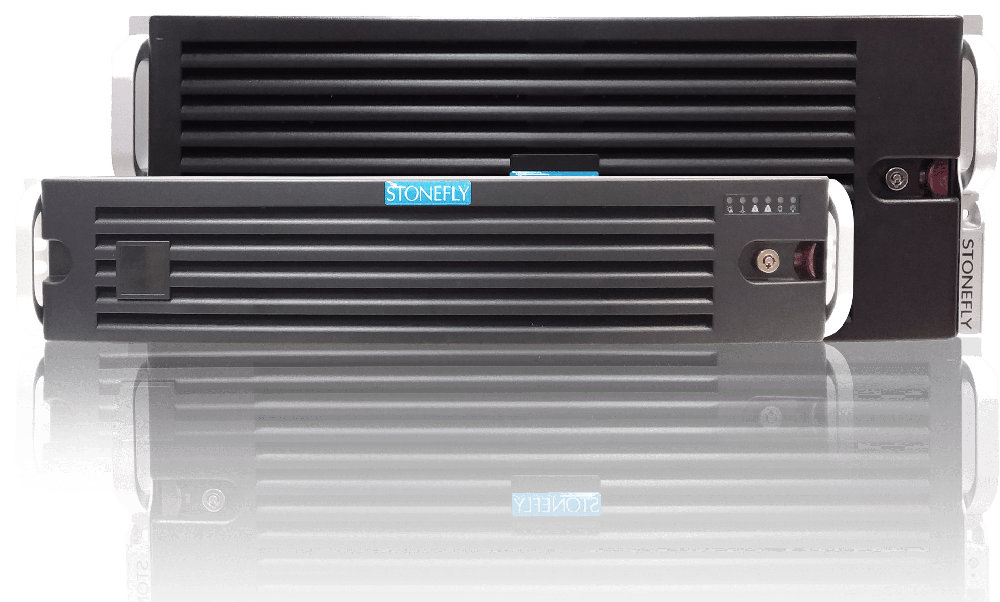
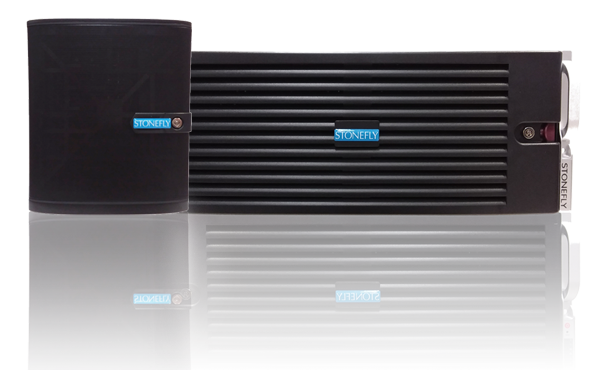
For enterprises that prefer complete control of their archives, StoneFly offers appliances available in 8, 12, 16, 24, 36, 60, and 108-bay configurations. These archive storage systems support NAS, SAN, and object storage protocols, providing the flexibility to integrate seamlessly with existing IT environments.
Built on enterprise SAS drives, they deliver cost-efficient and reliable archival data storage optimized for long-term retention. These appliances also come with the ability to integrate the cloud of the customer’s choice, enabling hybrid storage and archiving strategies.
With this model, data can remain on-premises for years while older records are seamlessly migrated to the cloud for extended retention, combining the control of local storage with the scalability of cloud platforms.
StoneFly’s cloud-based solutions allow enterprises to extend their archives beyond local infrastructure.
One option is the StoneFly air-gapped and immutable cloud, which isolates archived datasets from production systems and protects them against ransomware or tampering. Alternatively, enterprises can choose to archive into public clouds such as Azure, AWS, or other object storage providers.
StoneFly delivers the gateway technology and management layer, ensuring that regardless of the chosen platform, archived data benefits from immutability, automated air-gapping, and strong encryption. This makes cloud-based archives storage both scalable and secure, while maintaining compliance with industry regulations.
StoneFly’s GPA 4.0 (Green Petabyte Archive) appliance is a 1000W low-power, low-carbon, air-gapped and immutable archive storage system purpose-built for organizations that need to retain data for years without modification.
Unlike conventional large-scale arrays, the GPA 4.0 consumes less than a kilowatt of power, generating minimal heat and significantly lowering cooling requirements. This makes it not only cost-efficient but also environmentally sustainable for multi-petabyte archival data storage.
Because archive systems remain inactive most of the time, the GPA 4.0 requires minimal maintenance while maintaining security through true network isolation.
With zero active network connections, the appliance eliminates exposure to ransomware, ensuring that archives storage remains fully protected. Its air-gapped and immutable architecture guarantees compliance and integrity, even over decades of retention.
The GPA 4.0 is ideally suited for industries that must preserve sensitive datasets such as surveillance video, criminal records, patient data, legal documents, logs, emails, financial records, and media archives.
The foundation of effective archive storage systems is a clear set of retention policies. These policies define how long data must remain in archives storage, when it should transition from primary environments, and when it qualifies for deletion. Automating these processes with lifecycle management ensures that inactive datasets move into storage for archiving seamlessly, without draining production infrastructure or requiring manual oversight.
Compliance is a primary driver for archival data storage, and enterprises must ensure their archives align with regulatory mandates such as HIPAA, GDPR, or SEC 17a-4. Features like WORM enforcement, immutability, and automated air-gapping guarantee that archived files cannot be altered or prematurely deleted. By using archive storage solutions with these safeguards, organizations strengthen their compliance posture while reducing audit risks.
Security for archives extends beyond compliance. Encryption protects data confidentiality, while role-based access controls prevent unauthorized use. Air-gapped isolation is particularly critical, as it eliminates exposure to ransomware and other cyber threats by physically disconnecting archived datasets from production networks. Enterprises adopting archiving storage should also run periodic integrity checks to verify that long-retained data remains accessible and intact.
Archived data is only valuable if it can be retrieved when needed. Metadata indexing and advanced search capabilities ensure that even petabyte-scale data archive storage remains navigable and responsive. By combining indexing with tiered storage strategies, enterprises can quickly locate records while optimizing costs for rarely accessed files.
Enterprises cannot rely on primary arrays or backups to handle the demands of long-term retention. Purpose-built archive storage systems provide the scalability, compliance, and security necessary to manage inactive datasets without straining production resources.
With solutions ranging from on-premises appliances to hybrid models and cloud integrations, enterprises have the flexibility to design archive storage solutions that align with governance and budget requirements. For large-scale needs, the StoneFly GPA 4.0 appliance delivers low-power, air-gapped, and immutable archival data storage, ensuring security and efficiency at multi-petabyte scale.
By investing in modern storage and archiving, organizations protect their data, streamline compliance, and reduce costs for decades to come.
Looking for an archive storage solution? Contact our experts to discuss your projects today.



Join our mailing list to receive the latest news, updates, and promotions from StoneFly.