
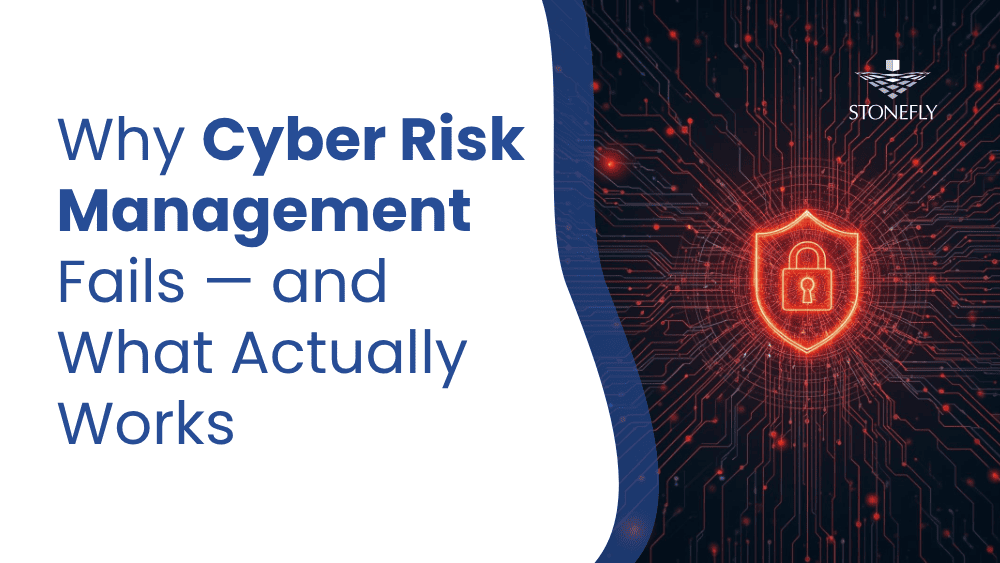
In 2023, a major financial services firm completed a comprehensive cybersecurity audit. Every control was documented. Every framework checkbox was ticked. Six weeks later, attackers exploited a misconfigured API in a third-party payment processor, exfiltrated customer records for 4.3 million accounts, and spent eleven days inside the environment before detection. The organization had a cyber risk management program. It just did not have one that accounted for its actual threat exposure.
This is the central problem with how many organizations approach cyber risk management: they optimize for compliance rather than resilience. Frameworks get checked off. Risk registers get filled in. Controls get documented. But the program is designed around what auditors want to see rather than around what attackers actually do. The result is an organization that looks secure on paper and is operationally exposed.
This guide covers how to build a cyber risk management program that functions under real threat conditions, not just audit conditions. That means understanding what risk management in cybersecurity actually requires at each stage — from the initial risk assessment through framework selection, tool deployment, third-party risk governance, incident response, and the executive reporting that keeps leadership engaged and informed.
Cyber risk management is the structured, ongoing process of identifying threats and vulnerabilities to an organization’s information systems, assessing the likelihood and potential impact of those threats, implementing controls to reduce exposure to acceptable levels, and monitoring the effectiveness of those controls over time. It is not a project that ends when the audit cycle closes. It is not equivalent to having security tools deployed. And it is not the same as compliance.
Compliance requirements — GDPR, HIPAA, NIST 800-53, ISO 27001 — define the minimum security posture that regulated organizations must demonstrate. Cyber risk management is the discipline that determines whether that posture is actually adequate for the organization’s real threat environment. An organization can be fully compliant and still be operationally exposed if the compliance standards do not align with the threats that are actually targeting that organization’s sector, technology stack, or data assets.
Enterprise risk management (ERM) gives organizations a structure for addressing all categories of risk: financial, operational, legal, strategic, and reputational. Cyber risk management is a specialized discipline within ERM that addresses technology-related threats. When cyber risk management operates as an isolated IT function with no connection to ERM, it produces technically sophisticated security work that executives cannot incorporate into business decisions because it is communicated in technical language rather than business risk language.
When cyber risk is properly integrated into ERM, it informs strategic decisions: which technology partnerships are acceptable given their security posture, how much risk the organization is willing to accept in a cloud migration, whether a particular acquisition introduces unacceptable cyber exposure into the combined entity. This integration requires translating technical risk findings into financial and operational terms that business leaders can act on.
Four principles separate cyber risk management programs that work from those that only satisfy auditors. First, alignment with business priorities: security controls should protect the assets that matter most to business operations, not every asset equally. Second, risk-based action: not every vulnerability requires immediate remediation; prioritization based on likelihood and impact determines what gets fixed first. Third, continuous adaptation: cyber threats evolve on a cadence that quarterly reviews cannot keep pace with, so the program must update in response to new threat intelligence and environmental changes. Fourth, shared accountability: cyber risk is not owned by IT alone; it is owned by every business function that handles or creates data risk.
A cyber risk management framework provides the structured methodology that transforms general security intentions into specific, measurable, and repeatable practices. Selecting the right framework — or the right combination of frameworks — is one of the foundational decisions in building a risk management program.
The NIST Cybersecurity Framework organizes security activities into five functions: Identify, Protect, Detect, Respond, and Recover. Its value lies in its flexibility — organizations of different sizes and industries can adapt it to their specific risk profile and maturity level. The Identify function covers asset inventory, risk assessment, and governance; Protect covers access controls, security awareness, and data protection; Detect covers continuous monitoring and anomaly detection; Respond covers incident response procedures; and Recover covers continuity planning and post-incident improvement.
The most common mistake in NIST CSF implementation is treating it as a checklist rather than a capability maturity model. The framework defines tiers of implementation maturity from Partial (Tier 1) to Adaptive (Tier 4). Organizations should assess their current tier across each function, define their target tier based on their risk tolerance and threat profile, and build a roadmap toward that target. Jumping directly to advanced implementation without establishing foundational capabilities produces fragile programs with sophisticated tools operating on poor data quality and weak governance.
ISO 27001 provides a certifiable information security management system (ISMS) that is particularly valuable for organizations that need to demonstrate security compliance to international customers or partners. Its requirement structure maps well to audit evidence, making it a preferred framework for organizations in regulated industries or those seeking to establish market credibility in security maturity.
FAIR (Factor Analysis of Information Risk) addresses a gap that most qualitative frameworks leave open: quantitative risk valuation. FAIR translates technical risk findings into financial loss exposure, which makes it possible to present cyber risk to executives and board members in the same terms they use to evaluate other business risks. An organization that can say “this vulnerability represents a probable annual loss exposure of $3.2 million if exploited” has a fundamentally different conversation with leadership than one that says “this vulnerability is rated High.”
CIS Controls provide prioritized, actionable security practices organized into three implementation groups based on organizational size and maturity. The controls are specifically sequenced so that earlier controls create the foundation that later controls depend on — a logical implementation structure that prevents the common mistake of deploying advanced security capabilities on an insecure foundation. CIS Controls work well as an operational complement to NIST CSF or ISO 27001, providing the specific technical guidance that higher-level frameworks leave undefined.
Most organizations operate under multiple regulatory requirements simultaneously. A healthcare organization may need to satisfy HIPAA, state privacy laws, and ISO 27001 certification requirements. A financial institution may be subject to SOX, GDPR if it handles EU customer data, and sector-specific guidance from banking regulators. Building a framework strategy that maps the controls satisfying each regulatory requirement prevents duplicated effort and identifies the gaps where existing controls do not cover a specific requirement.
A risk assessment is the foundation on which the rest of the cyber risk management program is built. An assessment that produces inaccurate or incomplete results leads to a program that protects the wrong things, allocates resources to low-priority risks, and leaves high-priority exposures unaddressed. The quality of the risk assessment determines the quality of everything that follows.
Risk assessment begins with knowing what needs to be protected. An asset inventory catalogs every digital asset: servers, endpoints, applications, databases, cloud resources, APIs, and the data flows between them. Data classification assigns sensitivity levels to data based on regulatory requirements, business value, and the potential harm if the data is compromised. An organization that has not classified its data cannot meaningfully prioritize which assets require the most rigorous protection.
In hybrid and multi-cloud environments, maintaining a current and accurate asset inventory requires automated discovery tools. Manual inventories go stale within weeks in dynamic cloud environments where resources are created, modified, and destroyed on a continuous basis. The risk assessment is only as current as the asset inventory it is based on.
Threat analysis identifies the actors and methods that could exploit vulnerabilities in the organization’s environment. This includes external attackers pursuing financial gain, nation-state actors targeting intellectual property or critical infrastructure, and insiders with access and intent. Threat intelligence feeds that are specific to the organization’s industry and technology stack provide more actionable threat context than generic threat feeds.
Vulnerability analysis identifies the specific weaknesses in the organization’s environment that threats could exploit: unpatched software, misconfigured cloud storage, overly permissive access controls, weak authentication policies, and gaps in network segmentation. Vulnerability scanners, penetration testing, and red team exercises each contribute different types of vulnerability intelligence — scanners identify known vulnerabilities at scale, penetration testing validates exploitability under controlled conditions, and red team exercises test whether the full attack lifecycle would be detected and stopped.
Every vulnerability scanner produces a list of findings with severity ratings. The highest-severity findings are not always the highest-priority remediation targets. A critical-severity vulnerability on an isolated test system with no external access may be a lower actual risk than a medium-severity misconfiguration on a customer-facing application that handles payment data. Effective risk prioritization combines vulnerability severity with asset criticality, exploitability in the specific environment, and the potential business impact of exploitation.
Risk scoring models that incorporate these factors allow security teams to produce a prioritized remediation list that reflects actual business risk rather than technical severity alone. When FAIR quantitative analysis is applied to the highest-priority findings, the resulting financial loss exposure estimates provide the business case that executive stakeholders need to approve the resources required for remediation.
Technology selection in cyber risk management is where many organizations make their most expensive mistakes. They purchase tools based on vendor marketing, analyst reports, or peer recommendations without a clear connection between the tool’s capabilities and the specific risks identified in their assessment. The result is an environment with sophisticated tools that are poorly configured, inadequately integrated, and not generating the intelligence the program needs.
Security Information and Event Management (SIEM) platforms collect, normalize, and correlate log and event data from across the environment — endpoints, network devices, cloud infrastructure, applications, and identity systems. The correlation engine identifies patterns that indicate security events and generates alerts for analyst investigation. A SIEM that is receiving data from all relevant sources and is tuned with rules that reflect the organization’s actual threat profile is one of the highest-value investments in a cyber risk management program.
A SIEM that is receiving data from only some sources, that has default rules not tuned to the organization’s environment, and that produces alert volumes too high for the security team to investigate is a significant investment producing minimal security value. SIEM deployment quality determines SIEM value. Organizations should invest as much in SIEM tuning, data source integration, and rule development as they invest in the platform license.
Vulnerability management platforms automate the discovery and assessment of security weaknesses across the environment. They should scan continuously in dynamic cloud environments rather than on a fixed schedule, as the environment changes faster than scheduled scans can track. Integration with asset inventory systems ensures that new assets are scanned when they are provisioned rather than when they are noticed during a manual review.
Effective vulnerability management programs close the loop between discovery and remediation: findings are automatically prioritized and routed to the appropriate remediation owners, remediation completion is tracked against defined SLAs, and exceptions are reviewed and formally accepted rather than quietly ignored. Programs that generate vulnerability reports without a functioning remediation workflow are discovering risk without managing it.
AI and machine learning capabilities embedded in security platforms improve detection accuracy by identifying behavioral anomalies that rule-based systems miss. Anomaly detection that builds behavioral baselines for users, devices, and network segments can flag deviations that are not covered by known threat signatures — which is particularly valuable for detecting novel attack techniques and insider threats.
Security Orchestration, Automation, and Response (SOAR) platforms automate the response to repetitive, well-defined security events: quarantining a device when an EDR alert fires, disabling a user account when impossible travel is detected, blocking a known malicious IP across all firewall rules when a threat intelligence feed flags it. Automation applied to these routine response actions frees analyst capacity for the complex investigation work that cannot be automated. Organizations that try to automate complex investigation decisions typically produce automated responses that are frequently wrong and erode analyst trust in the platform.
Zero trust architecture implements the principle that no user, device, or service is trusted by default, regardless of whether it is inside or outside the corporate network perimeter. Every access request is evaluated against identity, device health, and behavioral context before access is granted. For cyber risk management, zero trust reduces the blast radius of credential compromise by preventing lateral movement — an attacker who gains a foothold in one part of the environment cannot automatically access all resources that the compromised account has permission to reach.
Zero trust implementation is a multi-year program that requires changes to identity management, network architecture, and application access controls. Organizations that attempt full zero trust deployment in a single initiative typically encounter significant operational disruption. A phased approach that starts with the highest-risk access pathways — privileged access, remote access, access to sensitive data repositories — and extends progressively produces better outcomes with less operational risk.
Third-party vendors are among the most significant and least consistently managed sources of cyber risk in enterprise environments. The opening scenario in this guide — a breach entering through a third-party payment processor API — represents a pattern that repeats across industries. Supply chain attacks, where adversaries compromise a widely-used vendor to gain access to all of that vendor’s customers simultaneously, have demonstrated that a single weak link can affect thousands of organizations.
Not all vendors carry equal risk. A vendor with direct access to the organization’s production systems and customer data carries fundamentally different risk than a vendor who provides office supplies. Third-party risk management starts with classifying vendors based on the access they have, the data they handle, and the criticality of the services they provide. High-risk vendors require comprehensive security assessments, contractual security obligations, and continuous monitoring. Lower-risk vendors may require only standard contractual terms and periodic attestation.
Security assessments for high-risk vendors should evaluate their encryption practices, identity and access management, incident response capabilities, vulnerability management program, and compliance with relevant standards. Questionnaire-based assessments provide self-reported data that is useful but insufficient on its own — external attack surface monitoring that continuously scans the vendor’s internet-facing assets provides objective, real-time evidence of their security posture that supplements the self-reported questionnaire data.
Security requirements should be embedded in vendor contracts rather than informally expected. Contracts with high-risk vendors should specify minimum security standards, audit rights that allow the organization to verify compliance, breach notification timelines that meet the organization’s regulatory obligations, and incident response coordination procedures. Vendors who will not accept reasonable security contractual requirements are communicating something important about their security culture.
Ongoing monitoring closes the gap that point-in-time assessments leave open. A vendor that passed assessment at onboarding may have experienced significant security degradation by the time the annual reassessment occurs. Continuous external monitoring detects signals of vendor security deterioration — new unpatched vulnerabilities, leaked credentials, evidence of compromise in threat intelligence feeds — and triggers assessment activity when the monitoring data indicates elevated risk rather than waiting for the next scheduled assessment.
A cyber risk management program that prevents every incident does not exist. The realistic objective is minimizing the frequency and impact of incidents, and when they occur, recovering efficiently enough to limit the damage to operations, compliance standing, and stakeholder confidence. Incident response capability is where the investment in the rest of the risk management program is tested under real conditions.
Incident response follows a structured lifecycle: preparation, detection and analysis, containment, eradication, recovery, and post-incident review. Preparation is the most important and most frequently underinvested phase. An organization that has documented playbooks for common incident types, tested those playbooks through tabletop exercises, established communication protocols and escalation procedures, and verified that backup and recovery systems are functioning before an incident occurs will handle the incident dramatically better than one that is building the response plan as the incident unfolds.
Detection and analysis quality determines how quickly the organization recognizes that an incident has occurred and understands its scope. The detection gap — the time between when an attacker first gains access and when the organization detects the intrusion — is where the most damage occurs. Organizations with well-configured SIEM, behavioral analytics, and threat intelligence integration consistently detect incidents faster than those relying on perimeter-based detection alone.
Containment stops the incident from spreading. Short-term containment actions — isolating affected systems, disabling compromised accounts, blocking known malicious IP addresses — can be executed quickly. Long-term containment involves the network segmentation and access control changes that prevent the same attack vector from being exploited again. Organizations that jump directly to eradication without completing containment frequently find that the attacker regains access after remediation because the original entry vector was not closed.
Recovery should be executed from verified clean backups and validated against known-good configuration baselines before affected systems are returned to production. Organizations that restore from backups without verifying the backup integrity or without confirming that the restore process reintroduces clean rather than compromised data extend the incident rather than ending it. Post-incident review captures lessons learned and feeds them back into the risk management program as updated controls, improved playbooks, and training updates.
Data breaches involving personal or regulated data trigger notification obligations under GDPR (72-hour notification to the supervisory authority), HIPAA (60-day notification to affected individuals), and various state and national privacy laws with their own timelines and requirements. Organizations that have not mapped their breach notification obligations before an incident occurs spend critical early response hours determining what they must report rather than managing the incident.
Notification obligations should be documented as part of incident response preparation. The legal team’s role in breach response — determining notification requirements, drafting notification communications, and managing regulatory engagement — should be defined in the incident response plan before the incident occurs, not assembled under time pressure after it has been declared.
Not every organization has the internal security team capacity to operate a 24/7 security operations capability at the sophistication level their threat environment requires. Managed Detection and Response (MDR) services and Security Operations Center (SOC) outsourcing provide the continuous monitoring, threat hunting, and response capabilities that bridge this gap.
The decision to outsource security operations involves honest assessment of internal capability gaps. Common drivers include insufficient staffing for 24/7 coverage, lack of specialized expertise in threat hunting or forensic investigation, inability to keep pace with the threat intelligence and tool update cadence that effective detection requires, and the cost of building internal capability compared to purchasing it as a service.
MDR provider evaluation should be driven by the organization’s specific threat profile and compliance requirements, not by general analyst rankings. An MDR provider that is excellent for financial services organizations may be less well-suited for manufacturing or healthcare organizations with different threat actors, different regulatory requirements, and different technology environments. Evaluation criteria should include the provider’s experience in the organization’s industry, the specific threat intelligence sources they use, their integration capabilities with the organization’s existing security tool stack, and the contractually guaranteed response time SLAs.
Governance of outsourced security operations is as important as the selection decision. The MDR provider should operate within the organization’s cyber risk management framework rather than replacing it. Clear escalation procedures, defined authorization levels for automated response actions, regular performance reviews against agreed KPIs, and contractual obligations for audit transparency maintain the accountability that the organization’s governance structure requires.
A cyber risk management program that cannot demonstrate its effectiveness to leadership will lose budget competition against programs that can demonstrate theirs. Measurement and reporting are not administrative overhead — they are the mechanism by which cyber risk management secures the organizational investment required to function.
Effective metrics measure outcomes, not activity. The number of security alerts generated is an activity metric. The percentage of high-priority vulnerabilities remediated within the defined SLA is an outcome metric. Mean Time to Detect (MTTD) — the average time between threat activity beginning and analyst detection — is an outcome metric that directly reflects detection capability. Mean Time to Respond (MTTR) measures response efficiency. The percentage of sensitive data assets covered by active monitoring measures program completeness.
Trend analysis of these metrics over time is more informative than point-in-time snapshots. MTTD declining over six months indicates that detection capability is improving. Vulnerability remediation rate stagnating while the vulnerability count grows indicates that the remediation process cannot keep pace with the discovery rate. These trend signals identify where the program needs investment or process improvement before they manifest as incidents.
Board and executive reporting requires a different communication approach than technical security reporting. Executives need to understand the organization’s current risk exposure, how it has changed, what is being done to address the highest-priority risks, and what investment decisions are required. Technical metrics are relevant context but should not be the primary content of executive reporting.
FAIR quantitative analysis supports executive reporting by expressing cyber risk in financial terms. A report that presents the top five risk scenarios by estimated annual loss exposure, the controls that have been implemented to reduce each exposure, and the residual exposure after controls are applied gives executives a business-level view of the cyber risk portfolio that they can incorporate into organizational risk tolerance decisions. This is the information boards need to make informed decisions about security investment — not a summary of CVE counts and patch statistics.
Program documentation and metrics describe what the program is designed to do. Red team exercises test what it actually does under adversarial conditions. Red teams that simulate realistic attack scenarios — using the techniques that actual threat actors targeting the organization’s industry and technology stack employ — produce findings that are not available through any configuration review or documentation audit.
Tabletop exercises test the incident response process without the operational risk of a live red team engagement. They validate whether the response team understands its roles and procedures, whether the communication protocols work, and whether the escalation paths are clear. Both red team exercises and tabletop exercises should be conducted regularly, with findings feeding directly back into program improvement priorities.
The threat landscape that a cyber risk management program is built against in 2026 will not be the same threat landscape the program faces in 2028. Regulatory requirements will change. New technologies will introduce new attack surfaces. The organization’s own technology environment will evolve. A program designed as a static set of controls will become progressively less effective as the environment it is protecting changes around it.
AI is changing the attack landscape in ways that risk management programs must account for. AI-generated phishing content is substantially more convincing than traditional phishing because it can be personalized at scale, mimic the writing style of known individuals, and construct plausible contextual scenarios without the language errors that traditionally indicated phishing. Social engineering attacks powered by AI-generated voice and video synthesis are creating new vectors for identity deception that traditional security awareness training did not prepare users to recognize.
The defensive response to AI-enhanced attacks is not primarily technical. It is procedural: verifying requests for sensitive actions through out-of-band channels, applying extra scrutiny to any communication that creates urgency or requests bypassing normal controls, and building a security culture where employees feel safe questioning unusual requests even from apparent authority figures. Technical controls that detect AI-generated content are developing but are not yet reliable enough to be a primary defense.
Cyber risk disclosure requirements are tightening. SEC rules introduced in 2023 require public companies to disclose material cybersecurity incidents within four business days and to provide annual disclosures about their cybersecurity risk management programs and board oversight. Similar requirements are emerging in other jurisdictions. Organizations that treat cybersecurity reporting as an IT communication function rather than a material disclosure function face significant governance risk.
Building compliance readiness into the cyber risk management program means maintaining the documentation and evidence that regulatory reporting requires as a continuous operational practice rather than assembling it reactively when a disclosure obligation arises. Compliance automation tools that generate real-time dashboards of control coverage across applicable frameworks reduce the labor cost of compliance evidence collection and make the organization’s compliance posture visible to leadership on a continuous basis.
The financial services firm from the introduction had a cyber risk management program. What it did not have was a program designed around its actual threat environment. The third-party payment processor was a high-risk vendor with access to customer data and a direct API integration with production systems. A risk assessment that identified and classified that integration would have flagged it as a priority for monitoring and control. A third-party risk management process with continuous external monitoring would have detected the misconfiguration before it was exploited. An incident response program with practiced playbooks and rapid detection capabilities would have found the intrusion in days rather than weeks.
Effective cyber risk management is not about having the most sophisticated tools or the most comprehensive compliance documentation. It is about building a program that is calibrated to the organization’s real threat exposure, maintained with enough rigor to stay current as the environment changes, and governed with enough discipline to close the gaps that audits alone cannot find.
The organizations that sustain operational resilience through genuine security maturity share a common characteristic: they treat cyber risk management as a continuous business discipline with direct accountability to leadership, not as a technical compliance function that reports to IT. That orientation — more than any specific tool, framework, or control — determines whether the program works when it matters.





Join our mailing list to receive the latest news, updates, and promotions from StoneFly.