
Enterprises rely on hypervisors to consolidate workloads, improve efficiency, and support large-scale virtualization strategies. When evaluating VMware vs Hyper-V, organizations often focus on performance, scalability, and integration with existing infrastructure. However, backup and cloud recovery play an equally critical role in determining which platform best aligns with long-term IT strategies.
VMware ESXi and Microsoft Hyper-V are both Type 1 hypervisors, running directly on host hardware to deliver high performance. VMware is widely adopted for its extensive multi-OS support, advanced resource management, and strong multi-cloud integrations. Hyper-V, on the other hand, offers deep integration with the Windows ecosystem and Azure, often making it the default choice for enterprises heavily invested in Microsoft technologies.
Deciding between VMware and Hyper-V requires more than just comparing hypervisor features. Backup strategies, cloud recovery capabilities, and ecosystem compatibility significantly influence enterprise resilience, compliance, and cost efficiency. This comparison examines VMware and Hyper-V not only as virtualization platforms but also through the lens of backup and cloud recovery.
Both VMware ESXi and Microsoft Hyper-V are bare-metal, Type 1 hypervisors designed to deliver enterprise-grade virtualization. Their architectural foundations are similar, but differences in integration, scalability, and ecosystem support can significantly influence enterprise IT strategies.
Hyper-V is tightly integrated with Windows Server, Active Directory, and Microsoft management tools, making it a natural fit for enterprises already standardized on Microsoft technologies. VMware ESXi, managed through vCenter, provides broader multi-OS support, including Linux, Unix, and even macOS, while offering seamless integrations with leading public clouds such as AWS, Azure, and Google Cloud.
VMware ESXi is known for advanced memory optimization techniques such as Transparent Page Sharing and memory overcommitment, making it highly efficient in dense, multi-tenant environments. Hyper-V relies on Dynamic Memory to adjust allocations on demand, which is effective in Windows-centric workloads but introduces slightly more overhead due to its reliance on the Windows kernel. VMware supports up to 768 logical processors per host, while Hyper-V supports 512. Hyper-V leads in memory scalability, with support for up to 48 TB RAM per host compared to VMware’s 24 TB.
VMware’s ecosystem includes vSAN for software-defined storage and Storage vMotion for live migration of virtual disks with no downtime. Hyper-V provides Storage Spaces Direct (S2D), which integrates with Windows Server for clustered storage, though it is not as feature-rich as VMware’s vSAN suite. On the networking side, VMware offers vSwitch and Distributed Virtual Switch, providing granular control and scalability across large environments. Hyper-V Virtual Switch is competitive for Microsoft-centric environments but lacks some of VMware’s advanced distributed networking features.
Both platforms scale to 64-node clusters, but VMware supports up to 10,000 VMs per cluster, while Hyper-V supports 8,000. Both hypervisors allow up to 1,024 VMs per host, which is sufficient for most enterprise environments, though VMware’s broader feature set often favors large-scale, multi-tenant deployments.
VMware licensing can be complex, with costs increasing for advanced features such as vSAN or Distributed Resource Scheduler (DRS). Hyper-V, bundled with Windows Server, can reduce upfront licensing costs for organizations already invested in Microsoft infrastructure. However, advanced capabilities may require higher-tier licensing or additional components like System Center.
In short, VMware emphasizes flexibility, advanced management, and multi-cloud readiness, while Hyper-V focuses on deep Microsoft ecosystem integration and cost efficiency. These technical differences set the stage for how each platform handles enterprise backup and cloud recovery.
Backup and recovery capabilities are not identical between VMware and Hyper-V, largely due to differences in architecture, APIs, and ecosystem maturity. Understanding these technical distinctions is essential for enterprises evaluating long-term data protection strategies.
VMware backup relies heavily on its vStorage APIs for Data Protection (VADP), which enable third-party backup vendors to create image-level backups of virtual machines without requiring downtime. VMware snapshots are a key mechanism, capturing point-in-time states of VMs that can then be offloaded by backup software. While snapshots are efficient, leaving them open for extended periods can impact VM performance.
VMware previously offered its own native solution, vSphere Data Protection (VDP), but this was deprecated in favor of third-party integrations with platforms such as Veeam, Commvault, and others. These integrations support advanced features such as incremental forever backups, Changed Block Tracking (CBT), deduplication, and compression. Enterprises often choose VMware backup solutions that extend into replication and orchestration for disaster recovery.
Microsoft Hyper-V backup integrates with the Volume Shadow Copy Service (VSS) framework to provide application-consistent backups. Hyper-V snapshots, known as checkpoints, can be standard (crash-consistent) or production checkpoints (application-consistent, leveraging VSS). Windows Server Backup offers basic VM-level protection but lacks advanced functionality for large-scale deployments.
For enterprise environments, System Center Data Protection Manager (DPM) provides centralized Hyper-V backup management with features such as incremental backups, long-term retention, and integration with Azure Backup. Hyper-V also supports Resilient Change Tracking (RCT), introduced in Windows Server 2016, which improves efficiency by tracking only modified disk blocks between backups — a direct parallel to VMware’s CBT.
These differences highlight that while both platforms provide reliable VM-level backups, VMware offers more mature ecosystem integrations, while Hyper-V prioritizes simplicity and cost-effectiveness within Windows-centric infrastructures.
VMware backup is best understood as an ecosystem rather than a single tool. The hypervisor provides APIs and snapshot functionality, but enterprises rely on third-party integrations to achieve comprehensive backup, replication, and disaster recovery capabilities.
Snapshots form the foundation of VMware backup, capturing the state of a virtual machine at a given point in time. Combined with Changed Block Tracking (CBT), backup software can identify and capture only the modified blocks since the last backup, reducing time, bandwidth, and storage consumption. However, snapshots are not intended for long-term retention and must be carefully managed to avoid performance degradation.
VMware backup is typically handled by enterprise-grade platforms such as Veeam, Commvault, Dell Avamar, or Veritas NetBackup. These solutions integrate directly with VMware’s vStorage APIs to enable features such as:
Enterprises adopting hybrid or multi-cloud architectures often extend VMware backup into the cloud. VMware Cloud services integrate natively with AWS, Azure, and Google Cloud, allowing workloads to be protected across environments. VMware Cloud Disaster Recovery provides on-demand failover to cloud infrastructure, reducing the need for expensive secondary datacenters. This flexibility enables enterprises to align backup and disaster recovery strategies with business continuity requirements and cost optimization goals.
While VMware backup is highly capable, enterprises must plan for several technical challenges:
VMware backup, when implemented with these factors in mind, provides advanced functionality, automation, and strong cloud extensibility. But it requires careful design, monitoring, and testing to avoid performance pitfalls and ensure recoverability across large-scale enterprise workloads.
Microsoft Hyper-V backup takes a different approach from VMware, relying heavily on Windows-native frameworks and integrations with Microsoft’s broader ecosystem. While this makes it cost-efficient and familiar for organizations already invested in Microsoft technologies, it also shapes the backup strategies available to enterprises.
Hyper-V uses checkpoints (formerly known as snapshots) to capture the state of a virtual machine. These checkpoints can be:
To reduce overhead, Hyper-V leverages Resilient Change Tracking (RCT), introduced in Windows Server 2016, which records only modified disk blocks between backups. This allows incremental backups similar to VMware’s Changed Block Tracking (CBT).
Windows Server Backup: Provides basic backup at the VM level but is limited in scalability and lacks advanced features such as centralized scheduling and replication.
Despite deep integration with Windows Server, Hyper-V backup presents its own set of technical challenges:
When paired with Microsoft’s management stack, Hyper-V backup provides effective protection for Windows-centric environments and seamless integration with Azure for hybrid cloud strategies. However, enterprises with diverse workloads or multi-cloud requirements may encounter limitations in flexibility compared to VMware.
Enterprises are increasingly extending backup strategies into the cloud, whether to meet compliance requirements, reduce dependency on secondary datacenters, or improve recovery flexibility. VMware and Hyper-V both support cloud-based backup and disaster recovery, but they approach it differently.
VMware positions itself as cloud-agnostic, offering integrations with AWS, Azure, and Google Cloud. Using VMware Cloud services, enterprises can replicate workloads to the cloud and perform on-demand failover without maintaining dedicated recovery sites. Key capabilities include:
Hyper-V’s cloud strategy is tightly bound to Microsoft Azure. Enterprises can extend on-premises backups directly to Azure using Azure Backup or System Center DPM. Hyper-V Replica can also replicate VMs to an Azure-based disaster recovery site via Azure Site Recovery (ASR).
Key features include:
For enterprises evaluating cloud strategies, VMware suits hybrid and multi-cloud adoption, while Hyper-V aligns best with organizations consolidating around Microsoft Azure.
Enterprise adoption of VMware vs Hyper-V is often influenced not just by technical specifications but also by community experiences, support ecosystems, and long-term operational considerations. Feedback from IT professionals highlights how these platforms perform in real-world deployments.
VMware is frequently chosen for its scalability and advanced high availability features such as Distributed Resource Scheduler (DRS) and automated failover. Users emphasize its strong support for multi-cloud strategies, particularly when integrating with AWS, Azure, or Google Cloud. VMware backup solutions are also viewed as more mature, with broader third-party vendor support enabling granular recovery, automated orchestration, and cross-cloud replication. The trade-off is higher licensing costs and a steeper learning curve.
Hyper-V is praised for cost efficiency and deep integration with Microsoft technologies. Organizations already invested in Windows Server, Active Directory, and Azure benefit from simplified management and reduced licensing overhead. Hyper-V backup, when paired with Azure Backup and Site Recovery, provides a streamlined approach to cloud-based protection. However, IT teams note fewer advanced orchestration features compared to VMware, and limited flexibility for enterprises running multi-cloud environments.
VMware has a larger and more established enterprise community, with extensive knowledge bases, vendor documentation, and peer support available. This makes it easier for IT teams to troubleshoot complex backup and recovery challenges. Hyper-V’s community is smaller but steadily growing, with Microsoft forums and support channels catering primarily to Windows-centric environments. Enterprises adopting Hyper-V often find support sufficient but less extensive when compared to VMware’s ecosystem.
Community perspectives make clear that while VMware backup and cloud solutions excel in enterprise-scale, multi-cloud scenarios, Hyper-V backup strategies appeal to cost-sensitive organizations consolidating around Microsoft technologies.
Enterprises evaluating VMware vs Hyper-V backup must weigh not only technical features but also operational requirements, compliance obligations, and long-term cost efficiency. The right choice often depends on aligning recovery strategies with broader IT and business goals.
Meeting strict RTO and RPO requirements is critical in enterprise environments. VMware backup solutions, with advanced replication and orchestration features, enable faster recovery times and more granular restore points across multi-cloud environments. Hyper-V backup, particularly when paired with Azure Site Recovery, offers reliable recovery but with fewer automation features, which can increase manual intervention during large-scale failover events.
VMware backup strategies generally incur higher costs due to licensing tiers, API dependencies, and integration with third-party vendors. Hyper-V backup benefits from being bundled with Windows Server, significantly reducing licensing overhead for Microsoft-centric enterprises. However, organizations must factor in potential costs for scaling, third-party management tools, and Azure consumption when extending Hyper-V backup into hybrid deployments.
Modern backup strategies must address threats such as ransomware and insider attacks. Enterprises increasingly rely on air-gapped and immutable backup storage to ensure data cannot be modified or deleted. VMware backup integrates with multiple third-party solutions that offer these capabilities, while Hyper-V backup typically leverages Microsoft’s native security controls and Azure-based immutability options. Ensuring compliance with frameworks such as HIPAA, GDPR, or FedRAMP often requires evaluating which ecosystem better supports the enterprise’s regulatory landscape.
VMware backup provides strong multi-cloud flexibility, supporting AWS, Azure, and Google Cloud, which is ideal for enterprises pursuing hybrid or distributed cloud strategies. Hyper-V backup is tightly bound to Azure, simplifying integration but limiting options for organizations that prefer or require a multi-cloud approach. Aligning backup strategies with the enterprise’s overall cloud adoption roadmap is essential when choosing between the two.
Enterprises that prioritize cost efficiency and tight Microsoft integration may find Hyper-V backup sufficient, while organizations requiring advanced automation, multi-cloud agility, and broad vendor ecosystem support are more likely to benefit from VMware backup strategies.
Both VMware and Hyper-V deliver strong virtualization capabilities, but their backup and cloud recovery ecosystems diverge significantly. VMware backup offers advanced automation, granular recovery, and multi-cloud flexibility, making it well-suited for enterprises with diverse workloads and hybrid IT strategies. Hyper-V backup provides streamlined integration with Windows Server and Azure, delivering cost efficiency and simplicity for Microsoft-centric organizations.
The choice between VMware vs Hyper-V backup ultimately depends on enterprise priorities: whether the focus is on advanced orchestration and multi-cloud adaptability or on cost optimization and seamless Microsoft ecosystem alignment.
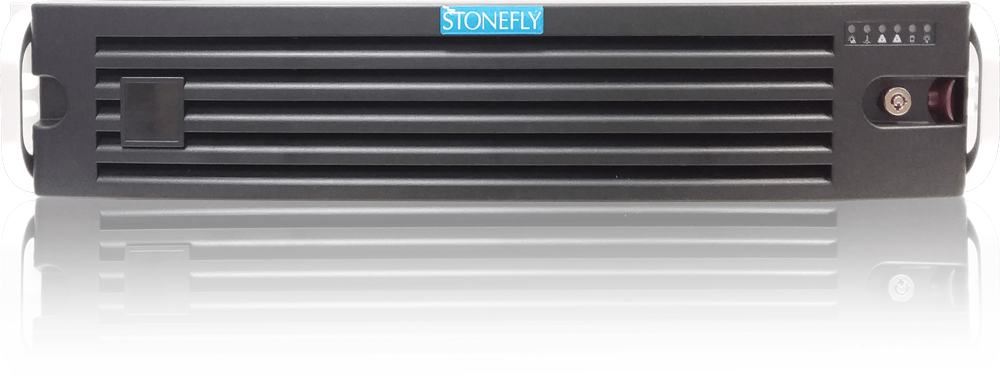
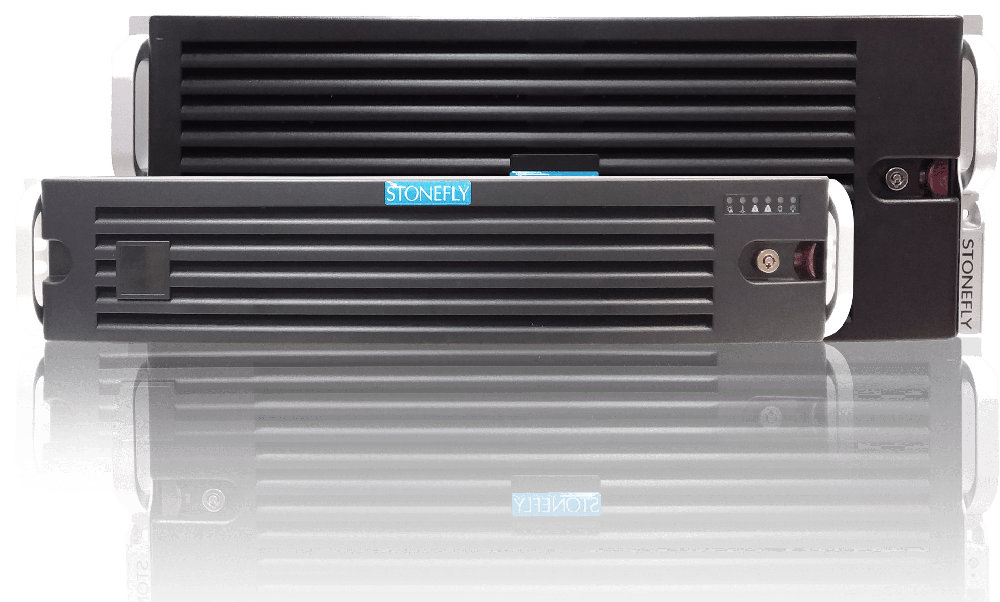
Whether you’re looking for VMware backup or Hyper-V backup, we cover both with our Veeam Ready air-gapped and immutable backup and DR solution, DR365V. Contact us today to set up ransomware-proof and automated data protection for your virtualization environments.



Join our mailing list to receive the latest news, updates, and promotions from StoneFly.