
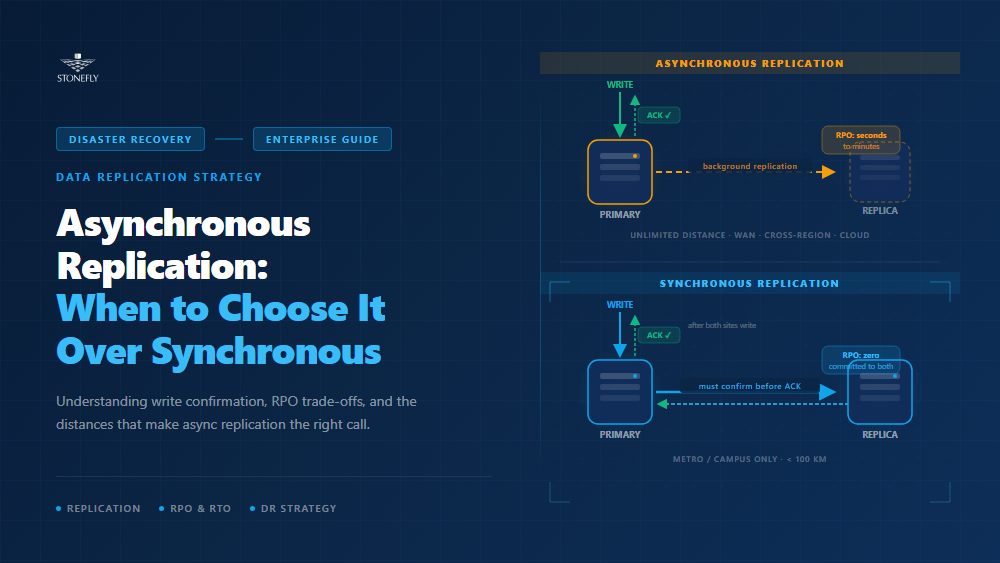
Every enterprise that maintains a disaster recovery site faces the same constraint: synchronous replication requires the primary system to wait for every write to be confirmed at the remote site before completing the operation. Within the same data center, that round-trip takes microseconds. Across a WAN link spanning hundreds of miles, it takes milliseconds — enough to add measurable latency to every database transaction, every file write, every application I/O operation. At scale, that latency becomes operationally unacceptable.
Asynchronous replication exists to solve exactly this problem. By decoupling the primary write from the remote copy, async replication allows the production system to confirm writes at local speed — and replicate to the remote site in the background, without blocking application operations. The trade-off is a replication lag window: the remote site may be seconds to minutes behind the primary. In the event of a failure during that window, those in-transit writes are lost.
For most enterprise workloads — and for virtually all WAN and cloud replication scenarios — asynchronous replication is the right architecture. For a narrow category of zero-tolerance financial and transactional workloads operating over low-latency links, synchronous replication is justified. Understanding which is which, and designing accordingly, is the foundation of effective IT disaster recovery planning.
This guide covers how asynchronous replication works, the asynchronous replication vs synchronous replication trade-off, RPO and RTO implications, database and storage implementations, WAN and cloud-to-cloud replication design, and how StoneFly’s enterprise data protection appliances deliver automated asynchronous replication for disaster recovery.
Asynchronous replication is a data replication method in which writes are confirmed to the application after being committed to the primary storage system, with the replication of those writes to a secondary or remote system occurring independently in the background. The source system does not wait for acknowledgment from the destination before confirming the write to the application.
The result is that the primary system operates at its native performance — unaffected by network latency to the replication target — while changes are continuously streamed or periodically batched to the secondary site. A replication lag always exists between what is committed on the primary and what is present on the secondary. If the primary fails, any writes not yet transferred to the secondary are lost, defining the Recovery Point Objective (RPO) for the asynchronous replication configuration.
Asynchronous replication is the dominant mode for enterprise data replication solutions across WAN links, cloud environments, and long-distance disaster recovery sites — because it is the only replication mode that is practical when the network round-trip time between sites makes synchronous confirmation unacceptable.
Asynchronous replication is implemented through several distinct mechanisms, each suited to different data sources and infrastructure types.
Log-based async replication captures changes from the database transaction log — the sequential record that all write-ahead-logging databases maintain for crash recovery — and ships those log records to the replica asynchronously. The replica replays the log to apply the same changes in the same order, maintaining a consistent replica that lags the primary by the time it takes to capture, transfer, and apply the log.
Log shipping is the foundation of asynchronous database replication in SQL Server (log shipping and asynchronous Always On Availability Groups), Oracle (asynchronous Data Guard), and PostgreSQL (asynchronous streaming replication). It is one of the lowest-overhead replication mechanisms because it leverages infrastructure the database already maintains — the transaction log — rather than requiring additional change tracking.
Change Data Capture (CDC) is a more sophisticated form of log-based async replication that reads the database transaction log in near real time and publishes individual change events (inserts, updates, deletes) to a replication stream. Unlike log shipping, which transfers entire log segments, CDC enables row-level change streaming at high throughput, low latency, and with the ability to fan out changes to multiple downstream targets simultaneously.
CDC-based asynchronous replication is the architecture underlying modern enterprise data replication solutions including Striim, Debezium, and the replication layers of platforms like CockroachDB. It delivers minimal replication lag — typically seconds — while preserving the fundamental asynchronous property: the source database does not wait for downstream consumers to acknowledge each change.
For block and file storage workloads, asynchronous replication is commonly implemented through periodic snapshot transfer: the storage system takes a point-in-time snapshot of changed blocks, compresses and deduplicated the delta, and transmits it to the remote site on a scheduled or triggered basis. The interval between snapshots defines the maximum RPO — if the primary fails between snapshot transfers, the data written since the last transferred snapshot is lost.
Modern asynchronous storage replication systems improve on simple schedule-based transfer by continuously tracking changed blocks and streaming deltas as they accumulate, reducing effective replication lag from the snapshot interval to near real time while retaining the asynchronous property that the primary I/O path is never blocked waiting for remote acknowledgment.
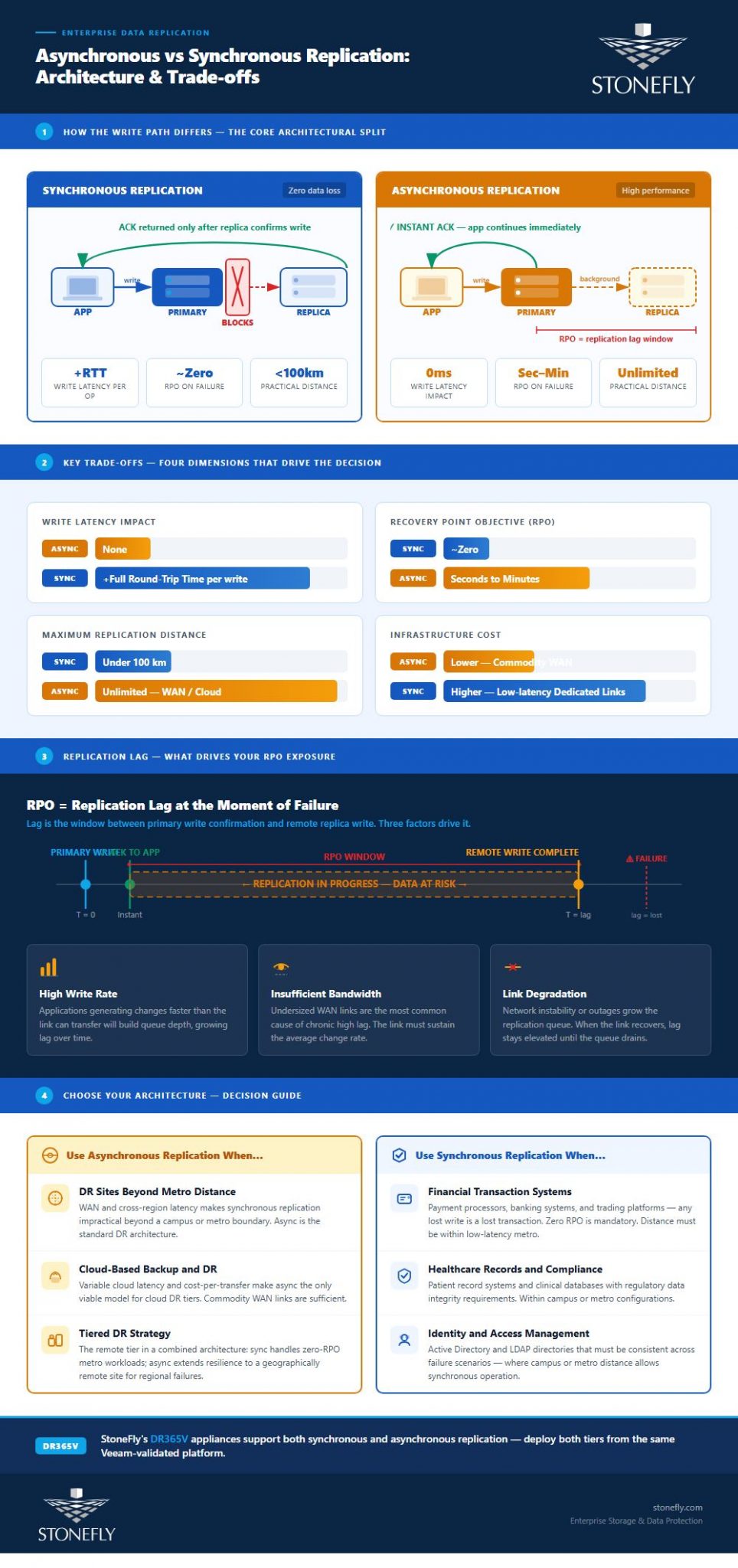
The asynchronous replication vs synchronous replication decision is the most consequential architectural choice in enterprise data replication design. It determines where write latency is paid, what data loss is possible on failure, what network infrastructure is required, and what maximum distance the replication can span.
| Asynchronous Replication | Synchronous Replication | |
| Write confirmation | After local write only — no wait for remote | After both local AND remote write confirmed |
| Write latency impact | None — application sees local write speed only | Adds full round-trip time to remote site on every write |
| RPO on failure | Seconds to minutes (replication lag window) | Near-zero — committed writes are already on both sites |
| Maximum practical distance | Unlimited — WAN, cross-region, cross-cloud | Same metro or campus — typically under 100km |
| Network bandwidth use | Efficient — batches changes, tolerates WAN | High — every write must traverse the link before confirming |
| Cost profile | Lower — commodity WAN links and cloud storage | Higher — low-latency dedicated links required |
| Best for | WAN DR, cloud backup, geo-distributed workloads | Financial transactions, zero-tolerance mission-critical data |
The practical rule is straightforward: synchronous replication is the correct choice when network round-trip time to the replication target is low enough that the added write latency is acceptable, and when the workload cannot tolerate any data loss at failure. Financial transaction systems, identity management databases, and healthcare record systems in metro-area configurations are the canonical synchronous use cases.
Asynchronous replication is the correct choice for everything else: disaster recovery sites more than a few kilometers away, cloud-based DR targets, secondary sites connected via shared WAN links, and workloads where a sub-minute RPO is acceptable. The vast majority of enterprise data replication solutions for disaster recovery are asynchronous — because the distances involved make synchronous replication impractical.
Many enterprise environments implement a tiered strategy: synchronous replication within a campus or metro cluster for zero-RPO requirements on the most critical systems, combined with asynchronous replication to a geographically remote DR site for resilience against regional events. StoneFly’s DR365V appliances support both synchronous and asynchronous replication, allowing the same platform to serve both tiers.
Asynchronous replication directly determines the Recovery Point Objective (RPO) of a disaster recovery design — the maximum amount of data the organization is prepared to lose in the event of a failure. Understanding this relationship is essential for IT disaster recovery planning.
The RPO for an asynchronous replication configuration equals the maximum replication lag — the time window during which writes have been committed on the primary but not yet transferred to the replica. If the primary fails when the lag is 45 seconds, 45 seconds of committed writes are lost. If the lag is 5 minutes, 5 minutes of writes are lost.
Replication lag is determined by several factors: the volume of changes being generated on the primary, the available bandwidth between primary and replica sites, the processing overhead of the replication engine, and whether the replication stream is continuous or batch-based. A well-configured continuous asynchronous replication system on a modern WAN link typically maintains sub-minute lag, often sub-second for moderate workloads. Batch-based async replication — scheduled hourly or daily snapshots — delivers RPOs measured in hours.
Unlike RPO, which is determined by the replication lag, RTO in asynchronous replication is determined primarily by the failover process — how quickly the secondary site is activated and accessible to users. With properly automated disaster recovery, RTO can be very low even with asynchronous replication. The data is already present on the secondary; the only time consumed is detecting the failure, activating the secondary, redirecting clients, and verifying application availability.
StoneFly DR365 appliances deliver RTOs and RPOs of less than 15 minutes for supported workloads through automated disaster recovery workflows, including instant VM spin-up from replicated backup data and automated site failover — compressing what might otherwise be hours of manual failover work into a predictable, tested, automated process.
Asynchronous database replication is the backbone of enterprise disaster recovery for relational and distributed database systems. Each major database platform implements async replication through its own native mechanism, and each exposes the same fundamental trade-off between replication lag and primary performance.
Microsoft SQL Server supports asynchronous replication through two primary mechanisms. Log shipping transfers transaction log backups from the primary to one or more secondary servers on a configurable schedule — delivering a straightforward async replication configuration with RPO equal to the log backup interval, typically 15 minutes to 1 hour. Always On Availability Groups support an asynchronous commit mode that streams log records to replicas continuously, achieving sub-second replication lag over LAN and low-latency WAN links without blocking primary writes.
Oracle Data Guard is the native Oracle database replication mechanism, supporting both synchronous (Maximum Protection and Maximum Availability modes) and asynchronous (Maximum Performance mode) operation. In Maximum Performance mode, Oracle redo log records are shipped asynchronously to the standby database, allowing primary transactions to commit without waiting for standby acknowledgment. This makes Oracle asynchronous replication viable for intercontinental DR configurations where synchronous commit would add hundreds of milliseconds to every transaction.
PostgreSQL streaming replication continuously ships write-ahead log (WAL) records from the primary to one or more standby servers. Asynchronous mode — the default PostgreSQL replication configuration — commits transactions on the primary without waiting for standby acknowledgment. The standby applies WAL records as they arrive, typically maintaining a lag of a few seconds to a few minutes depending on transaction volume and network conditions. The EDB Replication Server extends this to heterogeneous environments, enabling asynchronous replication from PostgreSQL to SQL Server, Oracle, and EDB Postgres Advanced Server.
Asynchronous replication is not limited to databases — it is the standard replication mode for enterprise storage arrays, NAS systems, and object storage platforms replicating across WAN links or to cloud targets.
Storage Area Network (SAN) arrays implement asynchronous replication by tracking changed blocks using a bitmap or journal and transmitting only the changed blocks to the replica storage on a continuous or scheduled basis. For virtual machine workloads, array-based asynchronous replication provides crash-consistent replicas that can be activated at the DR site by importing the replicated volumes and spinning up the VMs from the replica storage — with RPO equal to the replication lag of the last successfully transferred change set.
NAS platforms implement asynchronous replication at the file or directory level, tracking new and modified files since the last replication event and transferring them to a secondary NAS or cloud target. Multi-site replication with both real-time and scheduled asynchronous transfer modes allows NAS administrators to tune the RPO vs bandwidth trade-off — streaming changes continuously for low-RPO configurations or batching for bandwidth-constrained WAN links.
Object storage platforms implement asynchronous replication as the standard replication mode for cross-region and cross-cloud configurations. AWS S3 Cross-Region Replication (CRR), Azure Blob Storage geo-redundant replication, and on-premises S3-compatible platforms all replicate objects asynchronously — writing the object to the source bucket and replicating to the target region or provider in the background. Cloud-to-cloud replication via asynchronous object storage replication is the architecture underlying multi-cloud data protection strategies, where a secondary cloud provider serves as the DR target for the primary cloud deployment.
WAN replication — replicating data between sites connected by wide-area network links — is the use case that makes asynchronous replication a practical necessity rather than just a preference. Synchronous replication requires the primary to wait for the remote write confirmation on every I/O operation. At 100ms round-trip time across a coast-to-coast WAN link, synchronous replication adds 100ms of latency to every write — reducing transaction throughput by an order of magnitude compared to local write performance. No production database or storage workload can sustain that overhead.
Asynchronous WAN replication eliminates this constraint. The primary confirms writes at local speed, and the replication engine handles the WAN transfer independently. WAN optimization capabilities — compression, deduplication, and intelligent change block tracking — further reduce the bandwidth required for continuous async replication across WAN links, making it practical to maintain a remote replica even over commodity internet connections rather than dedicated leased lines.
Long-distance asynchronous data replication between data centers in different cities, regions, or countries is the standard architecture for enterprise disaster recovery storage solutions where site-level resilience — protection against a complete facility outage — is the DR objective. The replication lag across a well-provisioned WAN async replication link is typically under one minute, delivering an RPO measured in seconds to minutes for geographic disaster recovery.
Hybrid cloud data protection — protecting on-premises workloads by replicating to cloud infrastructure, or protecting cloud workloads by replicating across regions or providers — is built almost entirely on asynchronous replication. The latency, bandwidth cost, and geographic distance of cloud replication targets make synchronous replication impractical for all but the most specialized edge cases.
The most common hybrid cloud data protection pattern is asynchronous replication from on-premises primary infrastructure to a cloud-based DR target. On-premises backup and DR appliances replicate changed data to cloud object storage or cloud compute continuously in the background — maintaining a near-current replica in the cloud that can be activated as a DR environment if the primary site becomes unavailable. The cloud target acts as the geographically separated second copy required by standard 3-2-1 data protection architecture, without the capital cost of a dedicated secondary data center.
Azure and AWS both provide native integration points for enterprise data replication solutions — Azure Site Recovery for VM replication, AWS DRS for server replication — and third-party platforms like Veeam extend cloud replication capabilities with additional flexibility, multi-cloud support, and integration with on-premises backup infrastructure.
Cloud-to-cloud replication uses asynchronous object storage replication to maintain copies of critical data across multiple cloud providers or multiple cloud regions — protecting against the scenario of a single cloud provider’s regional outage taking down an organization’s entire cloud footprint. Cross-region async replication within a single cloud provider (AWS S3 CRR, Azure geo-redundant storage) addresses regional failures. Cross-provider async replication addresses provider-level events and eliminates vendor lock-in for business continuity solutions.
Asynchronous replication is the data layer of a disaster recovery architecture — it ensures that a recent replica exists at the DR site. But a replica alone does not constitute disaster recovery. IT disaster recovery planning must address how that replica is activated, how applications are restarted, how clients are redirected, and how the organization confirms that recovery was successful.
Automated disaster recovery orchestration — the practice of encoding the DR runbook as software-executed workflows rather than manual administrator steps — transforms asynchronous replication from a data safety mechanism into a functional business continuity solution. When a primary site failure is detected, an automated DR platform executes the failover sequence: activating the replica volumes, spinning up VMs from the replicated state, reconfiguring DNS and load balancers to redirect traffic, and validating application health before declaring recovery complete.
Without automation, even a well-maintained asynchronous replication environment may require hours of manual recovery work after a site failure — because someone has to execute each step of the DR runbook correctly under pressure. With automated disaster recovery, the same sequence executes in minutes with human oversight rather than human execution, compressing RTO to the time required to detect the failure and run the automation.
IT disaster recovery planning with asynchronous replication should address three operational requirements: replication monitoring (confirming that lag is within the defined RPO window at all times, and alerting when it is not), DR testing (regularly executing failover to the replica environment to validate that the automated recovery process works and that the RPO and RTO targets are achievable in practice), and failback (the process of re-synchronizing data from the DR site back to the primary after recovery, and returning to normal operations without data loss).
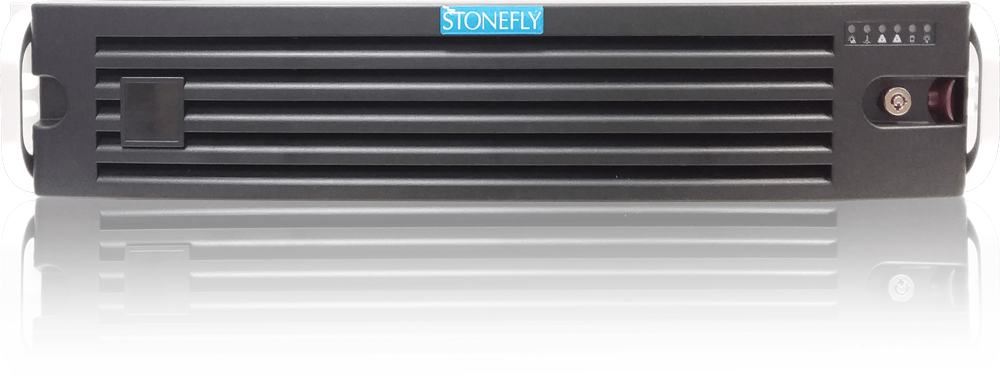
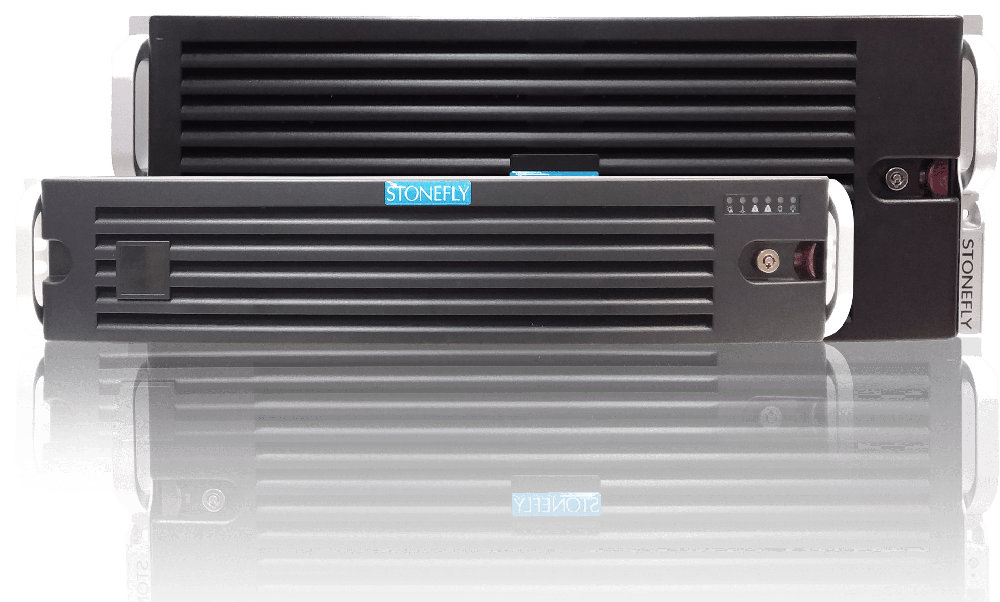
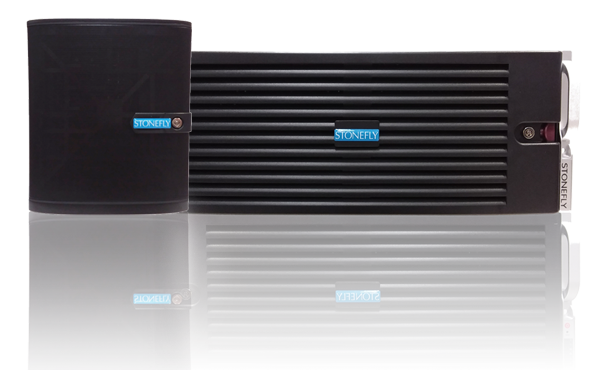
StoneFly’s DR365V and DR365VIVA backup and disaster recovery appliances integrate asynchronous replication directly into the backup infrastructure, giving enterprise IT teams a single platform for both data protection and disaster recovery replication without the complexity of managing separate backup and replication systems.
The StoneFly DR365V supports both synchronous and asynchronous replication, allowing organizations to configure the appropriate mode per workload — synchronous for zero-RPO requirements within low-latency network segments, and asynchronous for WAN replication, cloud-based DR, and cross-site data protection. Asynchronous replication on the DR365V supports One-to-Many configurations (one primary site replicating to multiple secondary sites) and Many-to-One configurations (multiple primary sites replicating to a single DR target), accommodating both branch office consolidation and multi-site enterprise DR architectures.
StoneFly DR365V appliances integrate natively with Microsoft Azure and Amazon AWS, enabling asynchronous replication from on-premises StoneFly infrastructure to cloud object storage as a DR tier. This provides the geographic separation and capacity elasticity of cloud storage as the async replication target, without requiring a dedicated secondary data center. Cloud-integrated async replication supports automated site recovery — activating the cloud-replicated workloads if the primary site goes offline — and delivers the cloud-based DR capability required for modern hybrid cloud data protection strategies.
StoneFly DR365 appliances deliver RTOs and RPOs of less than 15 minutes through automated disaster recovery capabilities including instant VM spin-up from replicated data, automated failover orchestration, and on-demand sandbox environments for DR testing without impacting production systems. The appliances are Veeam Ready Object and Veeam Ready Object with Immutability validated, ensuring that asynchronous replication target data is stored in an immutable, air-gapped repository — so that ransomware propagated through the production environment cannot overwrite or corrupt the replica copies that are the foundation of the DR architecture.
Threat detection integration in the DR365VS variant monitors for active ransomware behavior patterns and can trigger automated backup isolation — preserving clean async replication copies at a pre-attack point even as ransomware is actively encrypting production data. This closes the most dangerous gap in asynchronous replication for DR: ensuring that what was replicated is actually clean and recoverable, not a near-real-time copy of already-encrypted data.
-> StoneFly DR365V: Veeam Ready Backup and Replication Appliance
-> StoneFly DR365VS: Veeam Ready Appliance with Threat Detection
-> StoneFly DR365VIVA: Physically Air-Gapped Backup and Replication Nodes
-> StoneFly DR365 Backup and Disaster Recovery Appliances
Asynchronous replication is not a compromise — it is the architecturally correct choice for the vast majority of enterprise disaster recovery replication requirements. Synchronous replication’s zero-RPO guarantee comes at the cost of write latency that is only acceptable within metro-area distances over dedicated low-latency links. Beyond that range, asynchronous replication is the only practical mode — and with modern continuous async replication implementations maintaining sub-minute lag, the RPO difference between the two modes is often smaller than organizations assume.
The critical design decisions in any asynchronous replication deployment are lag monitoring (ensuring the actual RPO is consistently within the defined target), automated failover (ensuring the replica can be activated in minutes rather than hours), DR testing (validating the full recovery process, not just the replication transfer), and immutability (ensuring the replica copies are protected from ransomware propagation through the production environment to the replication target).
Enterprises that get these four elements right — continuous async replication, automated failover, tested recovery runbooks, and immutable replica storage — have a disaster recovery architecture that is both operationally realistic and genuinely protective. That is the standard StoneFly’s DR365 platform is designed to meet.
Contact StoneFly to discuss how DR365V’s asynchronous replication and automated disaster recovery capabilities integrate with your enterprise backup and DR architecture.





Join our mailing list to receive the latest news, updates, and promotions from StoneFly.